All We’re Looking for Is Love from Someone Else

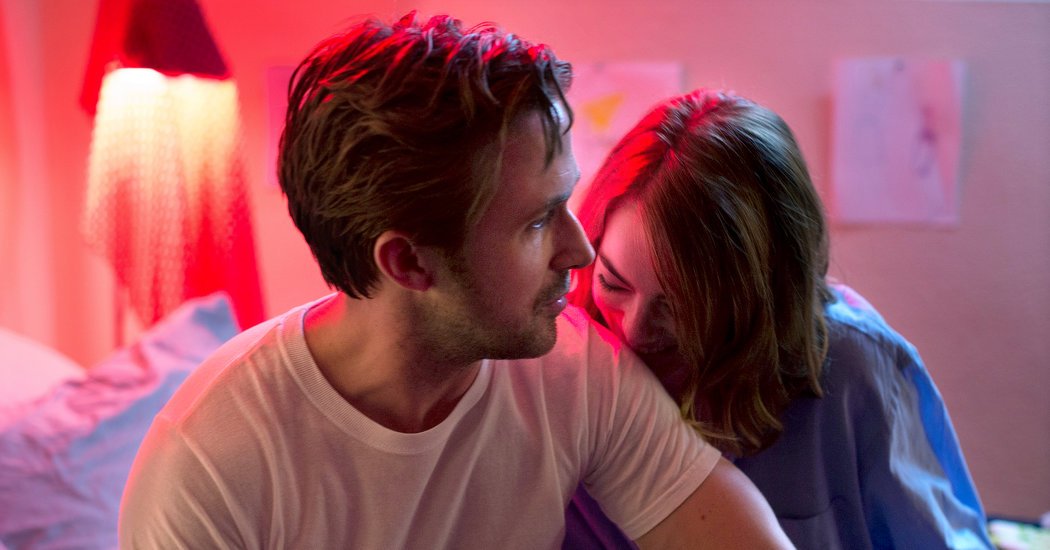
“They say you gotta want it more,” a young man sings in ‘Another Day of Sun’, La La Land’s opening number, “So I bang on every door.”

He came to LA with dreams of making it in the entertainment business, but his problem is not that he doesn’t want it enough. He wants it desperately, single-mindedly. He’s dancing in the middle of a traffic jam, singing about wanting it – as desperately as the dozens of other people singing the same song.

‘Another Day of Sun’ sounds bright and happy, but lyrically, it’s about constant rejection, about running out of money, about leaving loved ones to pursue unrealised dreams – and about a pressure to blame yourself. They say you gotta want it more.

The chorus initially sounds like an ode to perseverance:

And when they let you down

You’ll get up off the ground

‘Cause morning rolls around

And it’s another day of sun

But it’s more melancholy with every repetition, as getting knocked to the ground emerges as a habit. “It’s another day of sun” is a joke about LA not having seasons, but it’s also a comment on how that lack of weather can feel oppressive. It’s an environment that refuses to bend, impervious to your feelings. There’s weariness to it: constant sunshine, constant disappointment.

La La Land is not a film about how you should pursue your dreams.

Continue reading “All We’re Looking for Is Love from Someone Else”

Break the Studios, Save the Movies

Hollywood is in a prolonged state of crisis. Everybody knows this. Studios pump out a seemingly endless supply of sequels, spin-offs, remakes, reboots, and films otherwise based on any and all previously existing intellectual property, all of which invariably cost upwards of 100 million dollars. We call them tentpole films, because they’re supposed to be sure-fire bets that can make enough money to finance smaller, riskier projects across the studio’s slate, like tentpoles upholding a tent. The problem is that there is no tent. There’s just masses and masses of poles, sticking upright in a field, and we’re all so used to getting wet that we’re more likely to ask for the poles to be more interesting than ask for some tarp.

Continue reading “Break the Studios, Save the Movies”

You Should Watch Charlie Chaplin

It’s 2017, and silent films are dying.

Silent films started dying in 1927, of course, when The Jazz Singer mainstreamed the use of synchronised dialogue – although it itself was a sound-silent hybrid, mostly using sound in the sections to do with musical performance. By the 1930s, basically all films were talkies, and apart from occasional blips – Mel Brooks’ Silent Movie or best picture winner The Artist – we’ve never looked back. Silent films have been dead for almost a hundred years, and there’s no good mourning them now.

But there’s the second death – the death that occurs when something once vibrant and alive is forgotten by everyone living. That time will come for everything and everyone, but there’s an artificial acceleration when an art form has fallen out of use. Charles Dickens is as popular and well-known as ever, but he mightn’t be if everyone had stopped writing or reading novels for a hundred years. He mightn’t have been had it not been possible to publish his serials in the form of the novel, instead of leaving them scattered across the volumes of history. Silent films are still films, but they’re different in a pretty fundamental way, in a way that seems impossibly big if you’ve never seen one.

So I’m really worried – unreasonably worried – that people are going to forget Charlie Chaplin.

Continue reading “You Should Watch Charlie Chaplin”

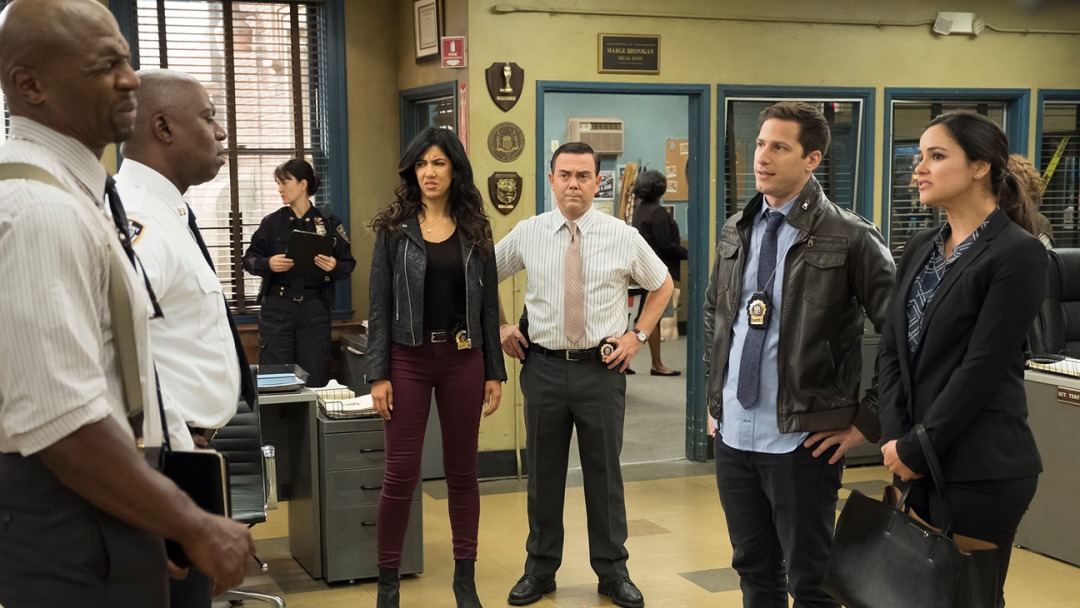
The Rise and Fall of Brooklyn Nine Nine

To love a TV show is to set yourself up for disappointment.

There are exceptions, obviously – Breaking Bad had a pretty much perfect run – but the serialised nature of television means it has infinitely more chances to let you down. Maybe it’ll be cancelled before it’s time. Or worse, maybe it will destroy itself from the inside out. The Simpsons is the greatest TV show ever made, but that fact is obscured now that there are more bad seasons than good. “Classic Simpsons” and “new Simpsons” are fully compartmentalised in my head. It hurts too much otherwise.

But The Simpsons was allowed be good – be great – for nine years. The greatest tragedy, one that seems to be constantly getting worse and puts me off watching new shows, is for a once great show to destroy itself within a year or two, the length of time it used to take a show to figure itself out. There’s more TV than ever now, and the whole cycle moves at double-speed: a show has to find its feet faster to survive, but it also burns out quicker. Crazy Ex-Girlfriend had one my favourite seasons of television ever and then immediately fell apart in season two, True Detective revealed itself to be a bloated pretentious corpse in season two after an acclaimed first season, and Westworld didn’t even make it to the end of its first season before people stopped caring. There are fifteen shows currently on air with eight or more seasons, six of which are procedurals and another four of which are Fox’s animated comedy slate. A show can be long-running and soulless, but it’s telling how few long-running shows there are – how hard it is to sustain a show for that long now.

You’d think the rise of shorter seasons would allow shows to continue on for years longer without burning through as much material – and yet, again and again, once-great shows collapse in what is, to the binge-watcher, a few short hours. The Simpsons had nine great years, but more and more, a show has to be exceptionally sturdy to be good for three or four.  It becomes harder and harder to remember the shape of the show you once loved, because every time you think you catch a glimpse of it, another wave of crap comes along to drown it once and for all.

I really hate Brooklyn Nine-Nine.

Continue reading “The Rise and Fall of Brooklyn Nine Nine”

Duct Tape on Armchairs: Frasier and the Working-Class Sitcom

It’s the golden age of TV.

455 scripted television shows aired in America in 2016 – that’s compared to 192 in 2006. There’s been years of back and forth about whether current TV is the best thing ever – quite possibly the central cultural output of our time – or actually not very good at all, because so-called prestige TV is so often shallow self-serious bullshit. The obvious fact that TV has always been good, and that the “golden age of TV” corresponds only to the rise of paid subscription services (HBO, Netflix, Amazon) and cinematography that made TV look like movies, might be mentioned, but is never of concern. We’ll talk about the fracturing of the television audience – how three of the last five TV seasons had football at the highest rating, because sport is the only thing diverse audiences watch live anymore – but we’ll pretend that it fractures more or less at random, and its only implications are for advertisers.

Continue reading “Duct Tape on Armchairs: Frasier and the Working-Class Sitcom”

I’m Not Sad Anymore, I’m Just Tired of This Place

This article is part of the In Defense of the Genre series. Previously, the case for taking pop punk seriously as art.


The first time I heard a song by The Wonder Years, I felt like I’d been cut open.

It felt the way it felt to hear ‘Sugar, We’re Goin’ Down’ just shy of my twelfth birthday. It felt the way it did to hear ‘Welcome to the Black Parade’ for the first time. It felt like a punch in the gut, only sweeter.

When I first discovered pop punk – Fall Out Boy, Blink-182, My Chemical Romance, et al. – it was something electrifying, transformative. It felt like someone understood things about myself that I’d never been able to put to words. I used to feel that way about a lot of culture when I was younger – that someone had impossibly felt what it was to be me, and articulated it in a way my child-self couldn’t. I didn’t know if I could feel that way anymore, not with any intensity. The more stuff you’ve heard and seen, the harder it is to find something that cuts deeply in a place you’ve never named.

Continue reading “I’m Not Sad Anymore, I’m Just Tired of This Place”

Jack of All Trades

“Jack of all trades, master of none” is supposed to describe Master of None’s lead character, jobbing New York actor Dev, not the show itself. And yet.

Master of None has gotten pretty much universal critical acclaim and been nominated for lots of awards, but when you get down to it, it’s a pretty okay show with a handful of very good episodes. I rarely complain about things being derivative, because art being original is less important than its being well-executed, but it’s frustrating to watch Master of None get praised for inventing things that I’ve seen on TV or in movies many times before, from being a romantic comedy where the man has feelings (the works of everyone from Chaplin to Apatow mustn’t count, I guess), to doing a Slacker episode, which I felt like I’d seen a hundred times before and I haven’t even seen Slacker.

Continue reading “Jack of All Trades”

I Went to the Marches, Nothing Happened: Obama in Little Sister

If I describe 2016’s Little Sister, it will sound like a quirky-for-quirk’s-sake, typical and self-important indie film: Addison Timlin plays Colleen, a former goth who is now a novitiate in Brooklyn close to taking her first vows. She visits her estranged family in Asheville, North Carolina where her brother, Jacob (Keith Poulson), has returned from the Iraq War, his face horrifically burned. There are countless indie films about a twenty-something returning home to a family from whom they feel alienated, where they learn something or other before returning to the big city, and if Little Sister just swapped the personalities involved – a stuffy conservative young person and their free-thinking liberal parents – it would be really boring (I know because I’ve seen Other People and it was really boring).

Continue reading “I Went to the Marches, Nothing Happened: Obama in Little Sister”

The Agony of Suburbia

I don’t fully understand music criticism. When I read (good) criticism about a book or a film, I feel like I learn something – either about the book or film itself, or books or films in general, or about politics or culture or the world. Most of the music criticism I’ve read either validates my opinions without helping me learn anything about them, or else it makes me feel stupid. A huge amount of music criticism is underpinned by a dichotomy between what is Good and Okay to Like and what is Dumb and Bad that Only Dumb and Bad People Like. What falls into each category is supposed to be obvious to the reader, because it’s never explained. (Robert Christgau is one of the most acclaimed music critics in America, and he operates on a bizarre and complicated system combining letter grades and emojis.) Declaring something good or bad is the critic’s job, of course, but even when I disagree with a film critic, they’ll still be interesting to read if they’re any good. Roger Ebert was wrong about Midnight Cowboy, but he was wrong in a way that made me think more deeply about the film.

Continue reading “The Agony of Suburbia”

Dan Aykroyd, Harold Ramis and Bill Murray in the original Ghostbusters (1984)

Ghostbusters (2016): a Hillary Clinton Story

It’s been the guts of a year since the height of the boom industry of Ghostbusters (2016) opinion pieces, and, I guess, since Ghostbusters (2016). The thousands upon thousands of words written about Ghostbusters were many things, but mostly they were exhausting. For months before the film was released, the Internet was alight both with backlash against the all-female reboot of Ghostbusters and with subsequent condemnation of the backlash as sexism. Somehow an all-female remake of an eighties comedy about hunting ghosts became a touchstone of socio-political debate in a year where the UK voted to leave the European Union and Donald Trump was elected the American president.

Continue reading “Ghostbusters (2016): a Hillary Clinton Story”