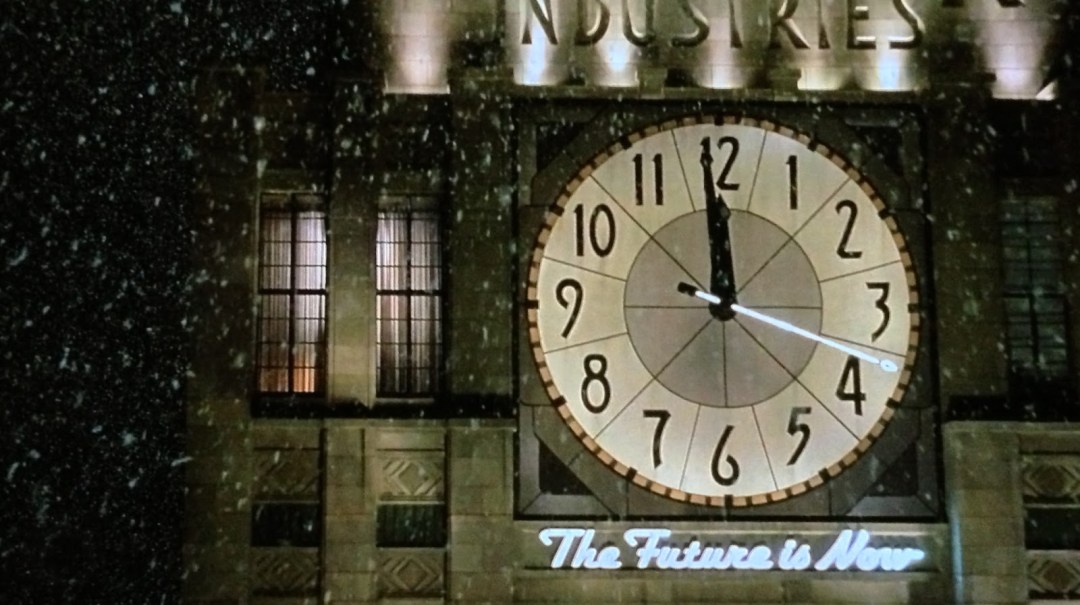
the clock on the Hudsucker building in the snow in The Hudsucker Proxy, with the words "The Future is Now"

In Defense of The Hudsucker Proxy

Joel and Ethan Coen make two types of films. Both types are comedies.

The first type sometimes gets mistaken for a drama. They’re the dark comedies that usually operate within a specific genre. Some of these are easily spotted – even Wikipedia calls Fargo a comedy – but it’s easy to get distracted by how serious they look on the surface. The Man Who Wasn’t There is a black-and-white period noir, which somehow overrides that the whole film is set in motion by someone coming up with this totally crazy idea he’s calling “dry cleaning”. The closest to a true drama that the Coens have directed is probably No Country for Old Men, but it has a huge amount of funny hair for a very serious, tense movie.

Continue reading “In Defense of The Hudsucker Proxy”

Harvey Keitel praying in Mean Streets

Martin Scorsese’s Violence of Grace

In the stories of Flannery O’Connor, grace is violent. It overpowers. Baptisms are drownings. It is only with a gun pointed at her that a grandmother can recognise the humanity of her murderer: she would have been “a good woman, if it had been somebody there to shoot her every minute of her life.”

This violence of grace is often represented by human violence, but it isn’t the same as human violence. Grace is beyond human comprehension, and so is impossible to represent literally. Any religious text is filled with metaphors, because metaphors are the only way to communicate about the divine. Using violence to represent grace, art can express how grace strikes: dramatic, overwhelming, painful. It is painful because it is transformative. Like violence, it is destructive, but it destroys only evil.

Continue reading “Martin Scorsese’s Violence of Grace”

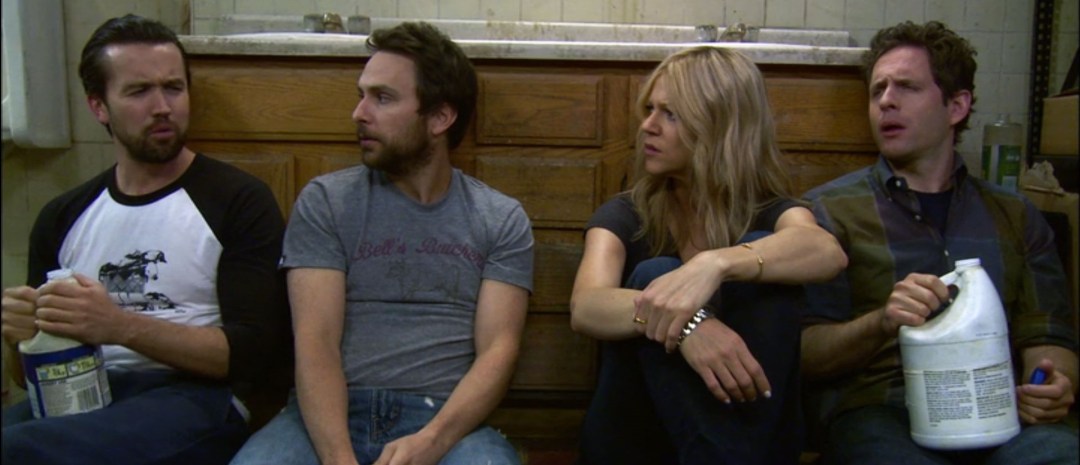
Mac MacDonald, Charlie Kelly, Dee Reynolds and Dennis Reynolds drinking in It's Always Sunny in Philadelphia

The Gang Fights Neoliberalism

American politics, for the past couple of decades up until just recently, has operated on a binary: liberal/conservative. A lot of the time, this leads to weird semantic problems – calling Bernie Sanders “very liberal” when he’s not a liberal at all, calling Donald Trump a conservative when his ideology has very little to do with conservatism  – but the way we talk about ideas informs what ideas become. If you only see things in terms of liberal and conservative, you can deeply misunderstand things happening in front of you. Worse, when you lose the words to describe them, the possibility of other distinct political philosophies can disappear.

South Park is a libertarian show. It’s always been a libertarian show. I find it hard to imagine a show more upfront with its ideology than South Park. Yet there are countless posts and articles debating whether South Park is secretly liberal or secretly conservative, as if it’s secretly anything. Even more bizarre is the common idea that South Park has no ideology at all. Interviews with titles like “Matt Stone & Trey Parker Are Not Your Political Allies (No Matter What You Believe).” Academic articles with titles like “Pseudo-Satire and Evasion of Ideological Meaning in South Park.” If an ideology does not fit within either of the boxes I have in front of me, it must not exist at all.

Continue reading “The Gang Fights Neoliberalism”