Some Unspoken Thing: In Praise of Guardians of the Galaxy Vol. 2

For at least a decade, we’ve lived through a pretty unprecedented boom in superhero films. Disney releases three Marvel Cinematic Universe films a year, Warner Brothers is trying desperately to make the limping DC universe hold together, Fox has the X-Men, and that’s not counting failed experiments like Fantastic Four or Sony’s Spider-Man universe, which, as far as I understand, they’re attempting to still do, but without Spider-Man. Superheroes aren’t suddenly popular out of nowhere or anything, but the sheer glut of superhero movies being produced now makes the progenitors of the superhero boom – like Christopher Nolan’s Batman trilogy or Sam Raimi’s Spider-Man – look modest by comparison.

It’s no secret that I’ve been critical of the superhero boom. I would support a ten-year ban on producing superhero films if such a thing were possible. But that isn’t out of snobbiness, or even out of a dislike of superhero films. I think Spider-Man 2 is a masterpiece. I saw The Dark Knight Rises in the cinema twice and think anyone who criticises its many plotholes is a pedantic killjoy. I think Logan had one of the best screenplays of last year. But the superhero boom is a feature of a much bigger problem: a trend in blockbuster filmmaking, and popular cinema in general, away from the thoughtful, interesting and weird and towards bland, hollow pleasures. It started with superheroes, and now it’s creeping all over the place, from Star Wars to the Universal monsters.

Superhero films tend to get a disproportionate amount of praise because they’ve spent a decade wearing us down, calibrating our expectations to just the right frequencies. I hate the word “overrated,” but I don’t think there’s a better word to explain the phenomenon of every Marvel release apparently being one of the best films ever made, if Rotten Tomatoes scores are anything to go by (and they aren’t). I really liked Wonder Woman, even if it had third act problems, but when people started talking about it as one of the best films of the year and it being “snubbed” by the Oscars, I felt like I was going insane. So I’ve never felt the need to speak up for a superhero film, really.

But then there’s Guardians of the Galaxy Vol. 2.

Continue reading “Some Unspoken Thing: In Praise of Guardians of the Galaxy Vol. 2”

I’m Addicted To Words and They’re Useless

This article is part of the In Defense of the Genre series. Previously, why Adam’s Song is an all-time great


Motion City Soundtrack’s Commit This To Memory is one of my favourite albums: bright, hooky pop-rock with a heavy dose of synth, it’s got some of the most fun songs about anxiety, depression and substance abuse in my collection, and I’m not short of fun songs about anxiety, depression and substance abuse to choose from. Its upbeat melodies, I suppose, contrast the lyrical content, but what’s more impressive is how the sound manages to evoke high anxiety while still being a total blast. Commit This To Memory does occasionally take the time to get dark in its musical tone, not just its lyrical one: after three fantastic pop songs, only one of which is longer than three minutes, we get ‘Resolution’, a noble contribution to the melancholy canon of New Year’s songs, which is slower, longer and much less danceable. The opening three songs on Commit This To Memory are a bundle of nerves, but ‘Resolution’ is lyrically both more removed and more desperately sad: She would tend to my wounds and fill me with food when I’d stumble in drunk for breakfast. She was right to take off before she was consumed.

Continue reading “I’m Addicted To Words and They’re Useless”

God Allegedly Has Bigger Plans for Me: Religion in Lost

When Michael Schur was coming up with The Good Place, he asked Lost co-creator Damon Lindelof for advice. “[Lindelof] told me, ‘Here are the pitfalls. Here are the traps you can fall into. Here’s the problem you’re going to hit’…” Schur said, “He actually I think said to me, ‘You just need to know where you’re going.’”

Lindelof’s advice was presumably drawing from experience, because Lost absolutely did not know where it was going. For the six full-length seasons it ran, it was an incredibly messy show, narratively convoluted and incoherent, brimming over with set-ups that were never paid off – and not in a David Lynch way, where it’s meant to be surreal and not intended to be “solved”. It only took Lost until its second season to do a “what if this character is in a psych ward and this is all in his head” episode, something Buffy managed to stave off for six years. The finale of Lost aired eight years ago to a polarised reception, and its reputation has only depreciated in the interim. It regularly makes lists of the worst finales of all time, and is practically synonymous with “all the mystery-box shit turning out to be nonsense” and “wasting years of your life on a show that turns out to be crap.”

So here’s the thing: Lost was a great show, finale and all. And I think that those who came away from the finale scratching their heads kind of missed the whole point of the show – because Lost was always a show about religion.

Continue reading “God Allegedly Has Bigger Plans for Me: Religion in Lost”

Sofia Coppola’s Sad Rich People

In 2003, Sofia Coppola released Lost in Translation. It was critically acclaimed, grossed 119 million dollars on a budget of four million, and made Coppola the first American woman ever nominated for Best Director at the Oscars. It’s about two Americans – Bill Murray and Scarlett Johansson – in a luxury hotel in Japan, two lonely people who find some solace in each other, an almost-romcom where nothing happens and everyone wants to die. It’s a beautiful film – I often say that subtlety is overrated, but Lost in Translation is quiet and soft, a reminder that a film can be those things without for a moment being boring or pretentious.

It’s 2004, and Sofia Coppola might become one of the most important film directors of her generation. Not because she’ll be tokenised as a woman, and not because her dad made The Godfather, but because of her incredible talent.

It’s fourteen years later, and it hasn’t really worked out that way.

Continue reading “Sofia Coppola’s Sad Rich People”

The One Where Pop Culture Disintegrates

Why do people still love Friends so much?

To be clear, I love Friends. I’ve seen every episode of Friends multiple times. It was a good show, and often a great one. It was such a massive juggernaut hit at the time that it’s inevitable that it would have some staying power – I can’t imagine a world where Friends was forgotten, consigned to the ash heap of history. Anything that big hangs around for a while. Culture doesn’t have a reset button, you just turn it at right angles and draw over what’s already there.

But Friends isn’t just hanging around in the background. It’s still hugely, actively popular. BuzzFeed’s clickbait pop culture listicle/quiz department pumps out posts about Friends on at least a biweekly basis. People get engaged on the Central Perk couch on tours of the Warner Brothers lot. The whole series was recently added to Netflix in Ireland and the UK, and – even though the show finished fourteen years ago, even though it’s been in reruns constantly, unavoidably since then – it was treated as a legitimately big deal.

And that’s weird. It is so far outside of the norm of televisual afterlife that “it’s a good show” doesn’t go a tenth of the way to explaining it.

Continue reading “The One Where Pop Culture Disintegrates”

Weekend at Bernie’s Is Not the Film You Think It Is

Weekend at Bernie’s might be the most misunderstood film I know. It was a hit in 1989, despite bad reviews, and has had staying power since: the image of Andrew McCarthy and Jonathan Silverman propping up Bernie’s lifeless body is seared onto the cultural memory, one of those iconic cinematic images that has been parodied and homaged and referenced enough to take on a life of its own beyond the film itself. It’s a very famous film, is the point – though not exactly acclaimed – but when I watched it, I kind of felt like the first person to ever see it.

Here’s what I assumed Weekend at Bernie’s would be like: an extremely dumb, extremely wacky 1980s comedy, in the vein of Porky’s or a National Lampoon movie, that is probably not very good but has a kind of charm that not very good films from the 1980s tend to have. I knew the basic plot – two guys pretend another guy, Bernie, is alive, while staying at his place for the weekend. I assumed – either because it’s how it turns out in any given Weekend at Bernie’s-inspired TV episode, or because of the existence of Weekend at Bernie’s II – that Bernie wasn’t really dead. That our heroes found him unconscious and panicked, but, by the end of the film, Bernie would wake up, and we’d arrive at our happy ending.

Weekend at Bernie’s is something much stranger, and much more interesting.

Continue reading “Weekend at Bernie’s Is Not the Film You Think It Is”

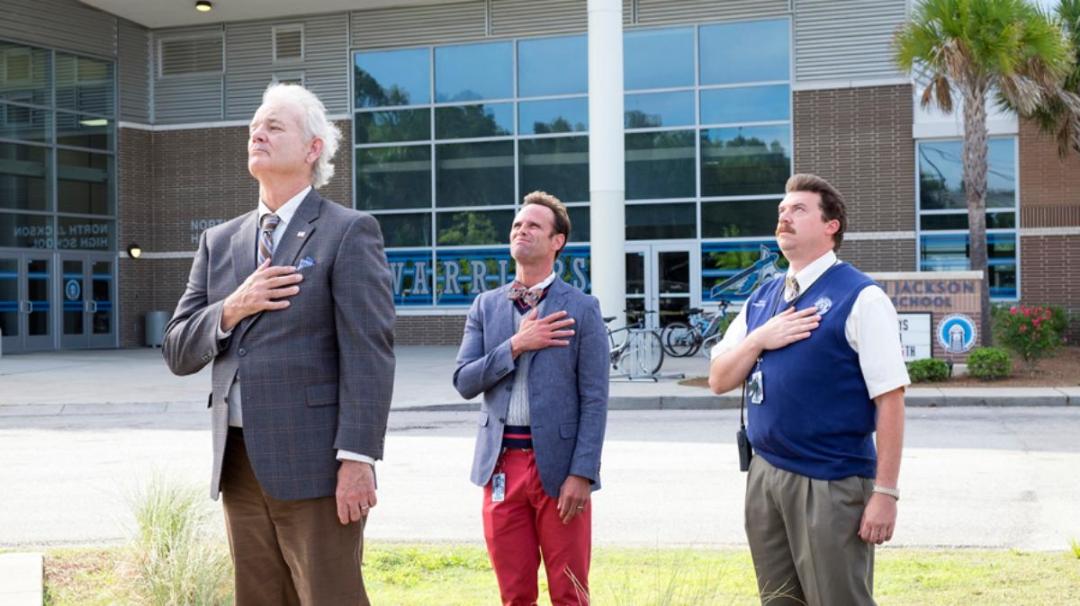
Goodness or the Choice of Goodness: Vice Principals, Empathy and Deserving

I spend a lot of time thinking about empathy and compassion. I believe in those things, as deep down as I believe in anything. I always thought this was relatively universal, at least outside of right-wing fringe groups, but I don’t really think that anymore. Not just because a Yale professor wrote a book literally called Against Empathy (in a video for The Atlantic he explains that empathy for victims is used to justify the Iraq War, but conveniently doesn’t mention if empathy can and does motivate anti-war activism), but mostly because of how often I find myself recoiling in horror from political discourse. I can’t cheer an elderly man getting brain cancer, no matter what he’s done. I don’t think that someone who punches a Nazi is suddenly as bad as a Nazi, but I can’t comprehend the ease with which people advocate the punching. I oppose violence in all its forms – structural or personal – and I don’t think that any person deserves to be killed, by the state or anyone else. I don’t think “deserve” comes into it. I don’t have the stomach to be a revolutionary.

Continue reading “Goodness or the Choice of Goodness: Vice Principals, Empathy and Deserving”

Camera Obscura: In Defense of Addicted to Love

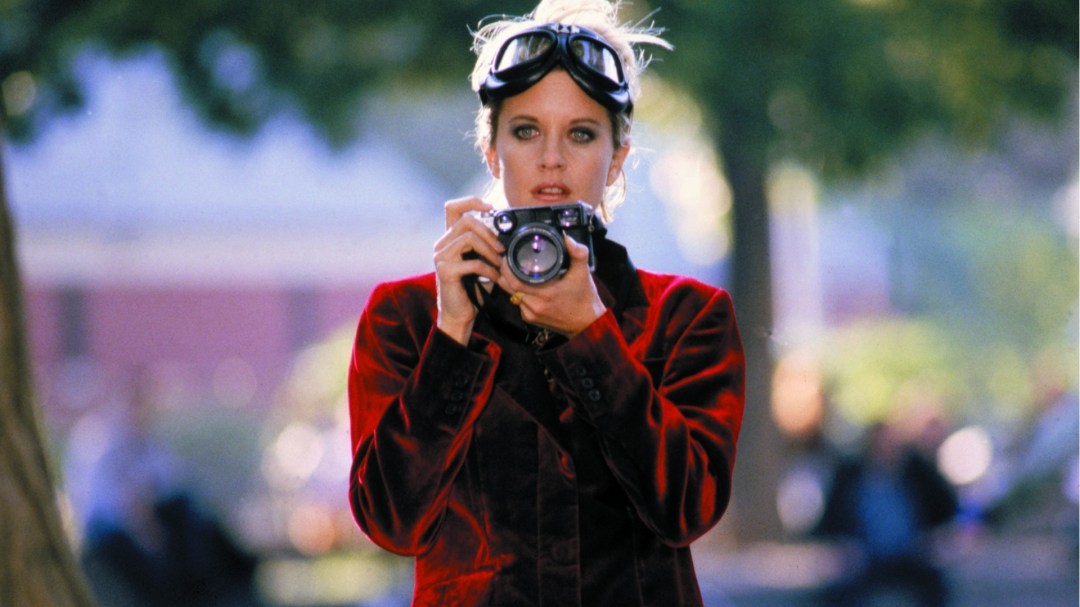
Addicted to Love is not a film anybody likes or cares about, or even remembers. It’s one of those films disappeared in the sands of time, managing to have literally zero cultural impact. There’s so much media today – peak TV, a boom of indie films scrabbling for a smaller piece of the pie, three hundred hours of video uploaded to YouTube every minute – that we’ve created a modern inverse of the lost films of early cinema. Those films quite literally ceased to exist, either due to studios dumping them to make space or accidental destruction by fire (nitrate film, which was standard before the 1950s, can spontaneously combust if stored improperly). The Film Foundation, Martin Scorsese’s film preservation non-profit, estimates that ninety percent of films made in the US before 1929 are lost.

Continue reading “Camera Obscura: In Defense of Addicted to Love”

Never Be Afraid Again

This article is part of the In Defense of the Genre series. Previously, Paramore and demanding the time and space to deal with emotions that we’re shamed for expressing


My Chemical Romance existed to save lives.

It’s hard to talk about with the uninitiated. It’s not unlike talking about faith to unbelievers: when you have to describe it out loud, you can hear how bizarre it is. A believer can hold their faith and their knowledge of their faith’s absurdity together without contradiction, but an unbeliever cannot understand that. CS Lewis wrote about faith as completely derived from reason, and sure, he was a lot more educated about theology than me, but that’s nonsense. Faith isn’t rational, and it wouldn’t matter if it was. “No one could have in a billion years of their gripping testimony or by showing me a radiant life of good deeds or through song or even the most beautiful of books brought me to Christ,” Nicole Cliffe (from The Toast, now sadly defunct) wrote about her conversion, “I had to be tapped on the shoulder.”

Continue reading “Never Be Afraid Again”

Doctor Who and the Death of Death

Death in popular culture is meaningless. There’s too much death and not enough. More than ever, TV shows and films are obsessed with the omnipresence of death, but blind to death having any meaning. “Why is no-one allowed die?” (e.g. the Marvel films) or “Why must everyone be killed off for shock value?” (e.g. Game of Thrones) seem like not only distinct but contradictory problems, but they’re two sides of the same coin: anybody might die – but probably not anybody you care about, and if it is, they’ll come back to life in the end.

Continue reading “Doctor Who and the Death of Death”