Radical Empathy and the Prison-Industrial Complex

Spoilers through to the end of season 5 of Orange Is the New Black.


Orange Is the New Black has become a cautionary tale of the streaming era of television. When it first debuted in 2013, it quickly became hugely popular, one of Netflix’s most watched and acclaimed original series. It was at the forefront of that brief moment when “Netflix original series” meant something: ground-breaking television, exploding our very conception of what television could be. With its sprawling, diverse ensemble cast, binge-friendly structure and mixture of comedy and drama, Orange Is the New Black was the kind of show that was regularly preceded by a “I can’t believe you haven’t seen” and followed by an exclamation mark.

But not anymore. The show’s fourth season was polarising, but its fifth was widely disliked, to the extent it made any impact at all. It’s become just another show in Netflix’s bloated catalogue, just another past-its-prime show that you’ve forgotten is still on the air.

Orange is the New Black seems destined to remain in a sort of TV purgatory,” The Guardian writes, “It has more than enough fans to sustain itself on Netflix and the streaming site is keen to back it considering it’s still one of its most-loved originals. But does it feel as vital as it did when it was first released?”

The answer is supposed to be no, so obviously that it doesn’t need to be said. But here’s the thing: in its latter years, Orange Is the New Black has become something more important and much more radical. I tend to rag on Peak TV quite a bit – if I say something “could only exist in the streaming era” I usually mean that it’s bloated, incoherent and insufficiently concerned with making individual episodes high-quality or enjoyable. The second season of Jessica Jones could only exist in the streaming era, and it fucking sucks. But Orange Is the New Black, too, could only exist in the streaming era: a beacon of light guiding the way to all that streaming television has the possibilities to be.

At what other point in history could a TV series get made – and become hugely popular – that argues, full-throated, for the abolition of prisons?

Continue reading “Radical Empathy and the Prison-Industrial Complex”

Fan Boys: The Phantom Menace

People tend not to have a great sense of scale, which isn’t the best quality when we’re so prone to making grand proclamations about entire populations of people. For example, a common refrain since the 2016 US presidential election has been variations on “we now live in a country where nearly half the people voted for Trump”. Now and then someone will point out that, with 60 percent turnout, it was more like a quarter. But that’s still not right. It was 46.1 percent (vote share) of 60.2 percent (turnout) of 71.6 percent (eligibility) of the US population in 2016, or just under 20 percent. This isn’t to minimise the horror of the election result or Trump’s presidency in any way. Every evil thing, every atrocity, that has occurred in the past two years still happened, and, if anything, it just makes it more fucked-up that it didn’t even take a majority to happen.

That’s why it bothers me when I hear this “we now live in a country…” thing, whether about Trump or Brexit or any of the other awful election results of the past several years. If your main political opponents actually comprise less than 20 percent of the country, but you react as if it was half, you can’t possibly be responding in the most effective way. Accuracy matters, especially with something as high-stake as the fate of democracy, and it’s frustrating to constantly see well-intentioned people be so sloppy with reality. Not that low stakes should let people off the hook: standards of research and fact-checking in entertainment journalism are in the gutter and it drives me up the wall. And while it’s obviously not as significant as the rising tide of fascism (though it’s often presented as comorbid with it), when it comes to misrepresenting the scale of a social problem, there’s little critics and journalists have fucked up more than their coverage of “fan boys” and their allegedly toxic effects on society.

Normally, I find articles like this difficult to write, because it requires me to cite specific examples of bad writing and I don’t enjoy going off on other writers, for the most part. But this one will be super easy, because, for once, I can shit on the writing of someone whose writing I already constantly shit on.

This is a callout post. For myself.

Continue reading “Fan Boys: The Phantom Menace”

Westerns: A Take

I can name for you every western I’ve ever seen. It wouldn’t even be hard. That’s not even close to true about any other genre: I always feel I came relatively late to horror, but the idea of listing all the horror films I’ve seen seems absurd, a job it would be impossible to finish. But I’ve seen, like, fifteen westerns – I’m a total novice, fumbling around in the dark in a genre in which I have yet to grow roots.

But as I slowly, stumblingly get into westerns, I’ve become acutely aware of the gap between the way people talk about westerns and what they’re actually like. The western – especially for people my age, who didn’t grow up watching them on Saturday afternoons – is treated less like an artform than a rhetorical device, and this means, necessarily, reducing a huge, varied film genre to a static set of characteristics. It means assuming that everything westerns were, are or can be fits in a little box.

Continue reading “Westerns: A Take”

Behold the Man Who Is a Bean

Night on a deserted street in London. Saint Paul’s Cathedral shines on the horizon. A beam of light shoots down from the sky and expands into a spotlight. A man falls from above and lands smack on the ground. He wears a tweed jacket and red tie, brown slacks and a white shirt. An angelic choir begins to sing in Latin.

Ecce homo qui est faba.

“Behold the man who is a bean.”

Continue reading “Behold the Man Who Is a Bean”

Notes on Mary Magdalene

This article is part of the Notes on Failure series, which discusses interesting cinematic failures. Previously, notes on Hamlet (2000)


I was looking forward to Mary Magdalene for like a year. I liked Lion, director Garth Davis’s debut film, and Rooney Mara has an outsized place in my heart thanks to her work with David Fincher. But mostly, I love religious films. It’s hard to say that when Pure Flix have made a cottage industry out of crap like God’s Not Dead, films designed to reassure Christians that of course you’re better than everyone else, don’t worry. But great religious films can wrangle with all the messy complications, can be free to be more art than indoctrination. A lot of the best ones are made by atheists – usually Marxists from Italy. Great religious films are great films that focus thematically on something I care intensely about, and they inevitably mean a lot to me.

But you’re always rolling those dice. Christianity is an extremely loaded thing, and it often seems like reviews are written in code: I’m pretty sure Martin Scorsese’s Silence didn’t get its due because secular audiences didn’t or couldn’t fully engage with it and religious audiences found it uncomfortable, challenging viewing, but then it’s hard to know what the reviews would be like if it really was a dull slog.

So I was excited to see Mary Magdalene, even if the reviews were pretty mixed. I love religious films, and I love unorthodox Gospel retellings, and I’m a feminist, and I’d been looking forward to it for like a year.

It was a disappointment. Here’s why.

Continue reading “Notes on Mary Magdalene”

I Know I’m Not Your Favourite Record

This article is part of the In Defense of the Genre series. Previously, Motion City Soundtrack and the inadequacy of language.


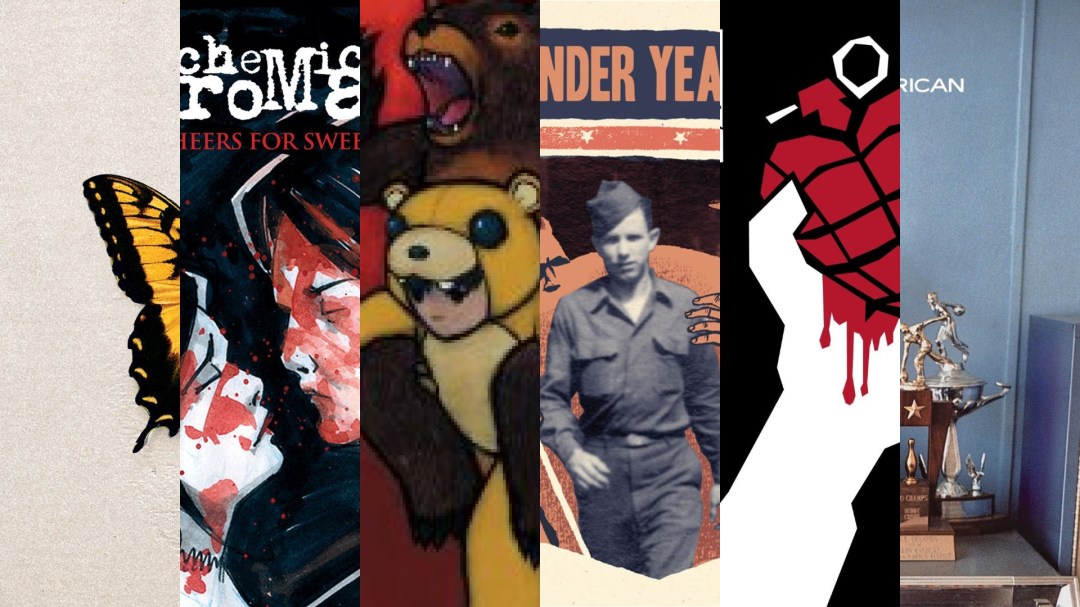
In Defense of the Genre is about celebrating a much-maligned genre, which frequently takes the shape of in-depth personal reflections on songs, albums or bands. But we also want to zoom out a bit every so often, and take a more sweeping look at this music that means so much to us. So here are some of our favourite works in pop punk, ranging from concept-driven rock operas to gag songs about masturbating. This isn’t a list of the best pop punk albums ever, or a primer on getting into pop punk, or even a list of our definitive favourites. But it is a list of albums that we love and wholeheartedly recommend.

Continue reading “I Know I’m Not Your Favourite Record”

The Sundae TV Awards 2018

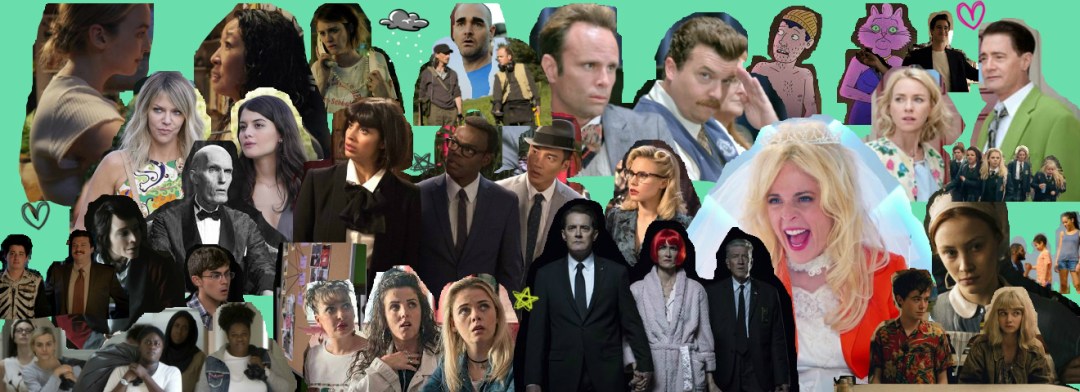
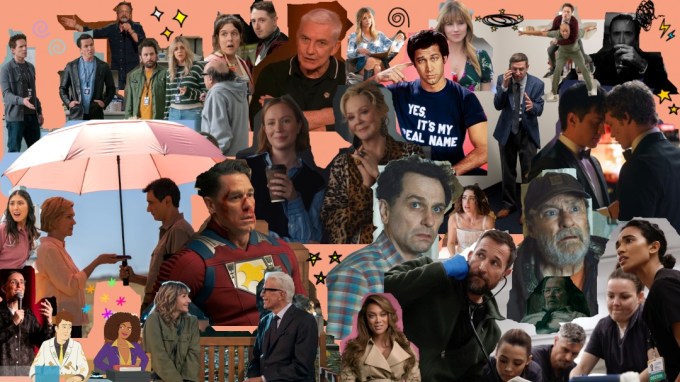
We can’t really claim these are what we think should have been nominated at the Emmys, or should win, since there’s an impossible amount of television to watch in the world. But if we were the only two members of the Television Academy and we could nominate any TV that aired in the most recent television season (from June 2017 to May 2018), and we only cared about the seven major awards in drama and comedy, this is what you’d get.

We didn’t distinguish between limited series and other drama series, since supposed miniseries get second seasons if they’re popular enough (see: Big Little Lies), and regular drama series get rebranded as miniseries when they get prematurely cancelled (see: Dig), while modern anthologies are just regular series that replace narrative continuity with thematic continuity (and some don’t even shed their narrative continuity completely, e.g. American Horror Story, Fargo, Black Mirror). Each of us filled out our personal nominees and then selected the winner by consensus, so the winners only came from shows we’d both nominated, but we’ve each picked a personal runner-up regardless of whether the other has seen or nominated it. We also each gave a Special Achievement Award for something not covered in the major categories – Dean gave the award for Drama, and Ciara gave the award for Comedy.

You can see each of our full slates of nominees at the bottom of the post.

Continue reading “The Sundae TV Awards 2018”

It’s a Little Childish and Stupid, But Then, So Is High School

Here’s a brief cultural history of “the villain is actually right” hot takes, as I understand it. People were like “What if Claudius is the real hero of Hamlet? Makes you think” and it didn’t really stick. Then a couple of hundred years passed and someone pointed out Walter Peck from Ghostbusters was obviously correct to not let the Ghostbusters run a nuclear reactor without permission, and it got clicks, so people were like “I wonder if I can do that with other eighties movies” – haven’t you ever noticed it’s always eighties movies? – and now we live in a world where three people in the comments of an already terrible article about why some eighties bad guys were the secret heroes of their movies suggested Mr Vernon from The Breakfast Club be added.

Just in case you’ve forgotten, this is a man who threatens a teenager with assault before leaving him locked unsupervised in a closet. I understand why unscrupulous click-hungry hucksters publish this rubbish, but the traction it gets online is baffling and a little scary, to be honest. I know that people disregard and even hate teenagers, consistently treating their problems as if they didn’t matter and then acting shocked – SHOCKED, I tell you – when they kill themselves at higher and higher numbers. I know this, I’ve written about it before, I’ll probably write about it again. But, I have to admit, I don’t understand why. I don’t see what anyone gets out of shitting on teenagers except, I guess, the grim, bloodthirsty satisfaction of kicking someone while they’re down. People do like to just hate and hurt other people for its own sake, though they also tend to come up with ad-hoc rationalisations for it, so they don’t have to acknowledge their own sadism. Maybe the reason so many people get older and suddenly start yammering about how the antagonistic authority figures of teen movies were actually the heroes all along is because it lets them tell themselves they’re still the heroes of their own lives, now that they’ve become the villains of their adolescence.

Ed Rooney is not the secret hero of Ferris Bueller’s Day Off.

Continue reading “It’s a Little Childish and Stupid, But Then, So Is High School”

A Mid-Life Crisis in North Dakota

Dennis Reynolds is a bad man. All the characters on It’s Always Sunny in Philadelphia are awful people – it’s kind of the premise of the show – but Dennis still stands apart. Like the rest of the Gang, he’s all narcissism, bigotry, and rage, ready to explode at any moment at anyone he perceives to have crossed him. Once, when a guy called him a narc, Dennis’s revenge was getting the guy to chain himself to a tree overnight during a storm while Dennis slept with his girlfriend, and that’s pretty mild when you’re grading on the Dennis curve of bad behaviour. He’s a prolific rapist, and he might be a serial killer.

He’s also one of the best characters in the history of TV.

Continue reading “A Mid-Life Crisis in North Dakota”