The Best of The Sundae So Far

The Sundae launched seven and a half months ago with a history of the decline of multi-cam sitcoms and a counterpoint to the 89th Academy Awards. Since then, we’ve published a piece a week every week for thirty-two weeks, and this week will be no different, except that it’s completely different, because we’re not publishing a new piece of criticism, analysis or opinion.

We’re taking a week off because, well, we don’t get paid to do this, and we’re both in full-time education, and we both have coursework to do, and we’d rather not write something this week than write something half-assed, rushed or forced. So, instead, we’ve looked back over the past seven and a half months of writing we’ve published and picked our favourite pieces. If you’re a long-time reader, revisit the classics. If you’re a recent reader, catch up on some stuff you might not have read. If you’re a brand new reader, take a crash course in what we’re all about.

Here’s the best of The Sundae so far.

Continue reading “The Best of The Sundae So Far”

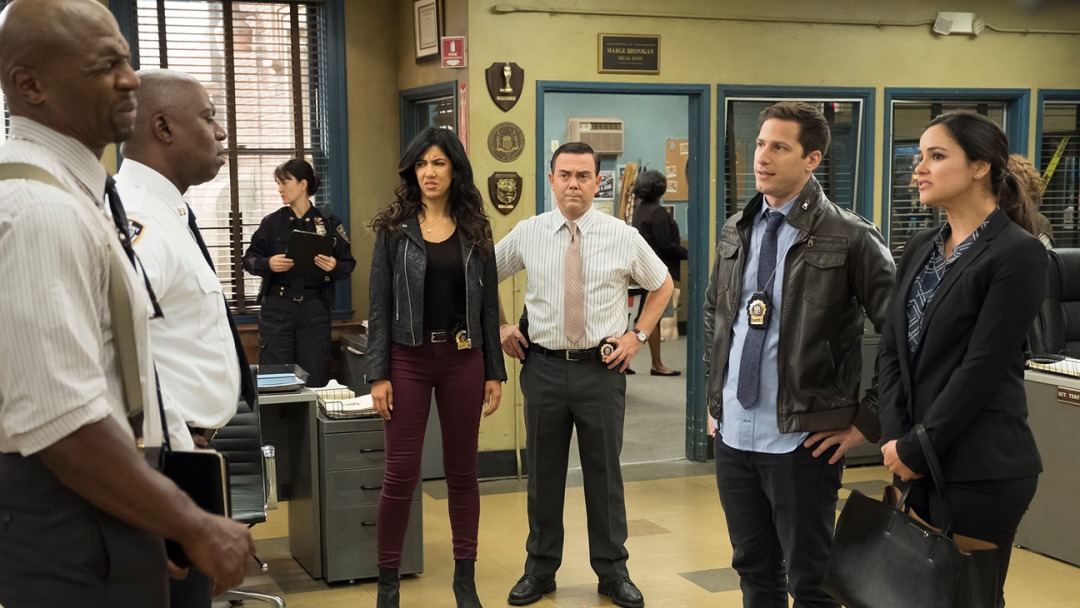
The Rise and Fall of Brooklyn Nine Nine

To love a TV show is to set yourself up for disappointment.

There are exceptions, obviously – Breaking Bad had a pretty much perfect run – but the serialised nature of television means it has infinitely more chances to let you down. Maybe it’ll be cancelled before it’s time. Or worse, maybe it will destroy itself from the inside out. The Simpsons is the greatest TV show ever made, but that fact is obscured now that there are more bad seasons than good. “Classic Simpsons” and “new Simpsons” are fully compartmentalised in my head. It hurts too much otherwise.

But The Simpsons was allowed be good – be great – for nine years. The greatest tragedy, one that seems to be constantly getting worse and puts me off watching new shows, is for a once great show to destroy itself within a year or two, the length of time it used to take a show to figure itself out. There’s more TV than ever now, and the whole cycle moves at double-speed: a show has to find its feet faster to survive, but it also burns out quicker. Crazy Ex-Girlfriend had one my favourite seasons of television ever and then immediately fell apart in season two, True Detective revealed itself to be a bloated pretentious corpse in season two after an acclaimed first season, and Westworld didn’t even make it to the end of its first season before people stopped caring. There are fifteen shows currently on air with eight or more seasons, six of which are procedurals and another four of which are Fox’s animated comedy slate. A show can be long-running and soulless, but it’s telling how few long-running shows there are – how hard it is to sustain a show for that long now.

You’d think the rise of shorter seasons would allow shows to continue on for years longer without burning through as much material – and yet, again and again, once-great shows collapse in what is, to the binge-watcher, a few short hours. The Simpsons had nine great years, but more and more, a show has to be exceptionally sturdy to be good for three or four.  It becomes harder and harder to remember the shape of the show you once loved, because every time you think you catch a glimpse of it, another wave of crap comes along to drown it once and for all.

I really hate Brooklyn Nine-Nine.

Continue reading “The Rise and Fall of Brooklyn Nine Nine”

Duct Tape on Armchairs: Frasier and the Working-Class Sitcom

It’s the golden age of TV.

455 scripted television shows aired in America in 2016 – that’s compared to 192 in 2006. There’s been years of back and forth about whether current TV is the best thing ever – quite possibly the central cultural output of our time – or actually not very good at all, because so-called prestige TV is so often shallow self-serious bullshit. The obvious fact that TV has always been good, and that the “golden age of TV” corresponds only to the rise of paid subscription services (HBO, Netflix, Amazon) and cinematography that made TV look like movies, might be mentioned, but is never of concern. We’ll talk about the fracturing of the television audience – how three of the last five TV seasons had football at the highest rating, because sport is the only thing diverse audiences watch live anymore – but we’ll pretend that it fractures more or less at random, and its only implications are for advertisers.

Continue reading “Duct Tape on Armchairs: Frasier and the Working-Class Sitcom”

Jack of All Trades

“Jack of all trades, master of none” is supposed to describe Master of None’s lead character, jobbing New York actor Dev, not the show itself. And yet.

Master of None has gotten pretty much universal critical acclaim and been nominated for lots of awards, but when you get down to it, it’s a pretty okay show with a handful of very good episodes. I rarely complain about things being derivative, because art being original is less important than its being well-executed, but it’s frustrating to watch Master of None get praised for inventing things that I’ve seen on TV or in movies many times before, from being a romantic comedy where the man has feelings (the works of everyone from Chaplin to Apatow mustn’t count, I guess), to doing a Slacker episode, which I felt like I’d seen a hundred times before and I haven’t even seen Slacker.

Continue reading “Jack of All Trades”

The Last Slapstick Artist

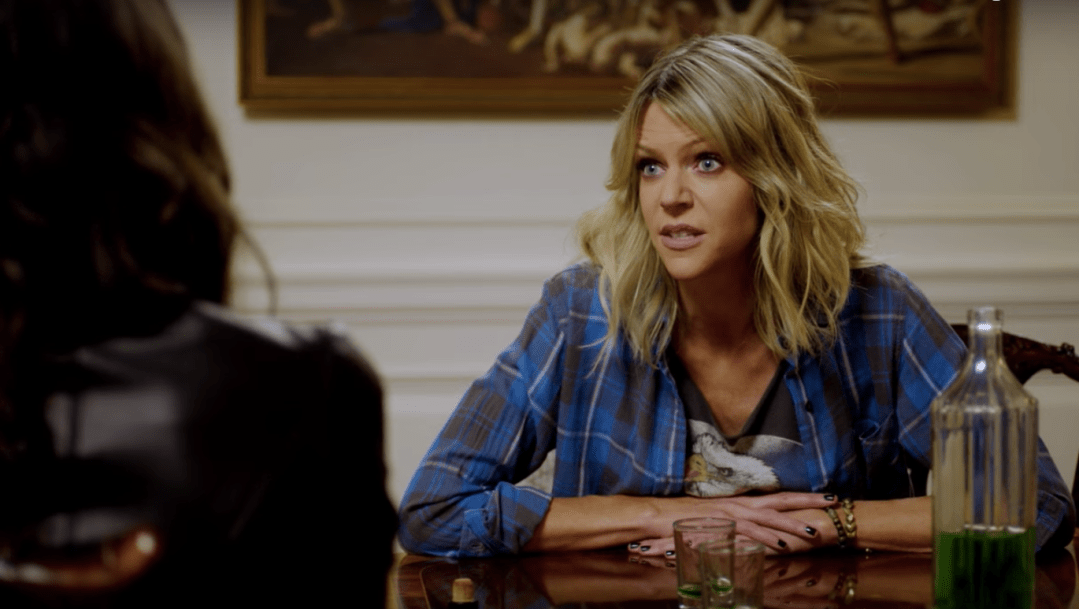
If you know Kaitlin Olson at all, you know her as barmaid and failed actress Dee Reynolds in It’s Always Sunny in Philadelphia, the best show on television. The only comedy actress on television in the same league as Kaitlin Olson is Julia Louis-Dreyfus of Seinfeld and Veep, and in a better world, their rivalry would be the Emmy story of the past six years. We’d all hold our breaths right as they announce who’s won Outstanding Lead Actress in a Comedy Series – is this Julia’s year or Kaitlin’s? Everyone would politely clap for Lena Dunham and Edie Falco and the other nominees, but we’d know it came down to Julia or Kaitlin, and if anyone else won, it would be the biggest upset of the night, like when Jeff Daniels won Outstanding Lead Actor in a Drama Series for The Newsroom, a show that I like way more than the average person and which I would definitely never give an Emmy for anything.

Instead, we’ve had five years of Julia Louis-Dreyfus waltzing away with the award because her one true rival wasn’t there to challenge her.

Continue reading “The Last Slapstick Artist”

the cast of Hamilton

Hamilton Tickets

We live in a time of great crisis and upheaval. The contradictions of the grotesque global atrocity known as capitalism continue to tear holes in the fragile fabric of the post-war liberal consensus that has guided the political culture of the western world for over seventy years. Each tear creates a new opening for resurgent fascists and other far-right extremists, who march openly in the streets of major cities for the first time in decades. The liberal centre offer no resistance to their rise, while conservatives, who have always been craftier and more pragmatic, prove eager collaborators.

After decades of failure by the professional political class, the dispossessed and disenfranchised of the world look elsewhere for solutions, and every attempt by the left to offer a more compelling alternative vision of the world than either the capitalists or the fascists is scuppered either by our own disunity or the constant treachery of centrist elites more afraid of a tax hike than eugenics. Meanwhile, poverty tortures and kills us, and the state tortures and kills us, and we torture and kill each other, and the greatest fear of all is not that some great and terrible calamity will happen, but that nothing will happen at all, and the only future is the violence and oppression of this present moment stretching infinitely forever and ever.

But let’s not talk about any of that today. Instead, it’s time we addressed another plague of modern civilisation, a malady that infects both our artistic and political culture, and threatens to consume everything that lays before it like a horde of rats.

I speak, of course, of the hit musical Hamilton.

Continue reading “Hamilton Tickets”

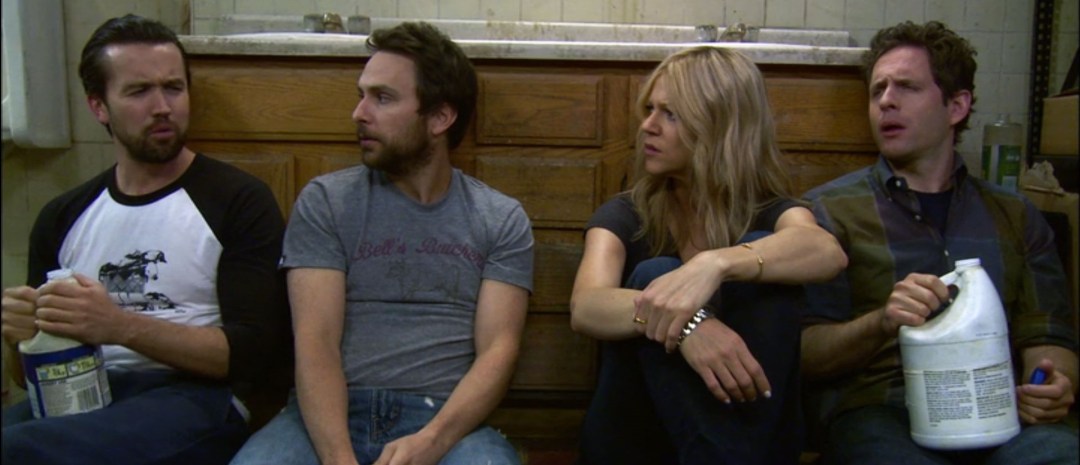
Mac MacDonald, Charlie Kelly, Dee Reynolds and Dennis Reynolds drinking in It's Always Sunny in Philadelphia

The Gang Fights Neoliberalism

American politics, for the past couple of decades up until just recently, has operated on a binary: liberal/conservative. A lot of the time, this leads to weird semantic problems – calling Bernie Sanders “very liberal” when he’s not a liberal at all, calling Donald Trump a conservative when his ideology has very little to do with conservatism  – but the way we talk about ideas informs what ideas become. If you only see things in terms of liberal and conservative, you can deeply misunderstand things happening in front of you. Worse, when you lose the words to describe them, the possibility of other distinct political philosophies can disappear.

South Park is a libertarian show. It’s always been a libertarian show. I find it hard to imagine a show more upfront with its ideology than South Park. Yet there are countless posts and articles debating whether South Park is secretly liberal or secretly conservative, as if it’s secretly anything. Even more bizarre is the common idea that South Park has no ideology at all. Interviews with titles like “Matt Stone & Trey Parker Are Not Your Political Allies (No Matter What You Believe).” Academic articles with titles like “Pseudo-Satire and Evasion of Ideological Meaning in South Park.” If an ideology does not fit within either of the boxes I have in front of me, it must not exist at all.

Continue reading “The Gang Fights Neoliberalism”

Last Man on Earth

The Last Show on Earth

Popular criticism of television is, in many ways, a nascent art form still struggling to grasp a young medium just as it goes through drastic and convlusive changes. Possibly because it has its roots in journalistic practice, it has suffered from one specific and troublesome tendency that is hardly unique to any form of criticism, but seems especially problematic for criticism of a serial art form like television that is typically reviewed episode-by-episode, namely a rush by critics to plant a flag on TV shows as quickly as possible, as if they’re afraid of being scooped on making the definitive statement on what a show is.

Continue reading “The Last Show on Earth”

the set of I Love Lucy

Whatever Happened to Life in Four Cameras?

For over fifty years, since it was pioneered by I Love Lucy, the multi-camera format – three walls, four cameras, taped before a live studio audience – was the beating heart of television comedy. Today, if anyone took a poll of critics, the likelihood of any multi-camera sitcom that debuted after the millennium ranking among the greatest comedies of the century so far would be close to zero.

Continue reading “Whatever Happened to Life in Four Cameras?”