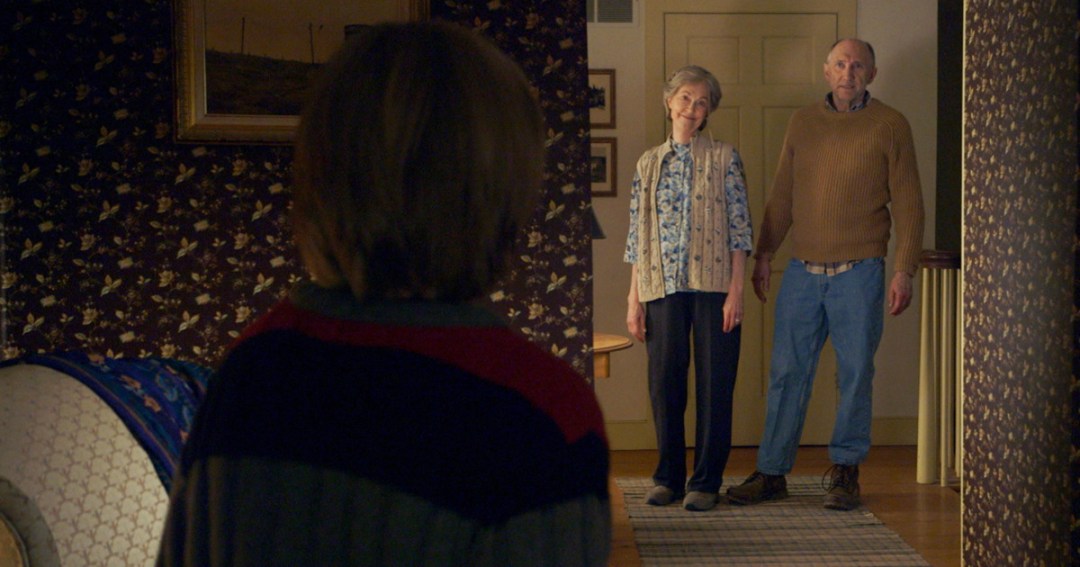
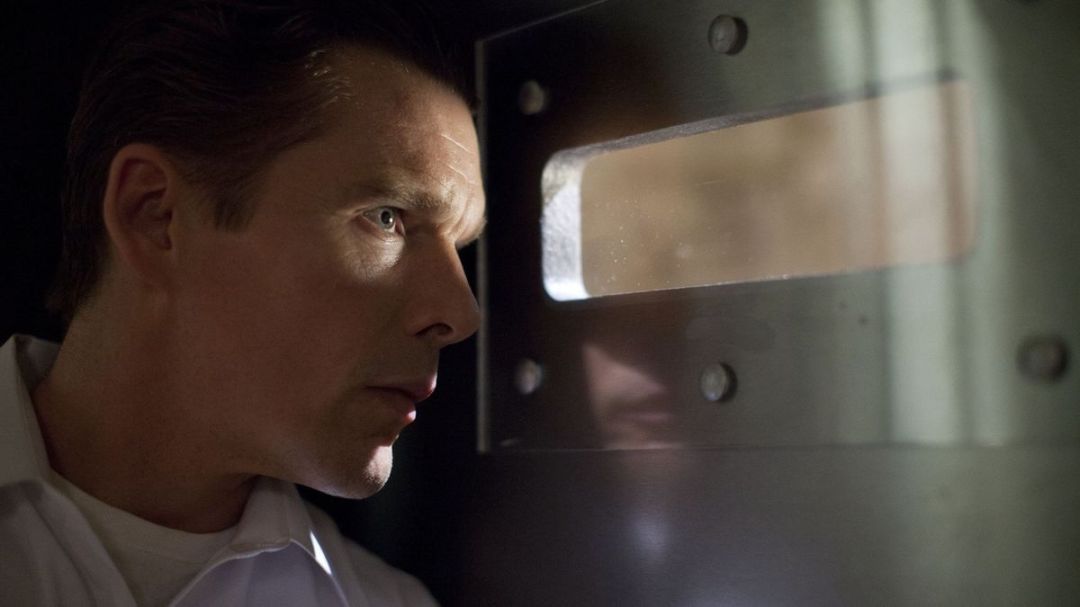
My First Vulnerability is the Last Thing You’ll See

This article is part of the In Defense of the Genre series. Previously, a look at some of our favourite pop punk albums, from the genre’s Big Bang in 1994 through to just before we launched in 2016.


“To get a little academic for a second, the primary emergency of gay history in its first decades was to uncover and to restore histories of gay movements and of gay heroes. And while the culture of academic research has certainly moved on from that, the public conversation really hasn’t.”

– Ben Miller, Bad Gays, Episode 1: “Ernst Röhm”

“be gay, do crimes”

– unknown

Say Anything are a strange band in the history of pop punk, not least because, well, are they a band? Max Bemis, lead singer and sole constant member, wrote all their lyrics and most of their music, and his work is, if not autobiographical exactly, then certainly confessional, in a way that reminds me alternately of Sylvia Plath and Eminem. He mentions people in his life by name in his songs a lot, particularly his wife and children in his later career, and usually without bothering to explain who they are for the unfamiliar listener. But other members of Say Anything have co-written music on most of their records, and many of them just credit Say Anything, rather than breaking down who did what. On the sliding scale between a solo project with a band name and a regular band with a primary songwriter, I tend to file Max Bemis and Say Anything in the same folder as Robert Smith and The Cure, Trent Reznor and Nine Inch Nails or John Darnielle and The Mountain Goats: bands that consist of one person and whoever they’re making music with at the time, too collaborative to be solo projects, but too mercurial to feel like a regular band.

Their sophomore album …Is a Real Boy is widely acclaimed as one of the best pop punk albums of all time and particularly regarded as one of the crown jewels of Bush-era emo, but they’ve pretty much never had a major hit. Not even …Is a Real Boy, which didn’t chart in a year when Blink-182, Green Day, Good Charlotte, Simple Plan, New Found Glory, Taking Back Sunday and even The Offspring (on their seventh album!) made the Billboard Year-End 200. Good Charlotte had two albums on it, and Green Day moved from #86 in 2004 to #2 in 2005 as the worldwide success of American Idiot turned it into one of the best-selling albums ever. My Chemical Romance released their sophomore album, Three Cheers for Sweet Revenge, in 2004 too, and also missed the year-end chart, but in 2005, they joined Green Day in the top 200 with Fall Out Boy, Simple Plan, Good Charlotte, Bowling for Soup and Jimmy Eat World. Say Anything had no such luck.

…Is a Real Boy had by far the biggest single of Say Anything’s career, “Alive with the Glory of Love”, a staple of alternative rock radio then and of alternative rock playlists now, but not a song that caused much of a ripple in the zeitgeist: it peaked at #28 on the alternative chart. Every subsequent Say Anything album has charted, but every subsequent Say Anything album except In Defense of the Genre, their sprawling double album full of collaborations with other pop punk and emo artists, also sold fewer copies than …Is a Real Boy. Almost twenty years later, …Is a Real Boy is still the album they’re primarily or even exclusively known for. They’ve had two other singles chart – “Baby Girl, I’m a Blur” and “Hate Everyone” – but “Alive with the Glory of Love” is still the closest they’ve come to a hit song. It’s not an uncommon story, really, but it just feels kind of ridiculous that a band this influential and iconic within the genre, who’ve collaborated with Gerard Way, Hayley Williams, Tom DeLonge, Matt Skiba and dozens of other beloved pop punk, emo and indie artists, have never really been that popular. It’s not like they’re critical darlings either: the reception for most of their albums after …Is a Real Boy skews positive, but it’s usually mixed and frequently polarised. I guess they’re kind of a love-it-or-hate-it thing, but even Marmite sells, for God’s sake.

…Is a Real Boy is a masterpiece, possibly the best pop punk album ever, and certainly my favourite, but it’s also been a bit of an albatross around Bemis’s neck. A lot of the band’s later experimentation is a fairly transparent effort to escape the shadow of …Is a Real Boy by refusing to even have a core sound. The second verse of “Judas Decapitation”, from their 2014 album Hebrews, is a screed aimed directly at the archetypal bad Say Anything fan who venerates …Is a Real Boy and hates the work the band has done since Bemis became happier, healthier and met his wife, Sherri DuPree of Eisley: “I hate that dude! / now that he’s married / he’s got a baby on the way / Poor Sherri!” Bemis is open about suffering from bipolar disorder and famously experienced a severe manic episode from the stress of making …Is a Real Boy, so there’s always been a dark undercurrent to the idea he needs to “go back” to making albums like it, as if he can’t make good music unless he’s untreated. You can hear the venom in his voice as he spits out the last lines of that verse: “be nineteen with a joint in hand / never change the band / never ever be a dot dot dot real man”, with the “dot dot dot” in the wrong place, just to piss them off even more. It was a bit of a surprise, then, when Bemis announced a sequel.

Oliver Appropriate, released in 2019, is the band’s presumptive final album, released a few months after a lengthy statement in which Bemis came out as queer, revealed he was retiring from touring for health reasons and announced the end of Say Anything as a recording project (though the third paragraph promises they’ll “return one day to play festivals and scoff at our career”.) Like many concept albums, the concept “lore” is almost entirely secondary to the experience – I’ve never read the liner notes of any concept album ever – but unlike, say, The Black Parade or the concept albums of Cursive (one of Bemis’s more transparent non-pop punk influences), it has a fairly clear narrative, even clearer than pop punk’s definitive concept album, American Idiot. Oliver is a washed-up, single, middle-aged, ex-punk rocker punching the clock at a marketing job and spending all his free time and money on drink and drugs, drifting from bar to bar, club to club, party to party, falling into bed at the end of the night with whatever woman will have him.

Then he sees Karl at a bar, and it’s like a bolt of lightning right into the darkest part of his heart, the secret place he’s been hiding his attraction to men from himself and everyone else. It’s a beautiful album about the misery of alienation, the agony of the closet and the thrill of first love. It’s also a very dark horror story: the album ends with Oliver drowning himself in the San Francisco Bay with Karl’s body.

Continue reading “My First Vulnerability is the Last Thing You’ll See”
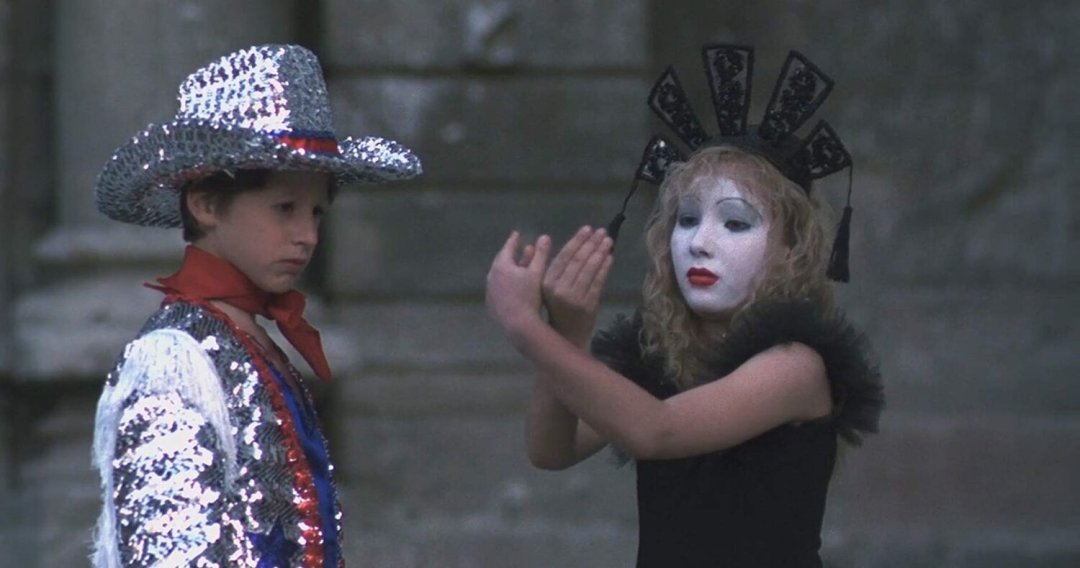
You Should Watch Santa Sangre

Alejandro Jodorowsky’s Santa Sangre is the kind of film that makes you fall in love with cinema. Even though it’s almost exactly two hours, it feels longer – not because it’s dull or slow, but because it’s so full to bursting with different styles, genres and stories that it seems impossible that it could all fit inside a two-hour movie. It’s a four-hour sprawling epic that is somehow, through some kind of time warp, only two hours long.

Continue reading “You Should Watch Santa Sangre”

Make It, Don’t Fake It

Trash Humpers is a difficult film to talk about without people dismissing it as, well, trash. Shot on VHS and edited in part on a pair of VCRs – sometimes blindfolded – it follows an anonymous gang of misfits in rubber old person masks1 as they traipse around Nashville, TN and film themselves doing a bunch of weird shit, like humping rubbish bins. Right from the second shot of the film, they hump rubbish bins, and fences, and trees, and whatever other inanimate objects strike their fancy. (They hire some sex workers at one point, but mainly to play drums on their asses.) It’s vulgar, strange and unsettling. It has less than no plot and almost no sense of linear time: the only thing that suggests any particular order to the events is the fact that some scenes are taped over others. 

“It’s not for everyone” is a cliché and a truism, but the audience of people both able and inclined to enjoy a film like Trash Humpers is vanishingly small. Some of that is the weird sex stuff, sure, but Pink Flamingos features unsimulated blowjobs, sex scenes involving live chickens and a guy who makes his asshole sing “Surfin’ Bird”, and it has a thousand times more popular appeal than Trash Humpers ever could. When we talk about taste in art, I feel like there’s a tendency to try and sort people into “types” or “taste profiles” or whatever. Usually on the basis of genre – the horror fan, the action fan, the romance fan – or, increasingly, based on weird, niche stereotypes like the “IMDb 250 fan” (a subject of derision in many online film communities for reasons that remain unclear to me) or the many varieties of “bro”. But our tastes are a lot more granular, specific and individual than that. I am, in theory, the target audience for a film like Hell or High Water. I love Jeff Bridges, Ben Foster and Chris Pine. I love westerns. The premise – two brothers rob the bank that duped their late mother into getting a reverse mortgage – fits me like a pair of moulded leather gloves. I wish at least 800% more films were about the recession and earnestly believe that movies should depict as many bank robberies as possible. But I don’t like Hell or High Water. It’s not a bad film, and there are lots of things I like about it, but it left me cold in the end. When I look back on it now, my overwhelming memory is how its desaturated colour grading reminded me of watery dilutable orange. It’s simply not to my taste. 

I don’t know if I could ever explain exactly why Trash Humpers appeals to me, but it does. In spite of all the reasons to find it mindless or boring or ugly, I just love this little film. It’s beautiful and funny and scary and moving. It rules. 

Continue reading “Make It, Don’t Fake It”

Notes on The Conjuring

This article is part of the Notes on Failure series, which discusses interesting cinematic failures. Previously, The Last Jedi.

The Conjuring was a smash hit on release in 2013. It tested so well with audiences that Warner Brothers moved its release from the February dead zone to the summer blockbuster season. It was the first horror film to get an A from CinemaScore, who calculate an average score based on surveys of cinema audiences (and have been since 1979). It’s inspired an entire cinematic universe of sequels, prequels and spin-offs, with three more in the works. It was critically praised, too: reviews routinely described it as a classy throwback to films like The Exorcist, a kind of slow-burn horror in marked contrast to James Wan’s directorial debut, torture porn pioneer Saw.  

The problem with this, of course, is that The Conjuring sucks. Here’s why. 

Continue reading “Notes on The Conjuring”

Don’t Tell Mama: Women’s Body Horror in Sharp Objects

Body horror is a genre characterised by what Ronald Cruz calls the “manipulation and warping of the normal site of bodily form and function”. It is a genre which unsettles us through its disregard for the human body as it assaults audiences with distortions of the familiar sights, sounds, movements, and functions of the body. Throughout the eight episodes of HBO’s gothic thriller Sharp Objects (2018), there is a growing unease regarding the body which erupts in moments of supreme shock and disgust. The three central characters – Camille Preaker, her mother Adora and sister Amma – all display the genre’s “gruesome disregard for the human body” in various ways as they exist within the narrow confines of femininity permitted in the small town of Wind Gap, Missouri. The female body in Sharp Objects is the site of the series’ most shocking moments of horror and the driving force of the entire mystery plot: the horror it endures and produces is the horror of the series.

Continue reading “Don’t Tell Mama: Women’s Body Horror in Sharp Objects”

You Should Watch More Short Films

Tragically, since I last broached the subject, the world hasn’t responded to my plea to watch more short films. “Dining Room or There Is Nothing” hasn’t taken the Internet by storm, the commentariat has yet to return the great “Chaplin/Keaton/Lloyd” debate to its rightful place at the heart of public discourse, and no one in my life has bought a boxset of subtitled Jan Švankmajer films I can borrow. I have no one to talk to about that Scott Barley short, “Hinterlands”, and how I think it’s good, but I feel desensitised to it because the colour palette reminds me too much of elements of the YouTube found footage horror series Marble Hornets.

All I can do is try again. I’ve tried a more populist approach this time: we’ve got a war movie and some horror films, a lovely sentimental children’s film and a cute little rom-com, a couple of animated classics and one of Martin Scorsese’s least Jesus-y films. (In the interest of clarity: I like my Scorsese Jesus-y. I recognise that I’m in the minority on this.) And if this doesn’t work, I’ll just have to go hard experimental for the next round.

Here’s another ten short films – covering seventy-odd years – that you should watch.

Continue reading “You Should Watch More Short Films”

In a Mirror, Grimly

When historians look back on the horror cinema of the 2010s, Mike Flanagan will undoubtedly be considered one of the decade’s most influential filmmakers. Though he lacks a distinct breakout hit, Flanagan has quietly built a reputation as one of the finest directors working in horror today, and if 2017’s Gerald’s Game isn’t considered the best of the recent glut of Stephen King adaptations, it’ll only be because he outdid himself with Doctor Sleep, his upcoming sequel to The Shining.

Flanagan’s first success, the film that made him a director to watch, was 2013’s Oculus, and, for my money, it’s still his best work. Tim Russell (Brenton Thwaites) is released from the psychiatric hospital where he’s lived since the deaths of his parents: the official version of events is that Alan, his abusive father, killed his wife, Marie, and was about to kill his children before Tim shot him in self-defense. Years of therapy have convinced Tim of the official story, but his sister, Kaylie (Karen Gillan), is not so persuaded. She uses her job at an auction house to get her hands on what she believes was the true cause of their parents’ deaths: a cursed mirror called the Lasser Glass with a long history of death in its wake. She invites Tim back to their childhood home to document the mirror’s deleterious effects on the human mind, prove the innocence of both Tim and her father, and then destroy it.

Suffice it to say, despite Kaylie’s extensive precautions (three cameras filming the mirror at all times, temperature monitors in every room to detect paranormal activity, alarms to remind her and Tim to eat and, most famously, an anchor suspended from the ceiling that will smash the mirror if a manual timer isn’t reset every thirty minutes), things don’t go according to plan. The mirror can completely warp human perception, even erase memories. In one of its simplest but most effective gotchas, Kaylie takes a bite from an apple, only to see the mirror has tricked her into eating a lightbulb, which then immediately turns back into an apple. Though broadly well-received, a small but vocal minority criticised the films’ ending, which leaves the viewer completely uncertain which of the film’s events, if any, actually happened. But I have the answer.

None of it actually happened. It’s a movie.

Continue reading “In a Mirror, Grimly”

What is Beyond the Frame

M. Night Shyamalan knows that you know who he is – or, at least, that you think you do. He’s the twist guy! His early work, particularly The Sixth Sense and Unbreakable, received such acclaim that Newsweek declared him “The Next Spielberg” in a cover story published three days after the release of Signs. It’s a cliché of latter-day Shyamalan coverage to contrast this praise with the direction of his subsequent career, as the diminishing returns on his work turned him from wunderkind to has-been.

He’s since made a proper comeback, with the runaway success of Split, which sucks, but back in 2015, he was still a joke. A literal punchline, a memetically bad writer and director, whose most recent movie, After Earth, was a sterile, indulgent pile of crap based on an idea by star Will Smith, operating at the height of Smith’s ego. His previous three films – Lady in the Water, The Happening and The Last Airbender – regularly appeared on lists of the worst films ever made. But, most importantly, he was the twist guy. So the story goes, he got so much praise for the genuinely brilliant twists of his early work that he couldn’t stop chasing the same high, trying to outdo himself with each film. It doesn’t matter that this isn’t true – it’s astonishing how many people have made fun of the twist in The Happening, a film that does not have a twist – because it quickly became the totalising narrative of his career. Particularly on the Internet, his shittiness and this specific explanation for his shittiness became the conventional wisdom, in much the same way that memes and groupthink convinced people Nicolas Cage is one of the worst actors in the world, rather than the best of his generation.

M. Night Shyamalan is the twist guy. Except he’s not. But he knows you think he is. So, back in 2015, he decided to play a prank on everyone. It’s called The Visit and it was his best film in fifteen years, so obviously it got wildly mixed reviews. People’s brains just go all wobbly when it comes to this guy, for some reason.

Continue reading “What is Beyond the Frame”

Things Like This Are Not Supposed to Happen in Our Neighbourhood

The Purge franchise is one of the stranger phenomena in modern popular cinema. Its financial success is unsurprising – it is virtually impossible not to profit on a wide-release horror film – but it receives constant commentary far outstripping its popularity. All but one installment of the Insidious franchise, Blumhouse’s other four-film horror series, outperformed the corresponding installment of the Purge franchise by a significant distance, but barely made a blip in the cultural discourse. There’s just something about The Purge that inspires furious fits of hot-takery.

Obviously, part of what makes it such a popular topic is that it’s just about as overtly political as horror comes. No one needs to tease out subtext when they’re writing about The Purge, because there is no subtext. Everything is helpfully signposted by the filmmakers. The official rationale for the Purge – a 12-hour period every year when all crime, including murder, is legal – is that it promotes social harmony by giving everyone a sanctioned time and space to “purge” their negative feelings. They credit the Purge with producing extremely low crime and unemployment rates, less than one percent, and they’re right to do so. But it’s not because everyone’s working out their anger issues by murdering each other. It’s because the wealthy are able to fortify their homes to protect themselves from the Purge, while the poor are not only without protection, but actively hunted by the wealthy, who can also afford to arm themselves better than the poor. Every year, rich people spill into the streets of this dystopian future America and murder the impoverished and vulnerable en mass. It’s not psychology, it’s eugenics. The Purge could let you work this out on your own, but it doesn’t want to leave any ambiguity, so the first film is peppered with news reports where this point is made explicitly. Lots of reviewers criticised the lack of subtlety: we get it, we get it. The Purge is about class warfare.

Except it’s not. Not really.

Continue reading “Things Like This Are Not Supposed to Happen in Our Neighbourhood”