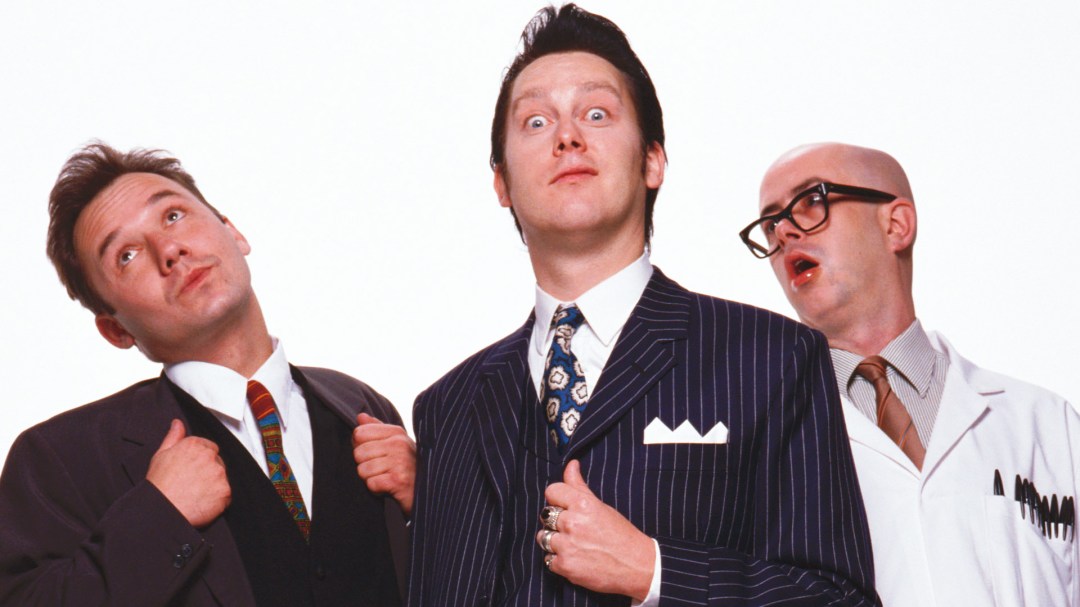
You Should Watch Vic Reeves Big Night Out

One of the most common refrains about Peak TV is that the sheer volume of television produced means there are more weird, interesting, niche shows getting made. If there’s more stuff getting greenlit, there’s a better chance of something outside of the box getting greenlit, not because the gatekeepers are more interested in broadcasting that kind of show, but because they have to cast a wider net to keep up with the demands of just how much original programming they’re pumping out despite previously being able to fill out their schedule with reruns of Rules of Engagement. This is true, up to a point. But for all the weird, interesting, outside-of-the-box shows being made in the last few years – Lady Dynamite, Legion, The Young Pope – none come close to Vic Reeves Big Night Out.

Vic Reeves Big Night Out – no apostrophe, no colon – aired two seasons on Channel 4 in 1990 and 1991. The first television outing for the double act of Vic Reeves and Bob Mortimer, it’s a parody of light-entertainment variety shows, with Vic in the role of host and Bob playing a variety of characters. It might sound like Big Night Out could bend into some familiar shapes – that it would seem recognisably like a light-entertainment variety show, like if you were flicking through the stations it would take a minute or two to realise it’s not. But Big Night Out is one of the weirdest shows I’ve ever seen. It’s a masterpiece of surreal comedy that makes most surreal humour look mundane.

Continue reading “You Should Watch Vic Reeves Big Night Out”

You Should Watch More Short Films

Tragically, since I last broached the subject, the world hasn’t responded to my plea to watch more short films. “Dining Room or There Is Nothing” hasn’t taken the Internet by storm, the commentariat has yet to return the great “Chaplin/Keaton/Lloyd” debate to its rightful place at the heart of public discourse, and no one in my life has bought a boxset of subtitled Jan Švankmajer films I can borrow. I have no one to talk to about that Scott Barley short, “Hinterlands”, and how I think it’s good, but I feel desensitised to it because the colour palette reminds me too much of elements of the YouTube found footage horror series Marble Hornets.

All I can do is try again. I’ve tried a more populist approach this time: we’ve got a war movie and some horror films, a lovely sentimental children’s film and a cute little rom-com, a couple of animated classics and one of Martin Scorsese’s least Jesus-y films. (In the interest of clarity: I like my Scorsese Jesus-y. I recognise that I’m in the minority on this.) And if this doesn’t work, I’ll just have to go hard experimental for the next round.

Here’s another ten short films – covering seventy-odd years – that you should watch.

Continue reading “You Should Watch More Short Films”

You Kill That Man, You Die Next

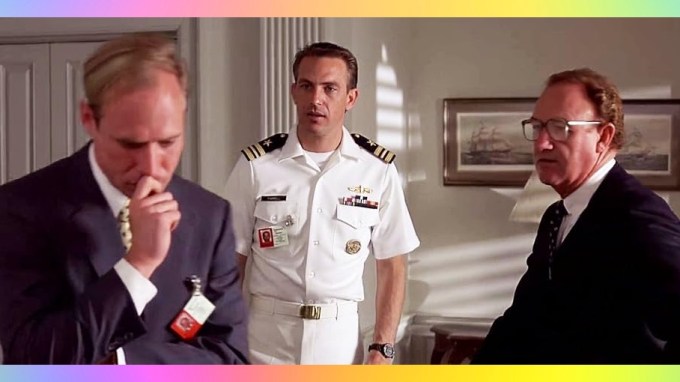
In the largely forgotten 1994 film Sleep with Me, Quentin Tarantino shows up for one scene to explain the gay subtext of Top Gun. “It’s a story about a man’s struggle with his own homosexuality,” he says, explaining that Maverick is torn between “the gay way”, represented by Val Kilmar and the fighter pilots, and heterosexuality, represented by Kelly McGillis. “The more he talks, the more plausible his theory sounds,” Roger Ebert wrote in his review. By the end of the scene, initially sceptical Todd Field is enthusiastically on-board.

Despite gay subtext’s long history in literary studies, it’s recently gotten a bit of a bad rap, in part due to the over-extension of the term queerbaiting. Queerbaiting, a fandom-coined term, refers to media, usually in serial formats like TV shows, teasing characters as LGBT or forming same-gender relationships in order to pander to LGBT fans but with no intention to follow through. Queerbaiting is definitely a thing that has happened on occasion – the TV show Supernatural, mostly – but it’s a term without nuance or historical root, that requires both projecting intent on the creators and flattening the relationship between subtext and text into a simple dichotomy.

But the relationship between gay subtext and overt gay text is complex and contingent. When Moonlight won the Oscar for Best Picture, many news outlets called it the first LGBT winner, and it made me feel vaguely uneasy. It is true, in some sense: there definitely hadn’t been a Best Picture winner that portrayed gay relationships as openly as Moonlight. But is Midnight Cowboy an LGBT film? Many of these articles rationalise that it is not because Joe (Jon Voight) only has sex with men for money, but that’s equally true of Keanu Reeves’s character in My Own Private Idaho, often listed as an unfairly snubbed LGBT film in these same articles. In one scene, Joe is unable to get an erection when with a female client, so they play Scribbage, and when Joe can’t think of a word with Y in it she suggests “gay”: “Is that your problem, baby?” The relationship between Joe and Ratso (Dustin Hoffman) is one of intimate partnership: I think often of Joe wiping Ratso’s face with his shirttail and Ratso clinging to his bare belly. Hoffman asked director John Schlesinger (a gay man) why they weren’t sleeping in the same bed, and Schlesinger said, “Oh God! Please! It was hard enough to get the financing.” After Midnight Cowboy was awarded Best Picture in 1970, John Wayne infamously called it “a story about two f*gs” and a “perverse movie”.

A decade earlier, Biblical epic Ben-Hur won Best Picture, into the screenplay for which Gore Vidal had consciously written a homoerotic subtext. A decade before that, All About Eve won, a film that only makes sense if Eve is a lesbian. (All About Eve has been criticised for homophobia while simultaneously achieving cult status among gay audiences, in no small part due to Bette Davis’s fabulousness.) At the very first Oscars in 1929, one of two Best Picture awards was given to Wings, the first film to portray a man kiss another man on the lips, accompanied by the title cards, “You – you know there is nothing in the world that means so much to me as your friendship” and then, “I knew it – – all the time – – ”

But whether a film has a gay subtext is ultimately a question of whether the viewer can make a legitimate case that it does. Something doesn’t have to be widely agreed to be present in a film for it to be present. Three years after John Schlesinger couldn’t have two men share a bed in Midnight Cowboy, Charlie (Harvey Keitel) and Johnny Boy (Robert De Niro) share a bed in Mean Streets, a film almost no-one thinks has a gay subtext. But as one of those few and proud: the film cuts from Charlie and Johnny in bed together to Charlie sleeping with his girlfriend, in a kind of displaced homoeroticism. Later, there’s a scene where two gay guys get into the car with Charlie and his friends, and it’s a bizarre, meaningless and pretty homophobic detour unless you think that the guy flirting with Charlie has clocked him – LGBT people recognise each other in a way cis straight people do not – and Charlie’s discomfort is his unease with his own sexuality.

It can be easier to make the case for the homoerotic undercurrents of Midnight Cowboy or Ben-Hur because we know that people involved in their production were LGBT – John Schlesinger and Gore Vidal, respectively – but meaning exists in the piece of art itself, it is not just injected into it from its surrounding context. If a higher burden of proof is placed on gay readings than on other interpretations, it eliminates the possibility of stories from the closet – whether that means art about closeted characters, or art that is itself closeted. It’s rooted in the assumption that all people are straight until they disclose otherwise, and cuts the contemporary moment off from all historical precedent. It paternalistically reduces the glint of recognition in the eye of the LGBT audience to being hoodwinked.

“You can watch any movie, and it doesn’t matter what the director was thinking, or what the people making the movie was thinking, if you can make a case for it, you can lay in a subtext into a film, make it a… much more enjoyable way to watch the film,” Quentin Tarantino told Craig Ferguson in 2010, “Like gay subtext! Gay subtext for instance. Always makes every movie better.”

Which brings us to Reservoir Dogs.

Continue reading “You Kill That Man, You Die Next”

Deconstructing Louis CK, Part 2

Read Part 1, on the fraught expectations around reexamining the artistic works of bad people, here. 


“There were some changes in how certain shows are classified this year. For example, Orange is the New Black is now technically a drama, while Louie is now technically jazz.”

– Andy Samberg, 2015 Emmys Opening Monologue

The word “innovative” is thrown around a lot in contemporary cultural criticism. It’s hard to say why, though I have some theories: a lack of historical literacy, particularly with younger critics; an increase in critics, especially reviewers and recappers, using broad language and easy shorthand due to the punishing deadlines demanded by a hectic 24/7 online publishing environment; a growing tendency towards a mindset of critic-as-advocate in a crowded pop culture marketplace, which encourages critics to overstate the virtues of works of art they want to support in the hopes it will persuade more of their audience to give them a shot. Probably there are other reasons, but I like my theories because of all the first-hand evidence I have. I’ve called movies and TV shows innovative out of ignorance, expedience and a desperate want to convince other people to like the things I like so I have someone to talk about them with. Sometimes the truth – that something is “merely” fresh, interesting or novel – can seem a bit lacklustre. But “innovative” is a word with some heft behind it: not just new, but so new it represents a major break with the old way of doing things.

But artistic innovation is rare, and only gets rarer the longer a medium is around. Every medium has its limits, and while its early days will be a flurry of invention as artists create the basic vocabulary of material, structure, form, etc. eventually most things an artist can possibly do with paint on canvas or light on film will have already been done. Irmin Roberts, an uncredited second-unit cameraman (or cinematographer, sources vary), invented the dolly-zoom in 1957 during the making of Vertigo, and that was the first and last time a dolly-zoom was innovative. People have used them in new and interesting ways since then – the reverse dolly-zoom from Goodfellas melts my face off to this day – but it was innovative once. It opened up the medium to new possibilities once.

Maybe this seems pedantic, and it would be if “innovative” was a perfect synonym for “fresh” and “new” and “original”, but the concept of innovation is an extremely loaded one. It’s no surprise the term has grown in use over the last few decades given the valorisation of “innovation” spread by Silicon Valley and its pantheon of “visionary geniuses”, each as mythical as the last. But it’s exactly in that source we should see the danger in throwing it around so loosely. Technological innovations are constantly credited in the public imagination to people who did not create them, treated as the breakthroughs of singularly brilliant minds whose sole role, very often, was owning the companies where the workers who actually created the innovations were working at the time. Even to credit those workers is usually too simplistic, because their breakthroughs are frequently just the final step in a years- or even decades-long process of inquiry, research, design, testing, etc. that likely involved dozens if not hundreds of people who deserve recognition for their contributions. But they don’t get it. Even the one who makes that final jump doesn’t get it. Irmin Roberts invented the dolly-zoom and he doesn’t even have a Wikipedia page.

The word “innovative” is thrown around a lot in contemporary cultural criticism, and it wigs me out. It’s such a bold claim to make: not just something you’ve never seen before, but something no one has ever seen before. And even when you’ve correctly identified something as innovative, if you’re not careful, you can credit it in such a way as to bury the contributions of people without whom it would not exist. It’s not a word to be used lightly, not when criticism is often where the history of an art form – or at least the dominant narrative of that history – is written.

Let’s talk about Louie.

Continue reading “Deconstructing Louis CK, Part 2”

Deconstructing Louis CK, Part 1

For the last several years, an increasing number of celebrities and other powerful figures – mostly but not exclusively men – have been exposed for sexual assault and harassment. People call it the #MeToo “moment” and it’s fair to say the outing of Harvey Weinstein as a serial sexual predator in the pages of the New York Times and New Yorker was a kind of tipping point. But it was a tipping point in a trend that’s been growing for years and many of the people exposed since Weinstein are people whose behaviour were the stuff of rumour for a while before. Sometimes, people ask me why I’m so willing to believe accusers when they speak out when it’s all just “he said, she said”, and there are a lot of reasons, but one is definitely that I’d been hearing things about several of the people recently exposed years before anyone came forward. I’m not some celebrity insider or anything. I’m just some guy from a small town in Ireland who’s never met a famous person I couldn’t fail to make small talk with before falling completely silent and walking away mumbling to myself, as Father Ted’s Ardal O’Hanlon could attest if our encounter in a pub in Galway had been memorable in any way whatsoever. I’m not connected. But if someone had asked me to name sexual predators in Hollywood a year before the Weinstein story broke, I could have named at least a few of the men whose crimes were about to be dragged into the light: Bryan Singer, John Lasseter, Louis CK.

These past few years have raised a lot of challenging questions about how to relate to artistic works made, at least in part, by sexual predators. I’ve written about some of these questions before, and I will probably write about them again in the future. They’re not questions with easy, straightforward or final answers, if they have answers at all. An argument that might persuade you in one case could fail in another: when people say Woody Allen’s movies are inseparable from the man and his crimes, something about it just rings truer to me than when people say the same about the songs of Brand New, whose lead singer Jesse Lacey admitted to sexually exploiting teenage girls while he was in his twenties, and it’s hard to pin down why. Why can I listen to Brand New without guilt but just the thought of listening to Lostprophets, whose lead singer Ian Watkins is a convicted child rapist, turns my stomach? Why do Lostprophets songs turn my stomach when I was recently able to watch multiple episodes of Glee starring Mark Salling, who plead guilty to possessing child pornography before hanging himself, with minimal discomfort? The details differ, obviously, but all four of these men hurt children. What makes me want to take back Brand New’s music from its association with Jesse Lacey but not Lostprophets’ from Ian Watkins?

I’m not sure and may never be. Certainty may not even be the point. Perhaps constantly questioning ourselves and our judgement is the response these issues require. Not to the extent that we suspend judgement indefinitely and let ourselves off the hook from making decisions, obviously, but maybe a satisfying answer shouldn’t be the goal.

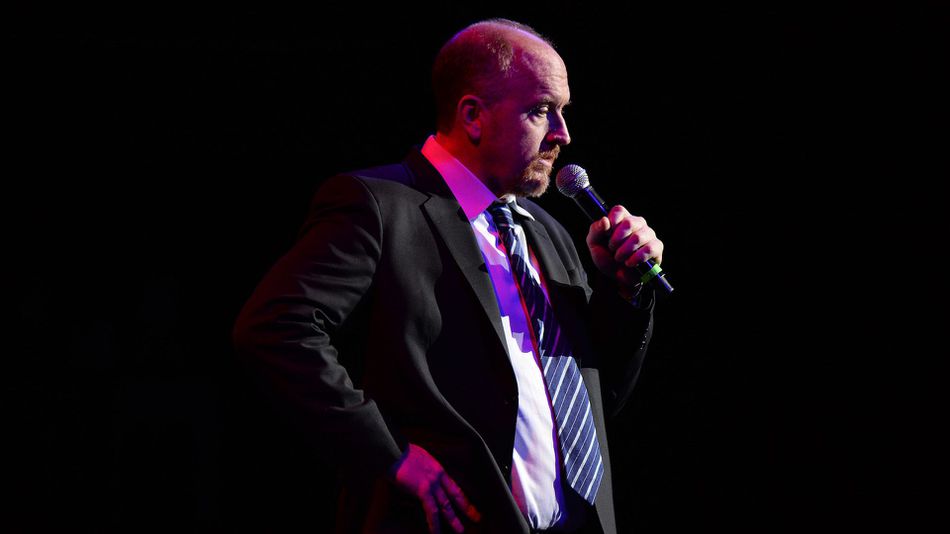
Let’s talk about Louis CK.

Continue reading “Deconstructing Louis CK, Part 1”

Rape Jokes: The Michael Scott Story

The American version of The Office is a much lighter, goofier show than its BBC counterpart. Ricky Gervais’ and Stephen Merchant’s original show is cynical and essentially misanthropic, such a pure distillation of cringe comedy that it’s uncomfortable to watch. Although the NBC version started as an almost beat-for-beat remake, it quickly became a radically different show: warm and pleasant, with characters who seem like nice people. The BBC show is painful, exquisitely so; the American remake is a go-to comfort show for many.

So it’s kind of weird that it’s in the American version that the main character gets raped.

Continue reading “Rape Jokes: The Michael Scott Story”

In a Mirror, Grimly

When historians look back on the horror cinema of the 2010s, Mike Flanagan will undoubtedly be considered one of the decade’s most influential filmmakers. Though he lacks a distinct breakout hit, Flanagan has quietly built a reputation as one of the finest directors working in horror today, and if 2017’s Gerald’s Game isn’t considered the best of the recent glut of Stephen King adaptations, it’ll only be because he outdid himself with Doctor Sleep, his upcoming sequel to The Shining.

Flanagan’s first success, the film that made him a director to watch, was 2013’s Oculus, and, for my money, it’s still his best work. Tim Russell (Brenton Thwaites) is released from the psychiatric hospital where he’s lived since the deaths of his parents: the official version of events is that Alan, his abusive father, killed his wife, Marie, and was about to kill his children before Tim shot him in self-defense. Years of therapy have convinced Tim of the official story, but his sister, Kaylie (Karen Gillan), is not so persuaded. She uses her job at an auction house to get her hands on what she believes was the true cause of their parents’ deaths: a cursed mirror called the Lasser Glass with a long history of death in its wake. She invites Tim back to their childhood home to document the mirror’s deleterious effects on the human mind, prove the innocence of both Tim and her father, and then destroy it.

Suffice it to say, despite Kaylie’s extensive precautions (three cameras filming the mirror at all times, temperature monitors in every room to detect paranormal activity, alarms to remind her and Tim to eat and, most famously, an anchor suspended from the ceiling that will smash the mirror if a manual timer isn’t reset every thirty minutes), things don’t go according to plan. The mirror can completely warp human perception, even erase memories. In one of its simplest but most effective gotchas, Kaylie takes a bite from an apple, only to see the mirror has tricked her into eating a lightbulb, which then immediately turns back into an apple. Though broadly well-received, a small but vocal minority criticised the films’ ending, which leaves the viewer completely uncertain which of the film’s events, if any, actually happened. But I have the answer.

None of it actually happened. It’s a movie.

Continue reading “In a Mirror, Grimly”

The Best of The Sundae #3

It’s been a banner year for The Sundae and we’re only halfway through. We got a shout out from Todd in the Shadows, took the New Zealand drag community by storm and did an objectively better job of rewarding the best films of 2018 than the Oscars by sheer virtue of not nominating Bohemian Rhapsody for anything. We also wrote some really good shit. And, for the first time ever, our best-of round-up contains two pieces from a pair of fantastic guest contributors.

So, if you’re a long-time reader, revisit some of our greatest hits. If you’re a recent reader, catch up on some stuff you might have missed. If you’re a brand new reader, take a chance on something a little different. And, if you like what you see, drop a tip in the jar so we can continue our mission of publishing independent cultural criticism unbeholden to the hot take cycle, and destroying the Walt Disney Company.

Here’s the best of The Sundae so far. Again. (Again.)

Continue reading “The Best of The Sundae #3”

Double Features #3: Partners in Theme

This article is part of the Double Features series, which pairs great films that go great together. Check out previous installments here and here.


The best way to learn about films, in my experience, is to watch a lot of films. Duh, I know. But every film you watch teaches you how to watch the next. One of the good things about double features is that watching films together can illuminate both, each teaching you how to watch its partner. Here are five pairings that clarify genre focus, help to situate each other in history and otherwise enrich each other, both as films and as guides to future films.

Continue reading “Double Features #3: Partners in Theme”

Cancelled Too Soon: One Mississippi

This article is part of the Cancelled Too Soon series. Previously, Manhattan.


One Mississippi is a semi-autobiographical sitcom that debuted on Amazon in 2016, based on and starring comedian Tig Notaro, who catapulted to fame when Louis CK commercially released an impromptu stand-up set she performed just after receiving a breast cancer diagnosis. Notaro plays a talk radio host called Tig Bavaro, who similarly develops breast cancer and loses her mother within a few months. While in her hometown of Bay St. Lucille, Mississippi following her mother’s funeral, Tig records her radio show with local producer Kate, with whom she develops a mutual attraction, even though Kate is ostensibly straight. (Kate is played by Notaro’s real wife Stephanie Allynne. They met while shooting a movie and Allynne did not date women before Notaro.) Tig gets a stomach infection that nearly kills her and requires a faecal transplant to treat. She has a brother with a French first name (Renaud/Remy) and a very reserved stepfather she has trouble connecting with. All of this is lifted from Tig Notaro’s life, albeit with names changed, events moved around in time a little and more dramatic character arcs.

But, so far as Notaro has said, the central dramatic fact of One Mississippi is fiction: Tig Bavaro was sexually abused by her grandfather as a child. It’s not the only thing the show is about, by any means, but it’s the axle the central story revolves around, the source of the core dramatic conflicts in the Bavaro family. Tig’s grief and illness are just a starting point – the narrative arc of the show’s two seasons is about sexual abuse and rape culture more generally, and each season ends with Tig taking a step towards processing her feelings about it. One Mississippi received widespread critical acclaim, and rightly so, with much of the praise, especially for season two, directed towards its portrayal of sexual violence and how society enables it.

It’s a very dry, very funny show, even with its often-dark subject matter, but it’s not a black comedy. Tig sometimes makes blackly comic jokes, and there are a couple of Scrubs-esque imagination spots that go very dark, but the tone of the show is mostly pretty relaxed and light, even if there’s narrative tension building up under the surface at all times. When it swings into the dramatic, you feel the shift, you know it’s accelerating, but its resting speed is a nice, gentle hum. I’ve rewatched One Mississippi from start to finish several times and I just enjoy it more and more. It’s somehow both a fun, easy watch and a show that makes me cry several times per season.

One Mississippi was cancelled after its second season in galling circumstances.

Continue reading “Cancelled Too Soon: One Mississippi”