How South Park is saving free speech in America

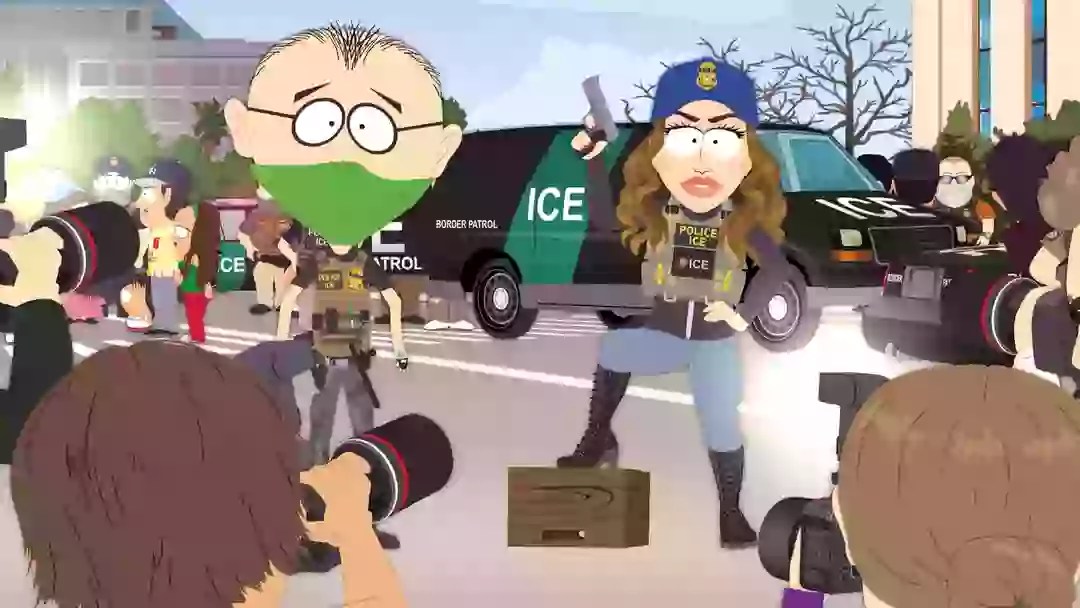
I was on the latest episode of the podcast The Bunker: News Without The Nonsense to discuss the new season of South Park, its criticism of Trump, and the show’s shifting place in the US culture wars. Listen below:

How South Park is saving free speech in America The Bunker – News without the nonsense

You can also find it on SpotifyApple, or wherever you get your podcasts.

If you want more of my South Park takes, check out this article I wrote for Current Affairs in 2023. An extract to whet your appetite:

In 2017, the two-headed monster of Donald Trump’s inauguration and South Park’s 20th anniversary prompted much hand-wringing over the show’s legacy. In the post-2016 rush to point fingers, a cartoon about the adventures of some potty-mouthed 8-year-old boys was made to bear at least some of the blame. Dana Schwartz tweeted that it was impossible to overstate the cultural damage of South Park’s portrayal of “earnestness as the only sin” and mockery as “the ultimate inoculation against all criticism”—and then, her point seemingly proven, she was descended on by trollsSouth Park didn’t invent the alt-right, Sean O’Neal wrote for The AV Club, “but at their roots are the same bored, irritated distaste for politically correct wokeness, the same impish thrill at saying the things you’re not supposed to say, the same button-pushing racism and sexism, now scrubbed of all irony.” For Lara Zarum in The Village Voice, the show’s misogyny—the creators “never seem content just to make fun of women; they relish sexually humiliating them, too, all while shunting the show’s female characters, young and old, to the maddeningly familiar role of disapproving nag”—is deeply tied to Hillary Clinton’s election loss. 

The consensus that seemed to calcify was that South Park’s corrosive influence on popular culture raised a generation of nihilistic trolls that revived American fascism for the lulz. At best, it inculcated a wilful apathy, political and otherwise. According to Lindsay Ellis, South Park creators Trey Parker and Matt Stone spent the whole 2000s “explaining that things were fine actually, both sides bad”: both symptomatic of, and feeding into, a wider apathetic cultural attitude towards social injustice in the 2000s. As Schwartz outlines, South Park has always skewered “both the left and the right—and anyone who believed in anything—as equally ridiculous. The smart people were those detached enough to know that everyone was full of it.”

There is some ring of truth to all this. The best of these critiques—like Zarum’s or O’Neal’s—are rooted in an acknowledgement that South Park is and has always been extremely funny, and that its cultural effect is not necessarily reflective of Stone and Parker’s intentions. But even still, a fundamental rift inevitably opens up between these arguments and my experience of the show itself.

The Man Who Shot Liberty Valance: The Sundae Presents Episode 34

Ciara and Dean co-host The Sundae Presents, a podcast in which they each make the other watch films they haven’t seen. For the first episode of the year, Ciara chose John Ford’s late career masterpiece The Man Who Shot Liberty Valance as Dean’s third encounter with both Ford and John Wayne. They talk about its unusually unscenic take on the frontier, the role of violence in politics, and how it reflects on the western’s place in American culture.

The Man Who Shot Liberty Valance The Sundae Presents

Listen on Spotify

Listen on Google Podcasts

Listen on Apple Podcasts

Listen on Amazon Music

Listen on Audible

Listen on RadioPublic

Listen on Pocket Casts

Have You Considered Shooting Franklin Roosevelt?

BOOTH: You know, you really ought to do something about that stomach. ​

ZANGARA: I do everything about this stomach!

BOOTH: Oh, yes?

ZANGARA: I give up wine, no good. I give up smokes, no good. I quit my work, no good. I move Miami, no good. I take appendix out, no good. Nothing no good. Nothing, nothing, nothing!

BOOTH: Have you considered shooting Franklin Roosevelt?

ZANGARA: You think that help?

BOOTH: It couldn’t hurt.

In the aftermath of the 2016 US presidential election, lots of people wrote lots of thinkpieces about lots of different art that could putatively “explain” This Age of Trump, This Age of Brexit, whether through its content (e.g. Idiocracy) or the cultural discourse surrounding it (e.g. the truly wild amount of controversy and debate about the Ghostbusters remake). I understand the impulse, even if I find it misguided and sad. People want a piece of media to unlock everything because it creates the illusion that you can understand and control things that are either inexplicable or which require you to re-evaluate yourself and your life in a way that’s uncomfortable or even painful. It’s not really that different from why people become conspiracy theorists, though art is usually a less dangerous lens through which to seek clarity. The main musical afflicted with this unfair burden was Hamilton, which was held up as either a celebration of bipartisan procedural democracy or a rebuke to rising xenophobia, depending on what was convenient. But some other musicals got the same treatment, including Evita and Assassins. (Not The Fix though, because no one gives a shit about The Fix.)

Assassins¹ is a very strange musical, even for Stephen Sondheim, one of the form’s most idiosyncratic writers. (He wrote the music and lyrics; John Weidman wrote the book.) It concerns some of the various men and women (mostly men) who assassinated or attempted to assassinate Presidents of the United States, with a particular focus on those who succeeded: John Wilkes Booth, Charles J. Guiteau, Leon Czolgosz and Lee Harvey Oswald. You could say it has a non-linear plot, since it presents the assassinations out of order, but that understates the oddness of its narrative structure.

Between assassinations, all the characters hang out in a kind of purgatory that exists before, after and alongside their lives. John Wilkes Booth, who died in 1865, gives Giuseppe Zangara the idea to shoot FDR in 1933. John Hinckley, Jr. and Squeaky Fromme sing a duet about their plans to kill Ronald Reagan and Gerald Ford respectively. Like Into the Woods, another Sondheim musical, it has an omniscient narrator who comes into conflict with the characters and is eventually destroyed by them. It’s very weird, very dark and very, very funny. It’s one of my favourite musicals of all time.

I don’t think Assassins can explain the current political moment. I don’t think any work of art can, because art just isn’t very good at providing answers like that. But art is excellent at asking questions or reframing how we think. Not much leaves me thinking quite like Assassins does.

Continue reading “Have You Considered Shooting Franklin Roosevelt?”

Netflix and the Obama Legacy

When Netflix announced last year it had entered a production deal with Barack and Michelle Obama, trading as Higher Ground Productions, the response from the right was predictable. Tons of extremely online conservatives who’ve spent the better part of a decade criticising every single thing that Obama does just because he’s Obama tried to start a boycott. Extremely online liberals and leftists made fun of the extremely online conservatives, but rarely commented on the deal itself, save the occasional prediction the shows would probably suck. And most people didn’t hear about it or didn’t care.

It was all very predictable, yet also confusing. I’m an extremely online leftist and when I heard Netflix had signed a deal with the Obamas, I was disgusted, so I thought the extremely online left response would be to make fun of extremely online conservatives for coming up with an incorrect explanation for their correct conclusion this news was messed up. But no one else seemed disgusted, so I waited to see if maybe some disgust would develop, but everyone just forgot about it, and now it’s a year later and I’m finished waiting, so here’s why you should be disgusted by the Obama-Netflix deal.

Continue reading “Netflix and the Obama Legacy”

The Rise and Fall of Last Week Tonight

This article is part of the Rise and Fall series, taking a look at shows that were once great and are now not. Previously, Brooklyn Nine-Nine


Every week, a new Last Week Tonight video shows up in my YouTube subscriptions page – the main story John Oliver covers in the show is uploaded to YouTube the next day – and every week, I dutifully watch it. It’s always disappointing. Sometimes because it seems like a waste to focus on something ultimately trivial or obvious, like his recent piece debunking psychics. Sometimes because it seems like a waste to cover something important but without a point of view or anything to illuminate, like his recent piece on automation. Sometimes because it’s so frustrating that it makes me genuinely angry, like his recent Brexit update that in twenty-plus minutes tossed off the Irish border in a line.

I ask myself all the time if Last Week Tonight changed or if I changed. The answer is a little of both, I’m sure, but I can pull up one of his old segments from 2014 or 2015 every so often, and they’re so, so much better than anything Last Week Tonight is doing now that I can’t understand how anyone can talk about John Oliver like he’s still the king of late night – unless it was a comment on the barrenness of the field, I guess. Last Week Tonight may have always been flawed, but it once was entertaining and informative. It once felt like a thing of value.

Now it sucks.

Continue reading “The Rise and Fall of Last Week Tonight”

Behold the Man Who Is a Bean

Night on a deserted street in London. Saint Paul’s Cathedral shines on the horizon. A beam of light shoots down from the sky and expands into a spotlight. A man falls from above and lands smack on the ground. He wears a tweed jacket and red tie, brown slacks and a white shirt. An angelic choir begins to sing in Latin.

Ecce homo qui est faba.

“Behold the man who is a bean.”

Continue reading “Behold the Man Who Is a Bean”

Michael & Me

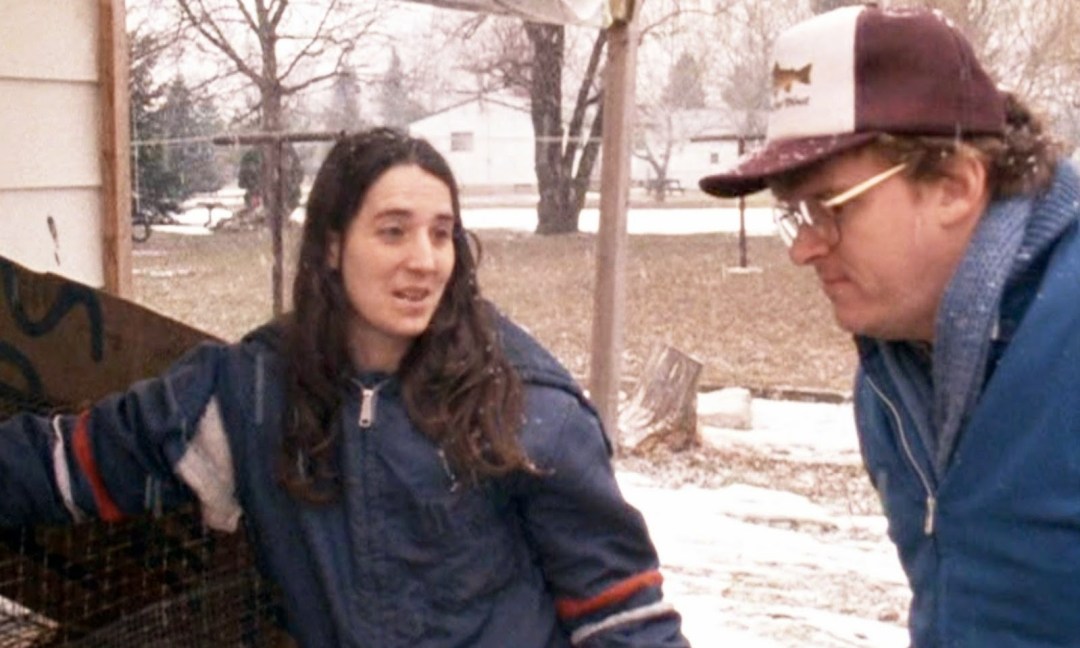
I figured I’d kind of missed the boat on Michael Moore. He was a really big deal when I was growing up in the 2000s – somehow becoming that most unlikely of things, a blockbuster documentary filmmaker – but I never saw any of his films. Though he’s always been divisive, over the course of Barack Obama’s presidency the tide of public opinion seemed to turn against him. We seemed to think of Michael Moore in the same category as JNCO jeans or bucket hats: a terrible fad that we are embarrassed to recall having once indulged.

So I’ve spent longer listening to Michael Moore being treated like a punchline than like a serious cultural phenomenon: Michael Moore, the manipulative liar; Michael Moore, preaching to the choir; Michael Moore, who can’t understand that things just aren’t that simple. Like the left-of-centre equivalent of Dinesh D’Souza. As I got older and my political opinions developed, I figured that Michael Moore must be a certain irritating kind of liberal, who roots for the Democrats like a football team, who, at best, was – like Jon Stewart on The Daily Show – more concerned with hypocrisy than justice. That’s not true at all, but it’s what I extrapolated as the only thing that made criticisms of Moore make sense: because if he was preaching to the choir, it must be the choir of Beltway and Hollywood and Silicon Valley liberals, who are more terrified of tax hikes than oligarchy.

Continue reading “Michael & Me”

The Redistribution of Art

If you read a lot of pop culture criticism, you’ll very quickly come across three words: vital, essential and necessary. Critics, especially film and TV critics in my experience, love to describe the very best art in the same way most people describe things like food, shelter and healthcare. The instinct might be to treat this as hyperbole, but I like to take people at their word, and besides, there’s no shortage of writing out there that makes explicit what’s merely suggested in most uses of “vital”, “essential” and “necessary”. Moreover, I agree completely: art is an essential part of life.

There are as many explanations for why art is vital, essential and necessary as there are thinkpieces explaining why. Art is how we understand each other when we can’t see inside each other’s skull prisons. Art has profound social value, capable of transforming how people see the world by forcing them to confront unfamiliar realities or new perspectives on age-old issues. Art and the appreciation of art is what makes life meaningful at all for lots of people. I don’t disagree with any of those points of view, but they’re all a bit piecemeal for my taste, failing to provide a universal justification for why art is necessary.

Continue reading “The Redistribution of Art”

Can You Believe It: Trump and Political Comedy

If you like comedy, but you’re tired of Trump jokes, the last couple of years have been frustrating. Your choices for political comedy on American television range from The Daily Show, which is pretty much all about Trump, to three different shows from Daily Show alumni – Last Week Tonight with John Oliver, Full Frontal with Samantha Bee and The Opposition with Jordan Klepper – which are also pretty much all about Trump. John Oliver’s turn towards Trump is particularly irritating because his show made its reputation on in-depth examinations of underdiscussed issues, like patent trolling, public funding of stadiums and the exploitation of chicken farmers, and had made a point of largely ignoring Trump for months before gradually becoming yet another Show Against Trump.

Shows without an explicit political bent offer no escape: Saturday Night Live features Trump so frequently that Alec Baldwin will likely be eligible for the Supporting Actor Emmy again this year, even though he’s ostensibly a guest star. The Late Show with Stephen Colbert does so much Trump material it was able to spin-off a recurring animated segment called Our Cartoon President into its own TV show. Colbert was always going to be more political than the average late-night host, except he’s actually not that much more political than the rest anymore: Seth Meyers does a weekly politics segment on Late Night called “A Closer Look” which is, of course, mostly about Trump and Jimmy Kimmel is constantly taking cracks at him. Even that spineless hair-ruffling weasel Jimmy Fallon has started to do regular Trump jokes now, and he’s Jimmy Fallon, the most inoffensive man who’s ever existed.

Continue reading “Can You Believe It: Trump and Political Comedy”

Goodness or the Choice of Goodness: Vice Principals, Empathy and Deserving

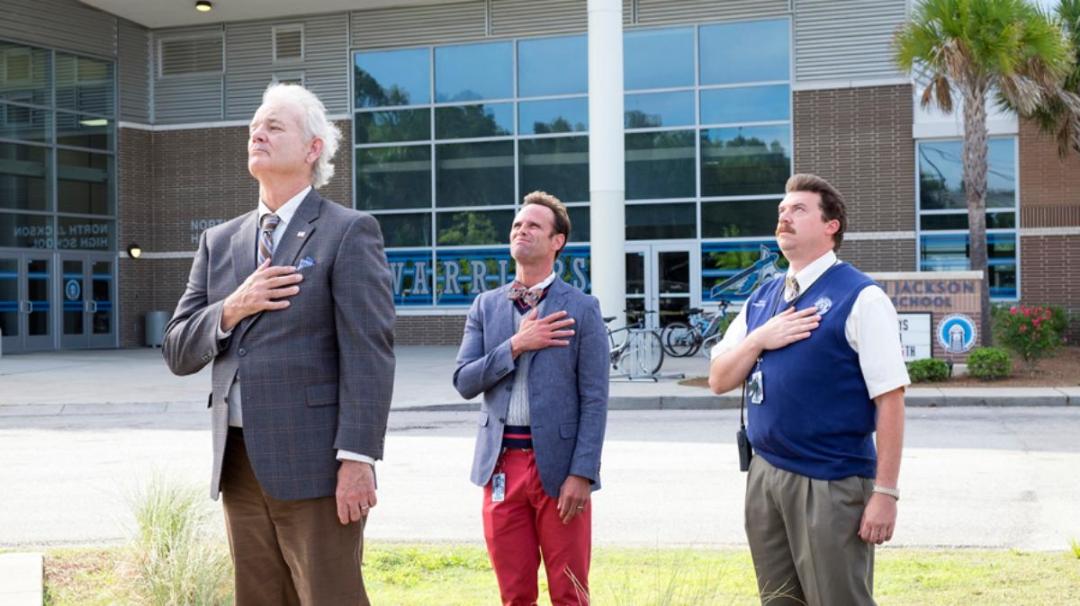
I spend a lot of time thinking about empathy and compassion. I believe in those things, as deep down as I believe in anything. I always thought this was relatively universal, at least outside of right-wing fringe groups, but I don’t really think that anymore. Not just because a Yale professor wrote a book literally called Against Empathy (in a video for The Atlantic he explains that empathy for victims is used to justify the Iraq War, but conveniently doesn’t mention if empathy can and does motivate anti-war activism), but mostly because of how often I find myself recoiling in horror from political discourse. I can’t cheer an elderly man getting brain cancer, no matter what he’s done. I don’t think that someone who punches a Nazi is suddenly as bad as a Nazi, but I can’t comprehend the ease with which people advocate the punching. I oppose violence in all its forms – structural or personal – and I don’t think that any person deserves to be killed, by the state or anyone else. I don’t think “deserve” comes into it. I don’t have the stomach to be a revolutionary.

Continue reading “Goodness or the Choice of Goodness: Vice Principals, Empathy and Deserving”