A Portrait of the Autist as a Young Woman

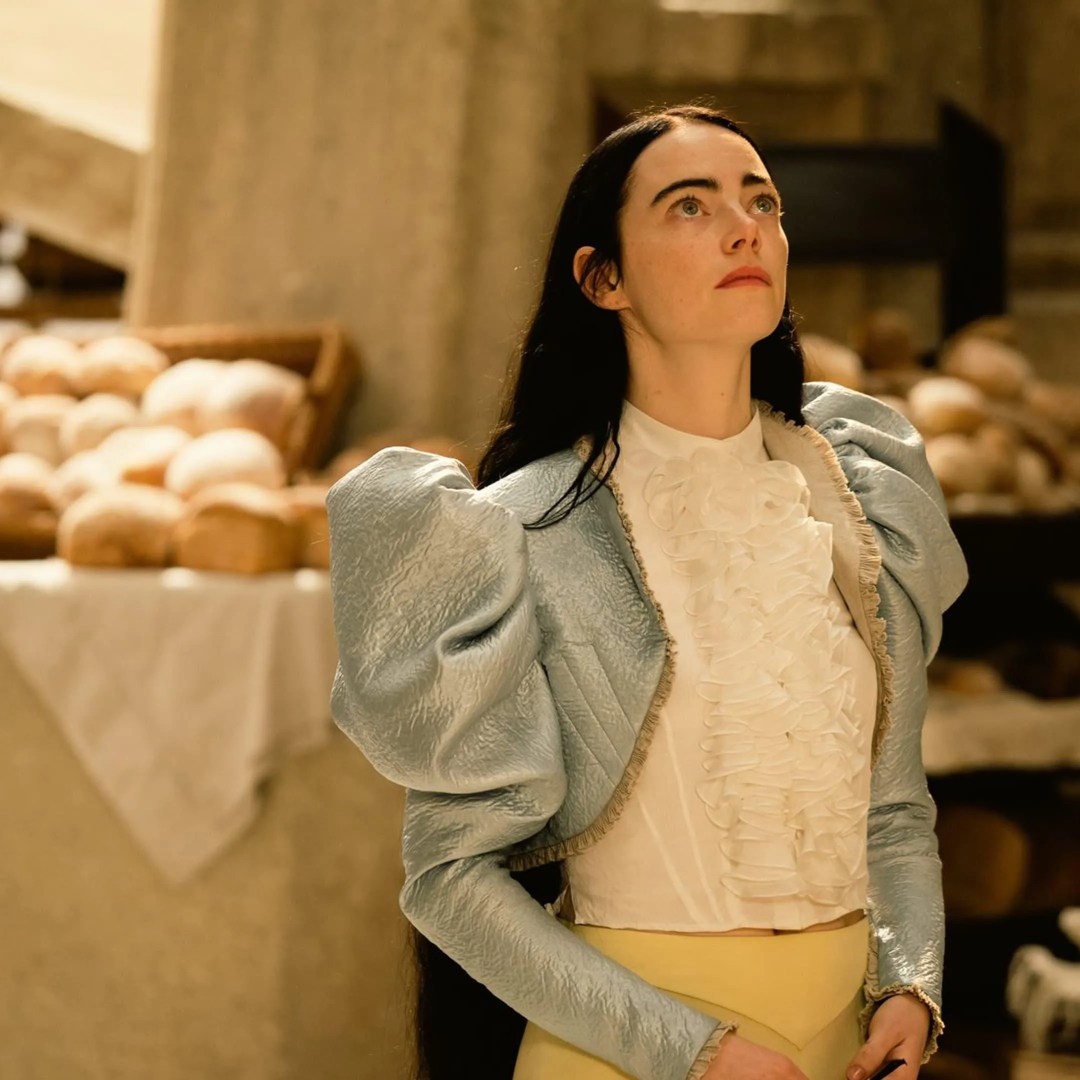
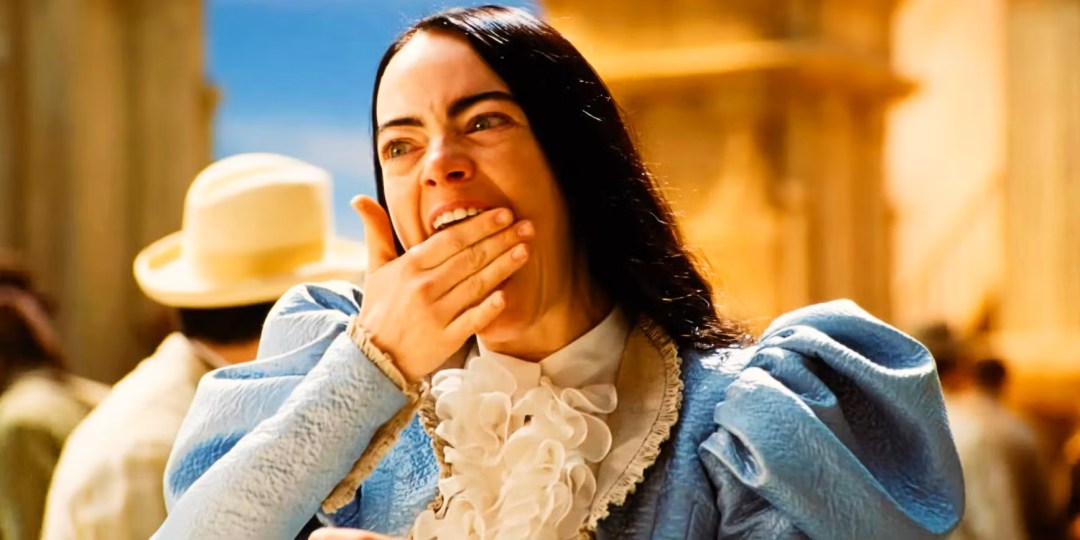
A woman stands atop the parapet at the edge of a bridge. Her dark hair is pinned in curls at the back of her head, loose strands near her face caught in the wind. Her deep blue dress has a Victorian high collar; its flared skirt would trail on the ground behind her if her feet were on the ground. The camera pans up to the endless blue of the sky, and then back down as the woman jumps into the endless blue below her. In Yorgos Lanthimos’s Poor Things, her death becomes a birth. Neither her own rebirth nor the birth of the unborn child in her womb, or maybe both those things. A new person is scavenged from the existing materials. Her name is Bella Baxter. 

The basic premise of Poor Things is this: Dr. Godwin Baxter (Willem Dafoe) found the corpse of a woman who had taken her own life, before rigor mortis had set in—dead but fresh, with a still-living fetus inside her. “It was obvious,” he tells his student Max McCandles (Ramy Youssef). “Take the infant’s brain out and put it in the full-grown woman, reanimate her, and watch.” The film is a riff on Frankenstein that shucks off two centuries of cultural baggage to recapture how messed up Frankenstein must have seemed when Mary Shelley first wrote it, long before Dr. Frankenstein’s creature was meeting Abbott and Costello (or Alvin and the Chipmunks). Part of what it discards in the process is any stability around who, if anyone, is the “monster” in a Frankenstein story.

Godwin—who Bella affectionately calls “God”—is himself both Frankenstein and the creature. As a child, he was subjected by his father to experiments that have left his face carved with deep, thick scars, his genitals non-functional, and a digestive system that requires being hooked up to machinery to produce gastric juices. “Dafoe plays every movement and gesture as labored,” Angelica Jade Bastién writes for Vulture. “He shuffles and sighs and sulks.” A student in his surgery class derisively calls him “the monster” because of his visible deformity. Yet God seems to regard his father not as an abusive sadist, but a man of science unwilling to put moral or emotional considerations above the pursuit of knowledge. He seems to admire this cool detachment and emulates it in his own work: “Our feelings must be put aside,” he tells Max. “Do you think my father could have branded me with hot irons on the genitals the way he did if he could not put science and progress first?” In Shelley’s original, Dr. Frankenstein shrunk with horror from his creation, next to which God’s problem is almost a photonegative: his paternal feelings towards Bella are an affliction he tries to overcome, though he never quite manages it. 

But the film’s point of view is wholly Bella’s: she, too, is both the creator and the creature, but entirely her own. She is her own mother and her own daughter, “born” into a crisply black-and-white, steampunk version of Victorian London and trapped in the confines of God’s mansion. When she meets Duncan Wedderburn (Mark Ruffalo)—a lothario who warns her not to become a jealous lover demanding constancy before himself becoming exactly that—she embarks on a journey of discovery, adventuring across a funhouse-mirror Europe in which trams traverse Lisbon’s skies and city streets come in the colors of lemon drops, cherry blossoms, and sherbet. 

Early last year I wrote about Poor Things as a film about autism and neurodivergence for Current Affairs. You can read it here.

The Sundae TV Awards 2024

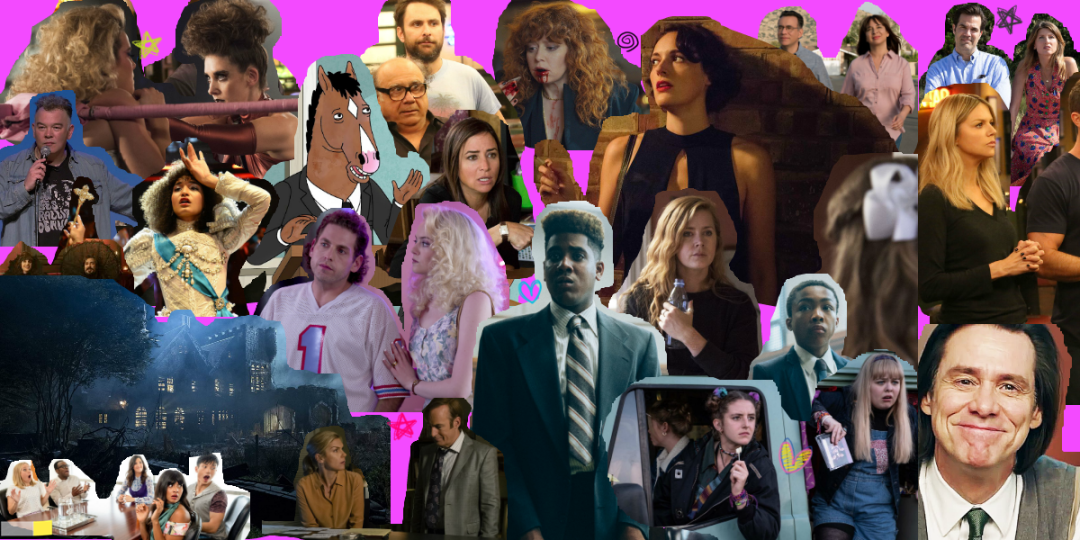
We didn’t watch as much new TV this year as we usually do. Partly that’s because we are both increasingly busy killing it at other things, but mostly it’s because, frankly, the TV landscape is increasingly disillusioning. We are so far gone from the days when it seemed like streaming might crack the possibilities of the medium wide open and change them forever. It did, to be clear, but then the vast, rapacious conglomerates that control all TV decided that, actually, ambition and vision are for losers who don’t have a Scrooge McDuck money vault. It’s hard to want to watch a lot of new shows these days when more and more of it seems like little more than an indistinguishable slurry of “content”.

What do you do when you’re a TV critic getting jaded with modern TV? If you’re Ciara, you sail the seven seas of classic television and answer the siren call of the new only when it earns your interest. If you’re Dean, you just start shooting as much animation and stand-up directly into your veins as possible, because there, if nowhere else, are ambition and vision still alive and well. But you never give up on television, because when it’s good it still melts your face off.

We’re two days late this year, but considering we were months ahead of the Emmys last year, we’re sure you’ll forgive us. These, as far as we’re concerned, are the best shows of the most recent TV season (June 2023 – May 2024). As well as the classic drama and comedy awards, we also have two awards for reality, variety and documentary television, including game shows, professional wrestling and whatever Eric Andre is doing at any given minute. We picked our winners by consensus, so only shows we both watched were eligible to win, but we each picked a runner-up, regardless of whether the other has seen it.

You can find each of our full slates of nominees at the bottom of the post. We recommend checking them out if you’re looking for recommendations.

Continue reading “The Sundae TV Awards 2024”

The Sundae TV Awards 2019

We can’t really claim these are what we think should have been nominated at the Emmys, or should win, since there’s an impossible amount of television to watch in the world. But if we were the only two members of the Television Academy and we could nominate any TV that aired in the most recent television season (from June 2018 to May 2019), and we only cared about the seven major awards in drama and comedy, this is what you’d get.

We didn’t distinguish between limited series and other drama series, since supposed miniseries get second seasons if they’re popular enough (see: Big Little Lies), and regular drama series get rebranded as miniseries when they get prematurely cancelled (see: Dig), while modern anthologies are just regular series that replace narrative continuity with thematic continuity (and some don’t even shed their narrative continuity completely, e.g. American Horror StoryFargoBlack Mirror). Each of us filled out our personal nominees and then selected the winner by consensus, so the winners only came from shows we’d both nominated, but we’ve each picked a personal runner-up regardless of whether the other has seen or nominated it. We also each gave a Special Achievement Award for something not covered in the major categories – Ciara gave the award for Drama, and Dean gave the award for Comedy.

You can see each of our full slates of nominees at the bottom of the post.

Continue reading “The Sundae TV Awards 2019”

The Sundae Film Awards 2019

It’s been a pretty weird Oscar season. If you asked me a couple of months ago if The Wife would be on-lock for an Oscar, I would have said, “What the hell is The Wife?” If you asked me if a foreign language film released on Netflix would be a serious contender for Best Picture, I would have said, “Maybe in ten years?” And that’s not even getting into all the crazy announcements and immediate backtracks: Best Popular Film, not performing all the Original Song nominees, presenting awards for such unimportant cinematic arts as cinematography and editing during the ad breaks.

Still, lots of great films came out this year – even though that can be awkward to define if you don’t live in America. We’ve decided it means “films that came out in 2018 in Ireland unless they were eligible for the Oscars last year as well as films that came out in 2019 in Ireland if they were eligible for this year’s Oscars.”

We can’t really claim that these are what we think should have been nominated at the Oscars, or should win, since we can’t even be sure if any film that wasn’t nominated was eligible. But if we were the only two members of the Academy, and we only cared about the eight major awards – we care about most of the others (except for the fake awards like Best Original Song) but this post would be absurdly long if we picked those too – this is what you’d get: the Sundae Film Awards 2019.

We each did out our personal nominees and then selected the winner by consensus, so the winners only come from films that both of us have seen and nominated, but we’ve each picked a personal runner-up regardless of whether the other has seen or nominated it. We also each picked a Special Achievement Award for something not covered in the major categories. You can see each of our full slates of nominees at the bottom of this post, which we encourage you to check out if you’re looking for recommendations.

Continue reading “The Sundae Film Awards 2019”

All We’re Looking for Is Love from Someone Else

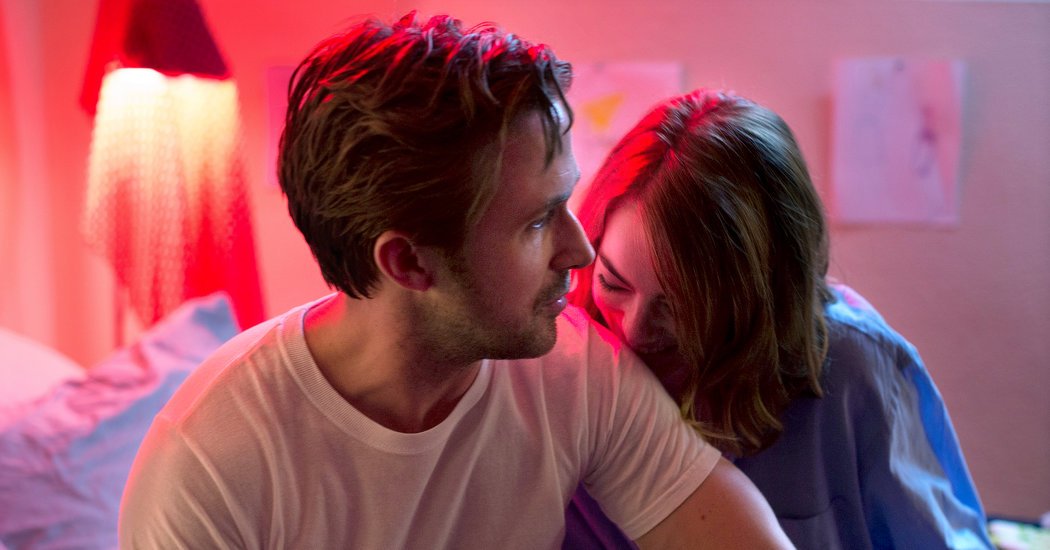
“They say you gotta want it more,” a young man sings in ‘Another Day of Sun’, La La Land’s opening number, “So I bang on every door.”

He came to LA with dreams of making it in the entertainment business, but his problem is not that he doesn’t want it enough. He wants it desperately, single-mindedly. He’s dancing in the middle of a traffic jam, singing about wanting it – as desperately as the dozens of other people singing the same song.

‘Another Day of Sun’ sounds bright and happy, but lyrically, it’s about constant rejection, about running out of money, about leaving loved ones to pursue unrealised dreams – and about a pressure to blame yourself. They say you gotta want it more.

The chorus initially sounds like an ode to perseverance:

And when they let you down

You’ll get up off the ground

‘Cause morning rolls around

And it’s another day of sun

But it’s more melancholy with every repetition, as getting knocked to the ground emerges as a habit. “It’s another day of sun” is a joke about LA not having seasons, but it’s also a comment on how that lack of weather can feel oppressive. It’s an environment that refuses to bend, impervious to your feelings. There’s weariness to it: constant sunshine, constant disappointment.

La La Land is not a film about how you should pursue your dreams.

Continue reading “All We’re Looking for Is Love from Someone Else”