How South Park is saving free speech in America

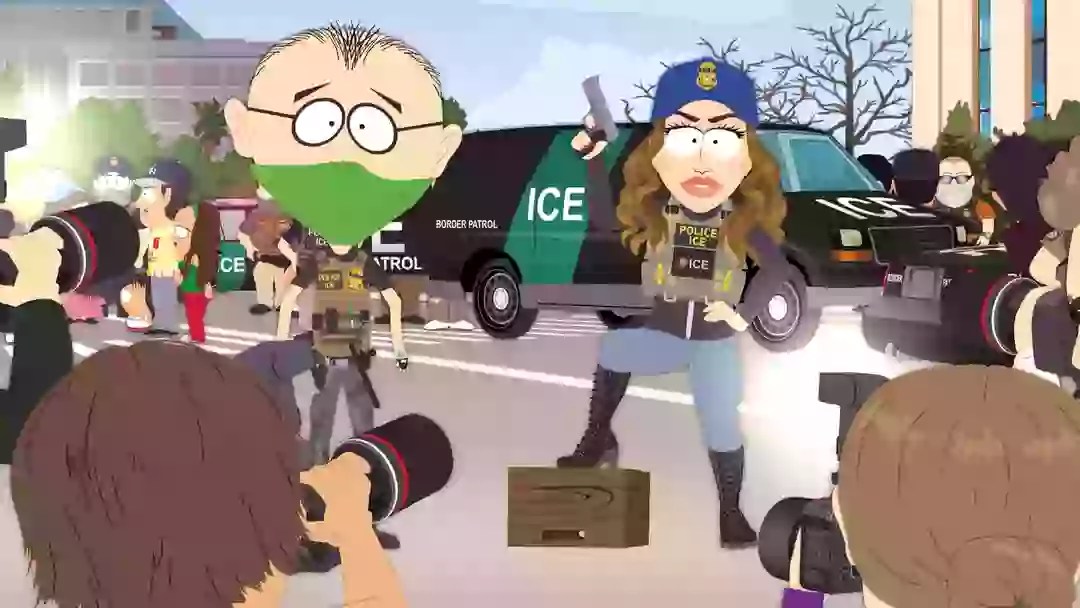
I was on the latest episode of the podcast The Bunker: News Without The Nonsense to discuss the new season of South Park, its criticism of Trump, and the show’s shifting place in the US culture wars. Listen below:

How South Park is saving free speech in America The Bunker – News without the nonsense

You can also find it on SpotifyApple, or wherever you get your podcasts.

If you want more of my South Park takes, check out this article I wrote for Current Affairs in 2023. An extract to whet your appetite:

In 2017, the two-headed monster of Donald Trump’s inauguration and South Park’s 20th anniversary prompted much hand-wringing over the show’s legacy. In the post-2016 rush to point fingers, a cartoon about the adventures of some potty-mouthed 8-year-old boys was made to bear at least some of the blame. Dana Schwartz tweeted that it was impossible to overstate the cultural damage of South Park’s portrayal of “earnestness as the only sin” and mockery as “the ultimate inoculation against all criticism”—and then, her point seemingly proven, she was descended on by trollsSouth Park didn’t invent the alt-right, Sean O’Neal wrote for The AV Club, “but at their roots are the same bored, irritated distaste for politically correct wokeness, the same impish thrill at saying the things you’re not supposed to say, the same button-pushing racism and sexism, now scrubbed of all irony.” For Lara Zarum in The Village Voice, the show’s misogyny—the creators “never seem content just to make fun of women; they relish sexually humiliating them, too, all while shunting the show’s female characters, young and old, to the maddeningly familiar role of disapproving nag”—is deeply tied to Hillary Clinton’s election loss. 

The consensus that seemed to calcify was that South Park’s corrosive influence on popular culture raised a generation of nihilistic trolls that revived American fascism for the lulz. At best, it inculcated a wilful apathy, political and otherwise. According to Lindsay Ellis, South Park creators Trey Parker and Matt Stone spent the whole 2000s “explaining that things were fine actually, both sides bad”: both symptomatic of, and feeding into, a wider apathetic cultural attitude towards social injustice in the 2000s. As Schwartz outlines, South Park has always skewered “both the left and the right—and anyone who believed in anything—as equally ridiculous. The smart people were those detached enough to know that everyone was full of it.”

There is some ring of truth to all this. The best of these critiques—like Zarum’s or O’Neal’s—are rooted in an acknowledgement that South Park is and has always been extremely funny, and that its cultural effect is not necessarily reflective of Stone and Parker’s intentions. But even still, a fundamental rift inevitably opens up between these arguments and my experience of the show itself.

The Sundae TV Awards 2024

We didn’t watch as much new TV this year as we usually do. Partly that’s because we are both increasingly busy killing it at other things, but mostly it’s because, frankly, the TV landscape is increasingly disillusioning. We are so far gone from the days when it seemed like streaming might crack the possibilities of the medium wide open and change them forever. It did, to be clear, but then the vast, rapacious conglomerates that control all TV decided that, actually, ambition and vision are for losers who don’t have a Scrooge McDuck money vault. It’s hard to want to watch a lot of new shows these days when more and more of it seems like little more than an indistinguishable slurry of “content”.

What do you do when you’re a TV critic getting jaded with modern TV? If you’re Ciara, you sail the seven seas of classic television and answer the siren call of the new only when it earns your interest. If you’re Dean, you just start shooting as much animation and stand-up directly into your veins as possible, because there, if nowhere else, are ambition and vision still alive and well. But you never give up on television, because when it’s good it still melts your face off.

We’re two days late this year, but considering we were months ahead of the Emmys last year, we’re sure you’ll forgive us. These, as far as we’re concerned, are the best shows of the most recent TV season (June 2023 – May 2024). As well as the classic drama and comedy awards, we also have two awards for reality, variety and documentary television, including game shows, professional wrestling and whatever Eric Andre is doing at any given minute. We picked our winners by consensus, so only shows we both watched were eligible to win, but we each picked a runner-up, regardless of whether the other has seen it.

You can find each of our full slates of nominees at the bottom of the post. We recommend checking them out if you’re looking for recommendations.

Continue reading “The Sundae TV Awards 2024”

Friday Film Showcased, Episode 2: Watership Down (1978) | The Diamond Arm (1969)

For many years, with regard to their film-watching, Ciara and Conor have been theming their months. For instance:

  • Cartoon June – you know, animated.
  • Soviet (J)Un(e)(ion) – Films from countries that were once in the USSR.
  • Jack July – Nicholson that is!
  • Giallo July.

Sometimes the titles of these months are puns, sometimes alliterative. Sometimes, it is awful strained altogether (see above). But it has always been fun. Or at least I hope so. They’ve been doing it long enough!

In the bi-augural (that means second?) episode of FFS, Ciara and Conor discuss their June film seasons (Cartoon June and Soviet (J)Un(e)ion), and Showcase two in particular.

Spoiler: It’s the two films in the title of this episode. Watchlist:

Cartoon June: https://letterboxd.com/hoganassasin/list/cartoon-june/

Soviet (J)un(e)ion: https://letterboxd.com/hoganassasin/list/soviet-junion/

You can listen to it here:

Episode 2: Watership Down (1978) | The Diamond Arm (1969) Friday Film Showcased

And you can even listen to it accompanied by the soothing sounds of a rainstorm. Relaxing!

Relaxing Rain Edition – Episode 2: Watership Down (1978) | The Diamond Arm (1969) Friday Film Showcased

Listen and subscribe onSpotify (with relaxing rain sounds) || Apple Podcasts (with relaxing rain sounds) || Amazon Music (with relaxing rain sounds) || Castbox (with relaxing rain sounds) || Pocketcasts (with relaxing rain sounds) || Goodpods (with relaxing rain sounds)

Mentioned in the podcast

Ciara’s Article on Soviet Cinema: https://www.currentaffairs.org/news/2023/10/why-you-should-be-watching-soviet-cinema

Slash Film article on The Last Unicorn and Studio Ghibli: https://www.slashfilm.com/751443/turns-out-the-last-unicorn-is-a-secret-studio-ghibli-film/

Philip French’s review of An American Tail: https://www.newspapers.com/article/the-observer-an-american-tail/124883207/

The Watership Down Podcast: https://podcasters.spotify.com/pod/show/watershipdown

Guillermo Del Toro on Watership Down: https://www.youtube.com/watch?v=3sN-crgRXV0

Cinemablend article on Song of the South and Splash Mountain: https://www.cinemablend.com/news/2547968/the-complicated-history-of-disneylands-splash-mountain-and-song-of-the-south

In Defense of South Park

In 2017, the two-headed monster of Donald Trump’s inauguration and South Park’s 20th anniversary prompted much hand-wringing over the show’s legacy. In the post-2016 rush to point fingers, a cartoon about the adventures of some potty-mouthed 8-year-old boys was made to bear at least some of the blame. Dana Schwartz tweeted that it was impossible to overstate the cultural damage of South Park’s portrayal of “earnestness as the only sin” and mockery as “the ultimate inoculation against all criticism”—and then, her point seemingly proven, she was descended on by trollsSouth Park didn’t invent the alt-right, Sean O’Neal wrote for The AV Club, “but at their roots are the same bored, irritated distaste for politically correct wokeness, the same impish thrill at saying the things you’re not supposed to say, the same button-pushing racism and sexism, now scrubbed of all irony.” For Lara Zarum in The Village Voice, the show’s misogyny—the creators “never seem content just to make fun of women; they relish sexually humiliating them, too, all while shunting the show’s female characters, young and old, to the maddeningly familiar role of disapproving nag”—is deeply tied to Hillary Clinton’s election loss. 

The consensus that seemed to calcify was that South Park’s corrosive influence on popular culture raised a generation of nihilistic trolls that revived American fascism for the lulz. At best, it inculcated a wilful apathy, political and otherwise. According to Lindsay Ellis, South Park creators Trey Parker and Matt Stone spent the whole 2000s “explaining that things were fine actually, both sides bad”: both symptomatic of, and feeding into, a wider apathetic cultural attitude towards social injustice in the 2000s. As Schwartz outlines, South Park has always skewered “both the left and the right—and anyone who believed in anything—as equally ridiculous. The smart people were those detached enough to know that everyone was full of it.”

There is some ring of truth to all this. The best of these critiques—like Zarum’s or O’Neal’s—are rooted in an acknowledgement that South Park is and has always been extremely funny, and that its cultural effect is not necessarily reflective of Stone and Parker’s intentions. But even still, a fundamental rift inevitably opens up between these arguments and my experience of the show itself.
I wrote about South Park, shock humour, and morality in art for Current Affairs. You can read it here!

2021 in Film(s That Didn’t Come Out in 2021)

Check out previous installments here, here, here and here.


2021 was, I’m sure we can all agree, the most recent year in the Gregorian calendar. Though, that being said, Ciara now exclusively understands the passage of time through self-programmed film seasons (e.g. Soviet June-ion, Silent September, Shane Black Christmas) and Dean has lost track of linear time altogether. It was a year of surprises in film: Zack Snyder finally got to finish his four-hour superhero epic and Sylvester Stallone, for better or worse, finally got to cut the robot from Rocky IV. We started a podcast, The Sundae Presents, where we take turns showing each other favourite films of ours the other hasn’t seen (catch up now!). We published lots of good pieces, including the first guest contribution to our pop punk series. Ciara finished watching all the Nightmares on Elm Street (except the remake, obviously) and Dean watched every Gus Van Sant film, then immediately got super into pirate movies for some reason. 

We’ll be looking back at our favourite films released in 2021 on Oscars weekend, which we guess is in March this year? This is a look back at some of the best films from other years that we watched for the first time, spanning eighty years of cinema from the earliest days of animation to the earliest days of Paul Verhoeven’s post-Hollywood career. At the risk of repeating ourselves, one of the few upsides to a year where staying inside was, at the very least, highly recommended was a lot of time to watch movies, and these represent less than five percent of them, so you know they come highly recommended. We’ve got Arthurian myth and silent romance and four films from the seventies, because we can’t pretend we don’t have a period bias. Check them out and stay tuned to The Sundae for more cold takes and fresh pods in 2022!

Continue reading “2021 in Film(s That Didn’t Come Out in 2021)”

2020 in Film(s That Didn’t Come Out in 2020)

Check out previous installments herehere and here.


It goes without saying that 2020 was a bizarre year for films, because it was a bizarre year for everything. But all the same, a lot of insane things happened in the movies this year. Cinemas all over the world closed down and it’s not clear they’ll survive long-term. Several blockbusters that were supposed to draw a billion-dollar box office ended up with a streaming debut, to unclear results. The industry got thrown into such disarray that the Oscar eligibility window was extended and the ceremony rescheduled for April.

By some twist of fate, that’s also when we’ll be looking at the best films of 2020 in the fifth annual Sundae Film Awards. For now, we’d like to look back at some of the gems from throughout film history that caught our attention this year. One of the few upsides to a year in lockdown was a lot of time to watch movies: in our case, literally hundreds. We’ve whittled them down to eight each, from the early thirties through to 2016, covering films as diverse as a war drama about the French resistance, a psychedelic Japanese anime about witchcraft and a documentary about race and class in America through the lens of high school basketball. Check them out and stay tuned for more cold takes from the Sundae in 2021!

Continue reading “2020 in Film(s That Didn’t Come Out in 2020)”

You Should Watch Short Films Forever

I’ve been struggling for years to express to other people exactly what I love about short films as an art form. Some of that is definitely that short films have no significant constituency in popular culture, so you can’t really assume a lot of priors. I don’t need to explain what feature-length films are like as an art form before I tell you why I like feature-length films, but most people don’t watch a lot of short films so in almost every conversation I have about them, I’m on the back foot from the get-go. I think there’s a popular view of short films as either Very Important Movies About Very Important Issues, like the tens of thousands of anti-bullying short films on YouTube, or pretentious film school nonsense, and probably shite either way. 

And there is a lot of stuff like that, sure, but if it feels like that’s all short films are, that’s really just a reflection of how accessible they are as a medium, if not necessarily for audiences, then certainly for filmmakers. All you need to make a short film is a camera, a way to edit the footage and the time to make it. Every phone in the world has a camera on it right now more powerful than almost anything imaginable just thirty years ago, and there’s loads of free editing software, some of a very high quality, available on your phone or computer. All that leaves is the time, and short films by definition are generally less time-consuming to produce. Even with the constraints of needing a computer and Internet access to do it, I’m not sure there’s a medium other than the written word with a lower barrier to entry as both an artist and a publisher than short films right now. It’s no shock it produces tons of rubbish, any more than it’s a shock most self-published novels are total shite. But the vast and overwhelming shiteness of self-published novels has never impugned the novel as an art form. Yet the glut of bad short films on the Internet has undeniably tainted the reputation of the medium. 

The most obvious explanation is there are virtually no large commercial interests behind short films (and there haven’t been for decades), whereas novels are produced and distributed by some of the biggest commercial interests in the world. Short films are a relatively uncommodified form, which is fantastic in a lot of ways, but it also means they aren’t marketed outside a small niche of filmgoers and largely lack even the infrastructure for formal, large-scale distribution outside the festival circuit or self-publication on the Internet. For novels, there are official routes to publication that, however flawed they may be in other areas, do provide some level of quality control just on the basic level of competence with language. It’s a reassurance that, if nothing else, a bunch of people who aren’t the author read the book before you and made sure it wasn’t just absolute unreadable gibberish. The line it draws is imperfect and hardly meritocratic, but it mostly succeeds at sorting some of the wheat from most of the chaff. The only guides people interested in or curious about short films have to finding the good stuff is articles like this by critics and other enthusiasts. And then you have to be able to get your hands on the films to watch them, which can be pretty tricky given the lack of distribution. Unless you have a load of cash to drop on expensive Blu-ray boxsets or Vimeo rentals – and even then, not everything is available to buy – you end up dependent on people willing and able to upload them for free, legally or not, just to be able to see them, and even official uploads can be pretty low-quality if they haven’t been reuploaded since YouTube started allowing higher-definition video. 

But I love short films despite all the hassle. I love short films because they’re films and there’s almost nothing in this world I love as much as I love films. 

Continue reading “You Should Watch Short Films Forever”

You Should Watch Even More Short Films

One of the reasons I’m such a proselytiser for short films, despite the overwhelming evidence that the vast majority of them (especially nowadays), are quite shit, is that shorts have always been the refuge of upstarts and underdogs, experimenters and innovators, and weirdos of various stripes too non-commercial to ever command a feature budget. Some truly great, influential and just bizarre filmmakers have cut their teeth and even built their careers in short films, and it’s not fair they’re lumped in with the glut of grey-toned anti-bullying PSAs and twee self-indulgent positivity culture shite that’s plastered all over social media for some reason. They deserve better. And you deserve better.

Here’s even more short films that are actually good.

Continue reading “You Should Watch Even More Short Films”

You Should Watch Wallace and Gromit

Unlike some other people on this very website, I am a sceptic when it comes to short films. It’s not that I have anything against it as a form inherently – it’s just that a lot of short films are bad. I would go as far as to say that most short films are bad. There are a lot of bad features, too, but their length requires a level of commitment that does at least a little weeding out. Of all the shorts I’ve seen, most have one idea, or one twist, or one – God forbid – lesson to be learnt. Too many shorts feel like the very first idea someone thought of. Way too many seem like a single idea stretched to breaking, and feel much too long even as that should be definitionally impossible.

These problems are a trend, not a rule, and there are a few categories that bypass these problems entirely, that feel naturally suited to the form. One of them is experimental films – like those of Maya Deren or David Lynch – which aren’t bound by traditional narrative and can pack their short running time with strange, affecting visuals. But the main exception is animated shorts: the short film feels like the platonic ideal for a cartoon. Maybe it’s because the commitment necessitated by a feature’s length is there in a cartoon regardless of its length, just because animation is hard and takes a long time. Maybe it’s that cartoons are the short films I grew up on, like old Looney Tunes shorts repackaged for television, while live action shorts were virtually absent. Maybe it’s just animation’s greater respect for the importance of colours. But my short film scepticism retreats to the background when the short happens to be animated.

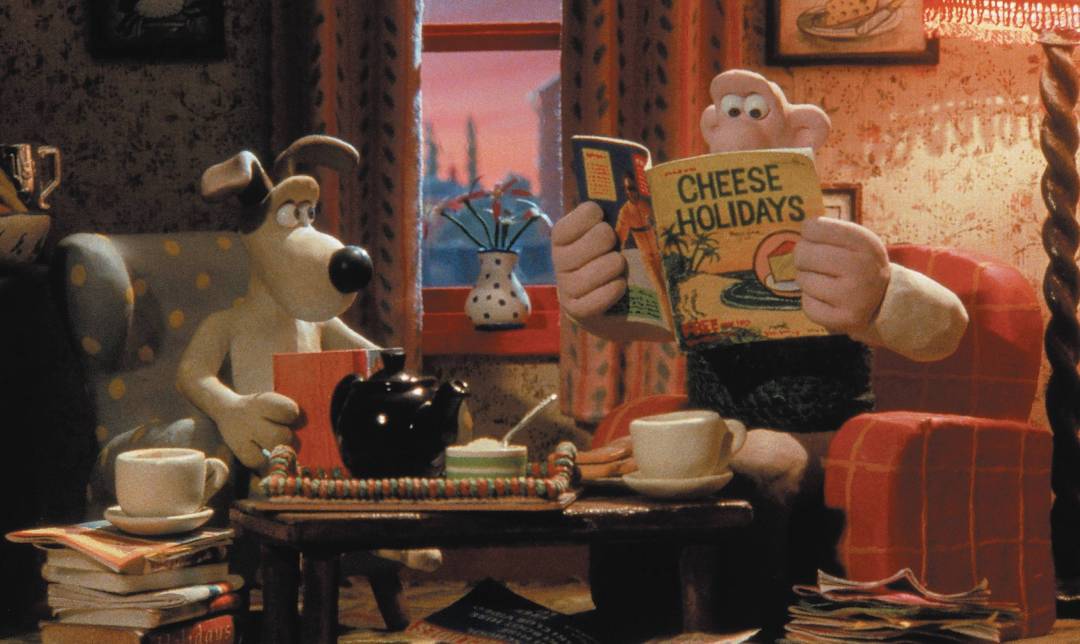
Case in point: Wallace and Gromit.

Continue reading “You Should Watch Wallace and Gromit”

You Should Still Watch More Short Films

I threatened to go hard experimental with this list if I didn’t see a visible uptick in appreciation for short films after my last paean to short cinema. But I also said no one in my life had bought a boxset of Jan Švankmajer shorts I could borrow and now someone has bought me one, so I’ll go easy on you all this time. Today’s selection stretches exactly one hundred years, starting in 1919 with a silly British cartoon and closing out in 2019 with a surreal masterpiece of the online. Nine decades, six or seven countries (depending on how you want to count Scotland), five animated and five live-action, it’s another cornucopia of fantastic art to sample.

Here’s another ten further more short films also again for you to enjoy.

Continue reading “You Should Still Watch More Short Films”