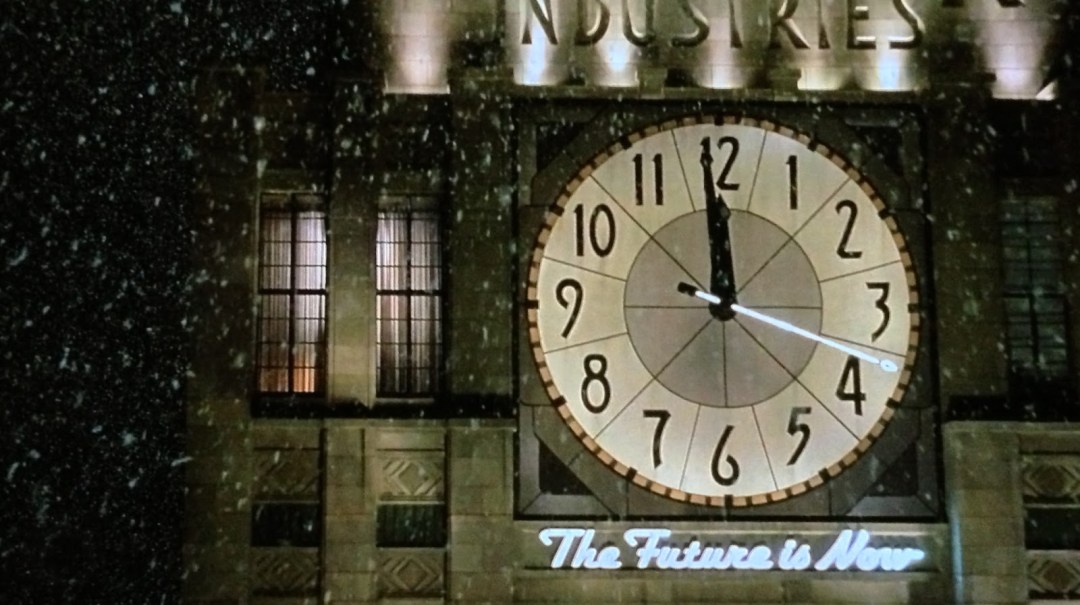
the clock on the Hudsucker building in the snow in The Hudsucker Proxy, with the words "The Future is Now"

In Defense of The Hudsucker Proxy

Joel and Ethan Coen make two types of films. Both types are comedies.

The first type sometimes gets mistaken for a drama. They’re the dark comedies that usually operate within a specific genre. Some of these are easily spotted – even Wikipedia calls Fargo a comedy – but it’s easy to get distracted by how serious they look on the surface. The Man Who Wasn’t There is a black-and-white period noir, which somehow overrides that the whole film is set in motion by someone coming up with this totally crazy idea he’s calling “dry cleaning”. The closest to a true drama that the Coens have directed is probably No Country for Old Men, but it has a huge amount of funny hair for a very serious, tense movie.

Continue reading “In Defense of The Hudsucker Proxy”

A Town Called Fortitude

How do you talk about a show influenced by Twin Peaks without burying it in the shadow of Twin Peaks? Twin Peaks is widely considered one of the greatest TV shows of all time, and certainly one of the most important. Now more than ever we are awash in a sea of shows – good and bad – that follow an investigation into a murder or disappearance in a small town that kicks up buried secrets and drags unspoken darkness into the light. And whether a show like that is good or bad, someone is going to compare it to Twin Peaks.

Continue reading “A Town Called Fortitude”

Harvey Keitel praying in Mean Streets

Martin Scorsese’s Violence of Grace

In the stories of Flannery O’Connor, grace is violent. It overpowers. Baptisms are drownings. It is only with a gun pointed at her that a grandmother can recognise the humanity of her murderer: she would have been “a good woman, if it had been somebody there to shoot her every minute of her life.”

This violence of grace is often represented by human violence, but it isn’t the same as human violence. Grace is beyond human comprehension, and so is impossible to represent literally. Any religious text is filled with metaphors, because metaphors are the only way to communicate about the divine. Using violence to represent grace, art can express how grace strikes: dramatic, overwhelming, painful. It is painful because it is transformative. Like violence, it is destructive, but it destroys only evil.

Continue reading “Martin Scorsese’s Violence of Grace”

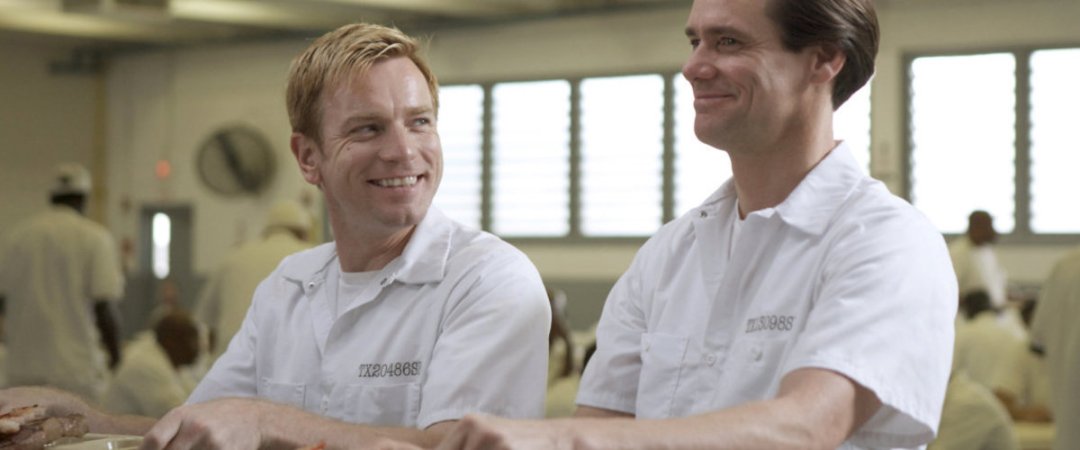
Jim Carrey and Ewan McGregor in I Love You Philip Morris

Written in the Stars or Some Crap Like That

I Love You Phillip Morris is the lost film of the noughties, a masterpiece of filmmaking that no one remembers less than ten years later. Everyone who loves film has a movie they champion in the face of an indifferent world, and I have several, but none so much as I Love You Phillip Morris. Wikipedia calls it a “black comedy drama” but I Love You Phillip Morris is one of those rare multi-genres films that layers each element so perfectly the result is pure alchemy, a work of art so inexplicably magical that even an accurate label can only ever be a reductive one. I Love You Phillip Morris is a biopic, a caper, a black comedy and a tragedy, but if it’s any kind of film, it’s a romantic comedy, and not just a romantic comedy, but one of the greatest romantic comedies of all time.

Continue reading “Written in the Stars or Some Crap Like That”

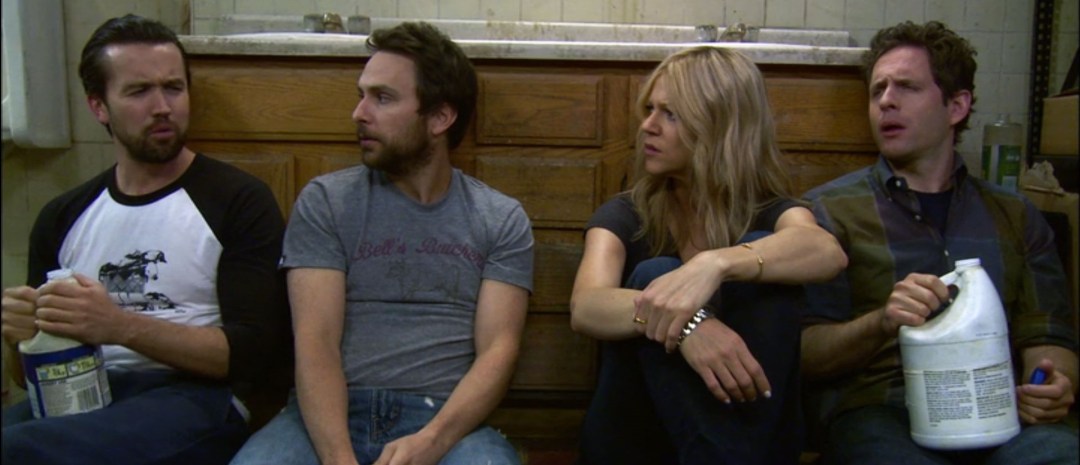
Mac MacDonald, Charlie Kelly, Dee Reynolds and Dennis Reynolds drinking in It's Always Sunny in Philadelphia

The Gang Fights Neoliberalism

American politics, for the past couple of decades up until just recently, has operated on a binary: liberal/conservative. A lot of the time, this leads to weird semantic problems – calling Bernie Sanders “very liberal” when he’s not a liberal at all, calling Donald Trump a conservative when his ideology has very little to do with conservatism  – but the way we talk about ideas informs what ideas become. If you only see things in terms of liberal and conservative, you can deeply misunderstand things happening in front of you. Worse, when you lose the words to describe them, the possibility of other distinct political philosophies can disappear.

South Park is a libertarian show. It’s always been a libertarian show. I find it hard to imagine a show more upfront with its ideology than South Park. Yet there are countless posts and articles debating whether South Park is secretly liberal or secretly conservative, as if it’s secretly anything. Even more bizarre is the common idea that South Park has no ideology at all. Interviews with titles like “Matt Stone & Trey Parker Are Not Your Political Allies (No Matter What You Believe).” Academic articles with titles like “Pseudo-Satire and Evasion of Ideological Meaning in South Park.” If an ideology does not fit within either of the boxes I have in front of me, it must not exist at all.

Continue reading “The Gang Fights Neoliberalism”

Last Man on Earth

The Last Show on Earth

Popular criticism of television is, in many ways, a nascent art form still struggling to grasp a young medium just as it goes through drastic and convlusive changes. Possibly because it has its roots in journalistic practice, it has suffered from one specific and troublesome tendency that is hardly unique to any form of criticism, but seems especially problematic for criticism of a serial art form like television that is typically reviewed episode-by-episode, namely a rush by critics to plant a flag on TV shows as quickly as possible, as if they’re afraid of being scooped on making the definitive statement on what a show is.

Continue reading “The Last Show on Earth”

The Sundae Film Awards 2017

We can’t really claim these are what we think should have been nominated at the Oscars, or should have won, since we can’t be one hundred percent sure that any film that wasn’t nominated at the Oscars was even eligible. But if we were the only two members of the Academy and we could nominate any film that came out since last year’s Oscars (since lots of Oscar-nominated films didn’t come out in Ireland until a week and a half ago) and we only cared about the eight major awards (we care about most of the others, but this post would be twenty thousand words long if we picked those too) this is what you’d get – the Sundae Film Awards.

We each filled out our personal nominees and then selected the winner by consensus, so the winners only came from films we’d both seen and both nominated, but we’ve each picked a personal runner-up from our slate regardless of whether the other has seen or nominated it. We’ve tried to give some voice to our reasons for picking who we’ve picked since we hate lists that don’t say anything. You can see each of our full slates of nominees at the bottom of the post.

Continue reading “The Sundae Film Awards 2017”

the set of I Love Lucy

Whatever Happened to Life in Four Cameras?

For over fifty years, since it was pioneered by I Love Lucy, the multi-camera format – three walls, four cameras, taped before a live studio audience – was the beating heart of television comedy. Today, if anyone took a poll of critics, the likelihood of any multi-camera sitcom that debuted after the millennium ranking among the greatest comedies of the century so far would be close to zero.

Continue reading “Whatever Happened to Life in Four Cameras?”