Netflix and the Obama Legacy

When Netflix announced last year it had entered a production deal with Barack and Michelle Obama, trading as Higher Ground Productions, the response from the right was predictable. Tons of extremely online conservatives who’ve spent the better part of a decade criticising every single thing that Obama does just because he’s Obama tried to start a boycott. Extremely online liberals and leftists made fun of the extremely online conservatives, but rarely commented on the deal itself, save the occasional prediction the shows would probably suck. And most people didn’t hear about it or didn’t care.

It was all very predictable, yet also confusing. I’m an extremely online leftist and when I heard Netflix had signed a deal with the Obamas, I was disgusted, so I thought the extremely online left response would be to make fun of extremely online conservatives for coming up with an incorrect explanation for their correct conclusion this news was messed up. But no one else seemed disgusted, so I waited to see if maybe some disgust would develop, but everyone just forgot about it, and now it’s a year later and I’m finished waiting, so here’s why you should be disgusted by the Obama-Netflix deal.

Continue reading “Netflix and the Obama Legacy”

I Miss You More Than I Did Yesterday

This article is part of the In Defense of the Genre series. Previously, the interplay of spite and insecurity in Fall Out Boy


When I was thirteen and fourteen, I’d go to the next town over, my mother’s hometown, to hang out with friends I’d made primarily through a common interest in the kind of contemporary alternative rock music played on music video channels like Kerrang and Scuzz: broadly punk, metal and indie rock, and specifically, in our case, nu metal, industrial rock, hardcore and, of course, pop punk. I’d get the bus in the morning, meet my friends, loiter in public spaces for however many hours, argue about whether Rammstein were selling out or something, and then go to my grandmother’s house until my mother came in to pick me up. Sometimes, I’d ditch my friends early to hang out with her longer.

My grandmother always took a genuine interest in whatever mattered to me, whether it was the pages upon pages of superheroes I’d draw in sketch books as a child or the loud, angry music that was my overwhelming passion for most of my adolescence. She shared my love of music, if not of genre: her home was filled top to bottom with shelf after shelf of cassettes and CDs, mostly country, though she wasn’t altogether averse to rock music. We talked about music a lot, and though there were occasions where we could meet in the middle – I still have a DVD she gave me of thirty years of Meat Loaf music videos – mainly each of us talked to the other about what we liked and why we liked it.

When I think of her now, my strongest memory is the late summer day I came in clutching a CD I’d just bought, Good Charlotte’s The Chronicles of Life and Death, only four years too late to help it chart in Ireland. Though I’d told my grandmother lots about the music I liked, she’d never actually heard any of it, and she insisted I put it on for her. I wasn’t altogether thrilled with the idea, but I did as I was told and played the title track. The song isn’t subtle. It opens and closes with a beeping heart monitor, it goes from cradle to grave in two verses, and the chorus climaxes with Joel Madden shouting “you come in this world / and you go out just the same”. I really liked the song and I really wanted my grandmother to like it too. When it was done playing, she turned to me and said “you’re here one day and you’re gone the next, sure isn’t that the truth”. She liked it.

I never saw my grandmother again. She died suddenly a few weeks later on September 18th, 2008.

Continue reading “I Miss You More Than I Did Yesterday”

On Cinema(s)

In 2018, Ireland had the highest per-capita cinema attendance of any country in Europe, averaging 3.3 visits per person and just edging out France’s average of 3.2. This really surprised me, because I go to the cinema a lot more than that. I go to the cinema most weeks, and it’s not unusual for me to see two or three films in a row on the same day. Last year, the Pálás cinema in Galway had a Jeff Goldblum day, and I went to see The Big Chill, The Fly and The Adventures of Buckaroo Banzai Across the 8th Dimension and really regretted not seeing Independence Day because I was at such a loose end, and I don’t even like Independence Day. I once saw Justice League, Murder on the Orient Express and Suburbicon on the same day for some reason. I pretty regularly miss out on seeing films in the cinema that I’m interested in, and yet I regularly beat the Irish annual average in a week without even thinking that I’ve been going to the cinema “a lot”.

This means that just by myself, I’m skewing that average up a bit. I can’t imagine going to the cinema three times a year, but there are obviously loads and loads of people that go far less than that. I think for some people, going to the cinema is something you mostly do as a child, the way lots of people think of libraries or bowling. It makes me sad.

Cinemas are special places, and they offer a special experience. And I’m terrified of them dying.

Continue reading “On Cinema(s)”

You Should Watch Short Films

I wish I could say short films have a bad rep with the general public, but that would imply they have a rep at all. Short films may as well not exist for a lot of people, even people who love movies, and that’s just a shame. The only short films most people I know have seen, if they’ve seen any, are Pixar or Disney shorts, old Looney Tunes one-reelers, or “short films” that are actually just long ads (not to police the boundaries of the medium or whatever). Some of those are good, sure, but if your entire diet of short film is just Disney and ads, like, Jesus, that’s just not good for the soul.

Here’s a selection of great short films from right across the medium’s history. I’ve excluded films that wouldn’t have been considered short when they were made (e.g. A Trip to the Moon) and anything made by Disney or a Disney-owned studio, though I couldn’t resist including a classic Looney Tunes short. Hopefully, this can be a first step into the wider world of short films, but, if not, just these ten are all pretty great.

Continue reading “You Should Watch Short Films”

Performing Taylor Swift

Taylor Swift’s ‘Look What You Made Me Do’ received widespread backlash, much of it less to do with music and more to do with a sense that she’s done something morally wrong.  “She claims to have gotten harder, but only comes off as brittle; she says that defeat made her smarter, but sounds as if she’s endlessly smarting,” Frank Guan wrote for Vulture. Maura Johnston, for The Guardian said: “it’s not clear whether she’s playing a role or being herself.” Everything seems to come back, at least implicitly, to Swift herself and her perceived pettiness.

But why are people so mad? I find most of Reputation to be fun and catchy. Assertions, however energetic, that the album is a trash fire haven’t convinced me. What’s more, I’ve been struck by how so many seem mad at Taylor Swift. Not just disappointed in an album they think is sub-par; they’re angry.

Continue reading “Performing Taylor Swift”

I Feel Far Away: Class (and) War in The Deer Hunter

Hollywood has made a lot of films about the Vietnam War. There’s the stuff set directly in the war, like Apocalypse Now or Full Metal Jacket or Good Morning, Vietnam, and there’s stuff in which the Vietnam War is a persistent background detail that somehow defines life back in America, whether that be in Travis Buckles’ fucked-up psyche in Taxi Driver, the gut-punch epilogue to American Graffiti, or the senseless slaughter of youths in The Texas Chainsaw Massacre. Films that aren’t about the Vietnam War at all still seem to be, because it is always there. Vanity Fair says that in Midnight Cowboy, “the Vietnam War lurks at the edges of the frame, all the more insistent for being virtually absent.” You can even read the Vietnam War into Grease, if you wanted to: maybe the reason it lapses into complete fantasy at the very end, as Danny and Sandy fly off in a flying car, is because an ending grounded in the real world would be the one where Danny goes halfway around the world to die. Basically every movie from the 1970s is about the Vietnam War to some degree, and plenty more since.

They are, in aggregate, terrible. I don’t mean that they are bad films – all the ones I’ve mentioned would comfortably make it onto my list of my favourite films ever, except for Good Morning, Vietnam, which sucks – but, taken as a whole, the Hollywood-Vietnam-War-movie genre distorts our understanding of the war itself. “The United States lost 58,000 soldiers in the war, while multiple millions of Vietnamese lives were lost, possibly nearly 4 million. This is 20 to 60 times as many deaths, almost half of whom may have been civilians,” Nathan Robinson writes for Current Affairs, “Yet… the story of the Vietnam War is almost always told from the perspective of American soldiers. The Vietnamese are nameless fungible extras.”

Films aren’t history lessons, nor do I think they should be, but when we’re shown something the same way and from the same perspective over and over, it helps to mould how we understand that thing in real life. The Vietnam War has been depicted so often on screen that it’s easy to feel like we know all about it, when in reality, there has still been very little reckoning all these decades later with the sheer devastation the war caused. More than three times as many tons of bombs were dropped in south-east Asia during the Vietnam War as in all of World War II, and yet almost all films about the conflict – including strident anti-war polemics – place American experiences, and particularly American suffering, front and centre.

The Deer Hunter is the patron saint of this critique.

Continue reading “I Feel Far Away: Class (and) War in The Deer Hunter”

It’s Not Your Art, It’s Ours

Last month, James L. Brooks announced that The Simpsons had decided to pull “Stark Raving Dad”, its classic episode guest starring Michael Jackson. Speaking to The Wall Street Journal, Brooks said that he and fellow producers Matt Groening and Al Jean agreed to stop airing the episode in reruns, drop it from the show’s streaming service and cut it from future DVD releases. HBO/Channel 4 documentary Leaving Neverland has brought renewed attention to the accusations against Jackson of serial child sexual abuse, and many have had to answer difficult questions about how to relate to Jackson and his work. Brooks et al. apparently felt this was most appropriate for a show that had collaborated with Jackson.

“I’m against book-burning of any kind,” he explained. “But this is our book, and we’re allowed to take out a chapter.”

Whether you agree or disagree with their decision, most people would instinctively concede that the producers are perfectly entitled to do with their property what they will. But that’s exactly where they were one hundred percent unequivocally wrong.

The Simpsons doesn’t belong to them. It belongs to us.

Continue reading “It’s Not Your Art, It’s Ours”

The First Kid to Write of Hearts, Lies and Friends

This article is part of the In Defense of the Genre series. Previously, a deep-dive on the image of the car in pop punk


Fall Out Boy are (for me, and precisely no-one else) a band uniquely burdened by history. There isn’t a band I’ve written about more – in MySpace bulletins and Tumblr text posts and diaries that I inevitably abandoned and destroyed – and there isn’t a band I find harder to write about. I can’t be objective: I mean, I don’t really believe in looking at music “objectively”, because art is about subjectivity, but to the extent that objectivity is a possible and desirable thing in criticism, here I have none. Every time I listen to a Fall Out Boy song, it’s the hundreds of times I’ve listened to it before – on the CD player in my childhood bedroom, on MP3 players and iPods and phones, on my laptop in the apartment where I lived in my first year of college – compounded.

Nothing sounds like being thirteen like Fall Out Boy. Nothing sounds like being eighteen like Fall Out Boy. Nothing sounds like right now like Fall Out Boy.

Continue reading “The First Kid to Write of Hearts, Lies and Friends”

What is Beyond the Frame

M. Night Shyamalan knows that you know who he is – or, at least, that you think you do. He’s the twist guy! His early work, particularly The Sixth Sense and Unbreakable, received such acclaim that Newsweek declared him “The Next Spielberg” in a cover story published three days after the release of Signs. It’s a cliché of latter-day Shyamalan coverage to contrast this praise with the direction of his subsequent career, as the diminishing returns on his work turned him from wunderkind to has-been.

He’s since made a proper comeback, with the runaway success of Split, which sucks, but back in 2015, he was still a joke. A literal punchline, a memetically bad writer and director, whose most recent movie, After Earth, was a sterile, indulgent pile of crap based on an idea by star Will Smith, operating at the height of Smith’s ego. His previous three films – Lady in the Water, The Happening and The Last Airbender – regularly appeared on lists of the worst films ever made. But, most importantly, he was the twist guy. So the story goes, he got so much praise for the genuinely brilliant twists of his early work that he couldn’t stop chasing the same high, trying to outdo himself with each film. It doesn’t matter that this isn’t true – it’s astonishing how many people have made fun of the twist in The Happening, a film that does not have a twist – because it quickly became the totalising narrative of his career. Particularly on the Internet, his shittiness and this specific explanation for his shittiness became the conventional wisdom, in much the same way that memes and groupthink convinced people Nicolas Cage is one of the worst actors in the world, rather than the best of his generation.

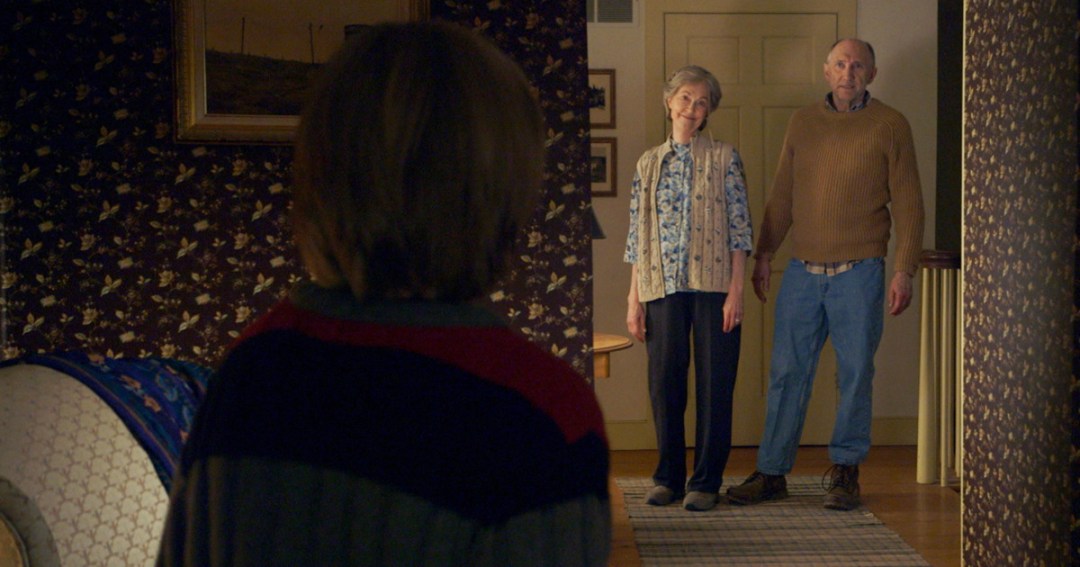
M. Night Shyamalan is the twist guy. Except he’s not. But he knows you think he is. So, back in 2015, he decided to play a prank on everyone. It’s called The Visit and it was his best film in fifteen years, so obviously it got wildly mixed reviews. People’s brains just go all wobbly when it comes to this guy, for some reason.

Continue reading “What is Beyond the Frame”

The Rise and Fall of Last Week Tonight

This article is part of the Rise and Fall series, taking a look at shows that were once great and are now not. Previously, Brooklyn Nine-Nine


Every week, a new Last Week Tonight video shows up in my YouTube subscriptions page – the main story John Oliver covers in the show is uploaded to YouTube the next day – and every week, I dutifully watch it. It’s always disappointing. Sometimes because it seems like a waste to focus on something ultimately trivial or obvious, like his recent piece debunking psychics. Sometimes because it seems like a waste to cover something important but without a point of view or anything to illuminate, like his recent piece on automation. Sometimes because it’s so frustrating that it makes me genuinely angry, like his recent Brexit update that in twenty-plus minutes tossed off the Irish border in a line.

I ask myself all the time if Last Week Tonight changed or if I changed. The answer is a little of both, I’m sure, but I can pull up one of his old segments from 2014 or 2015 every so often, and they’re so, so much better than anything Last Week Tonight is doing now that I can’t understand how anyone can talk about John Oliver like he’s still the king of late night – unless it was a comment on the barrenness of the field, I guess. Last Week Tonight may have always been flawed, but it once was entertaining and informative. It once felt like a thing of value.

Now it sucks.

Continue reading “The Rise and Fall of Last Week Tonight”