The Year in Film(s That Didn’t Come Out This Year)

One of the most annoying things about being a young critic – or just any young person who likes to talk about movies – is the pressure to pretend like you’ve already seen every great film ever made. Some of that is a purely self-imposed anxiety about sounding knowledgeable enough to justify your opinions, but mostly it’s the fairly explicit comments like “What!? How have you not seen X!?” or “Come back to me when you’ve watched Y, then maybe you’ll know what you’re talking about”.

But no one, not even Edgar Wright or Quentin Tarantino, has seen every great film ever made, even when you leave aside that anywhere between 70% and 90% of films made before 1929 are lost. The last time anyone could conceivably watch every film every made was the early 1930s, and more great films have probably gone unnoticed or forgotten than will ever be recognised. People have families and friends and interests and jobs and also just can’t physically stare at screens for a long time with no breaks. Even if you could somehow make time to watch a film every day, not including new ones, it would take you years to make a dent in the canon of great American cinema, let alone every other country, let alone alternative, experimental and avant-garde film, let alone all the great movies that were dismissed on release and have yet to be rehabilitated by dorks like us.

You don’t have to pretend to have seen all the “great” or “important” films to think, speak or write about movies. We sure haven’t. You can find out our favourite new releases of the year when we post the Sundae Film Awards 2018 in March, but we’re ending 2017 with a look back on the best films we saw this year that didn’t come out this year.

These films are great, and you should watch them. But it’s not a big deal if you don’t.

Continue reading “The Year in Film(s That Didn’t Come Out This Year)”

Weekend at Bernie’s Is Not the Film You Think It Is

Weekend at Bernie’s might be the most misunderstood film I know. It was a hit in 1989, despite bad reviews, and has had staying power since: the image of Andrew McCarthy and Jonathan Silverman propping up Bernie’s lifeless body is seared onto the cultural memory, one of those iconic cinematic images that has been parodied and homaged and referenced enough to take on a life of its own beyond the film itself. It’s a very famous film, is the point – though not exactly acclaimed – but when I watched it, I kind of felt like the first person to ever see it.

Here’s what I assumed Weekend at Bernie’s would be like: an extremely dumb, extremely wacky 1980s comedy, in the vein of Porky’s or a National Lampoon movie, that is probably not very good but has a kind of charm that not very good films from the 1980s tend to have. I knew the basic plot – two guys pretend another guy, Bernie, is alive, while staying at his place for the weekend. I assumed – either because it’s how it turns out in any given Weekend at Bernie’s-inspired TV episode, or because of the existence of Weekend at Bernie’s II – that Bernie wasn’t really dead. That our heroes found him unconscious and panicked, but, by the end of the film, Bernie would wake up, and we’d arrive at our happy ending.

Weekend at Bernie’s is something much stranger, and much more interesting.

Continue reading “Weekend at Bernie’s Is Not the Film You Think It Is”

The Real Lesson of Get Out’s Success

Get Out is one of the best horror films this year, and it’s been a particularly good year for horror. The directorial debut of comedian Jordan Peele, Get Out is the story of Chris Washington, a young black photographer who reluctantly agrees to meet his white girlfriend’s family for the first time. Bad things happen. As well as being really, really good, Get Out was phenomenally successful, grossing $254 million over a $4.5 million budget.

If a movie is critically acclaimed, financially successful and not a blockbuster, chances are that its financial success will be followed by a series of articles on what lessons Hollywood should take from its success. This isn’t a hard and fast rule, but it’s predictable enough that I wasn’t surprised when it happened to Get Out.

I hate these articles.

Continue reading “The Real Lesson of Get Out’s Success”

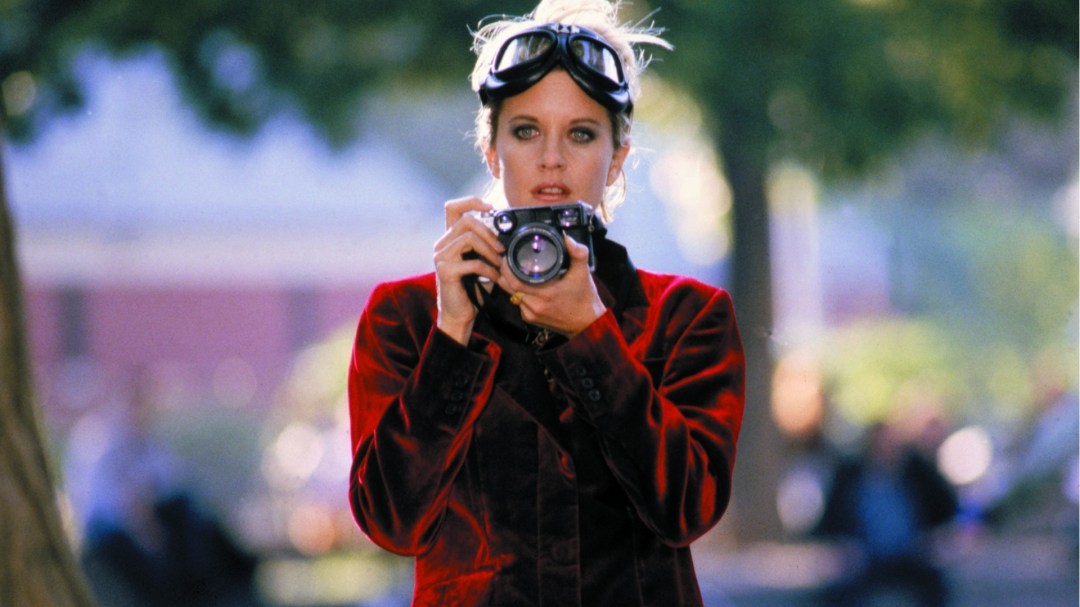
Camera Obscura: In Defense of Addicted to Love

Addicted to Love is not a film anybody likes or cares about, or even remembers. It’s one of those films disappeared in the sands of time, managing to have literally zero cultural impact. There’s so much media today – peak TV, a boom of indie films scrabbling for a smaller piece of the pie, three hundred hours of video uploaded to YouTube every minute – that we’ve created a modern inverse of the lost films of early cinema. Those films quite literally ceased to exist, either due to studios dumping them to make space or accidental destruction by fire (nitrate film, which was standard before the 1950s, can spontaneously combust if stored improperly). The Film Foundation, Martin Scorsese’s film preservation non-profit, estimates that ninety percent of films made in the US before 1929 are lost.

Continue reading “Camera Obscura: In Defense of Addicted to Love”

Video Game Movies and Why They Suck

It is a truth universally acknowledged that no one has ever made a good movie based on a video game, since the genre came into being with 1993’s Super Mario Bros. I don’t usually care for such truths, but that’s one I’m happy to accept, by and large. I would possibly carve out an exception for some of the Pokémon movies, though I haven’t watched any of them in a long time, and there are, of course, some good movies about video games or inspired by their aesthetic: Scott Pilgrim vs. the World, Wreck-It Ralph, Tron, etc. But as far as film adaptations of video games, it’s been one failure after another, with only occasional spells of mediocrity to shake things up.

Continue reading “Video Game Movies and Why They Suck”

Doctor Who and the Death of Death

Death in popular culture is meaningless. There’s too much death and not enough. More than ever, TV shows and films are obsessed with the omnipresence of death, but blind to death having any meaning. “Why is no-one allowed die?” (e.g. the Marvel films) or “Why must everyone be killed off for shock value?” (e.g. Game of Thrones) seem like not only distinct but contradictory problems, but they’re two sides of the same coin: anybody might die – but probably not anybody you care about, and if it is, they’ll come back to life in the end.

Continue reading “Doctor Who and the Death of Death”

The Best of The Sundae So Far

The Sundae launched seven and a half months ago with a history of the decline of multi-cam sitcoms and a counterpoint to the 89th Academy Awards. Since then, we’ve published a piece a week every week for thirty-two weeks, and this week will be no different, except that it’s completely different, because we’re not publishing a new piece of criticism, analysis or opinion.

We’re taking a week off because, well, we don’t get paid to do this, and we’re both in full-time education, and we both have coursework to do, and we’d rather not write something this week than write something half-assed, rushed or forced. So, instead, we’ve looked back over the past seven and a half months of writing we’ve published and picked our favourite pieces. If you’re a long-time reader, revisit the classics. If you’re a recent reader, catch up on some stuff you might not have read. If you’re a brand new reader, take a crash course in what we’re all about.

Here’s the best of The Sundae so far.

Continue reading “The Best of The Sundae So Far”

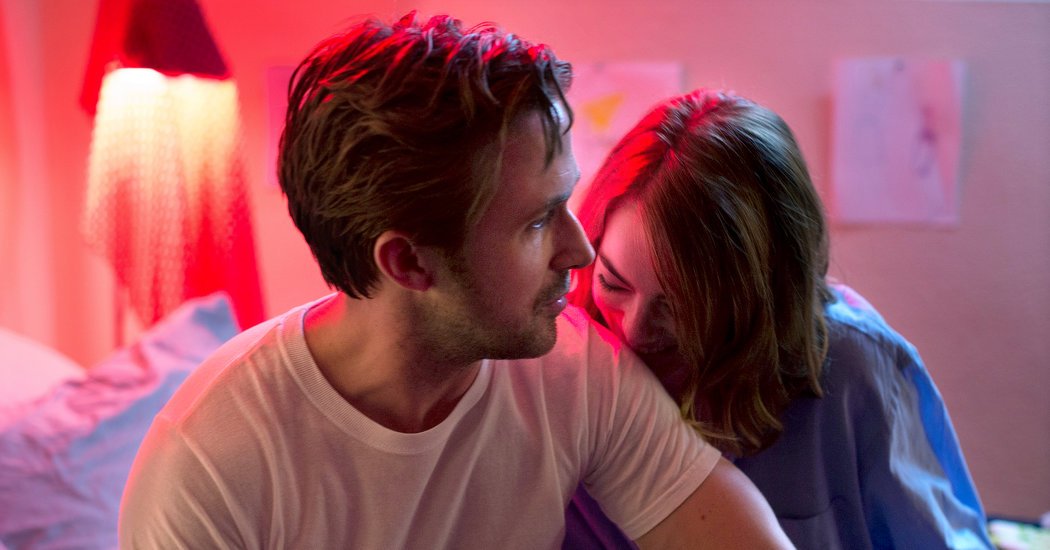
All We’re Looking for Is Love from Someone Else

“They say you gotta want it more,” a young man sings in ‘Another Day of Sun’, La La Land’s opening number, “So I bang on every door.”

He came to LA with dreams of making it in the entertainment business, but his problem is not that he doesn’t want it enough. He wants it desperately, single-mindedly. He’s dancing in the middle of a traffic jam, singing about wanting it – as desperately as the dozens of other people singing the same song.

‘Another Day of Sun’ sounds bright and happy, but lyrically, it’s about constant rejection, about running out of money, about leaving loved ones to pursue unrealised dreams – and about a pressure to blame yourself. They say you gotta want it more.

The chorus initially sounds like an ode to perseverance:

And when they let you down

You’ll get up off the ground

‘Cause morning rolls around

And it’s another day of sun

But it’s more melancholy with every repetition, as getting knocked to the ground emerges as a habit. “It’s another day of sun” is a joke about LA not having seasons, but it’s also a comment on how that lack of weather can feel oppressive. It’s an environment that refuses to bend, impervious to your feelings. There’s weariness to it: constant sunshine, constant disappointment.

La La Land is not a film about how you should pursue your dreams.

Continue reading “All We’re Looking for Is Love from Someone Else”

I Was a Teenage Nolan Bro

A spectre is haunting the Internet – the spectre of the Nolan Bro.

Every few years, Christopher Nolan releases a new film. Some critics don’t care for the new film, and they get angry tweets, comments and emails from obsessed Nolan fans that range from mild rants about how dumb their opinions are to death threats. Next come the thinkpieces – “Why Are Chris Nolan’s Fans Such Jerks?” (circa Inception), “Why Are Christopher Nolan Fans So Intense?” (circa Interstellar), “Why Does Christopher Nolan Have Such Angry Hardcore Fans?” (circa Dunkirk) – and then follows the long murmur in between because no one talks about Christopher Nolan that much except when he’s just made a film. I’ve seen three cycles of this bizarre online phenomenon, and for every time it happens, the online hatred for the Nolan Bro grows ever more widespread and annoying.

Continue reading “I Was a Teenage Nolan Bro”

Break the Studios, Save the Movies

Hollywood is in a prolonged state of crisis. Everybody knows this. Studios pump out a seemingly endless supply of sequels, spin-offs, remakes, reboots, and films otherwise based on any and all previously existing intellectual property, all of which invariably cost upwards of 100 million dollars. We call them tentpole films, because they’re supposed to be sure-fire bets that can make enough money to finance smaller, riskier projects across the studio’s slate, like tentpoles upholding a tent. The problem is that there is no tent. There’s just masses and masses of poles, sticking upright in a field, and we’re all so used to getting wet that we’re more likely to ask for the poles to be more interesting than ask for some tarp.

Continue reading “Break the Studios, Save the Movies”