
We watched probably as little new TV this year as we have since we started doing these awards, and just like last year, that’s mostly because we’re just busy. Ciara finished her PhD and is now officially Dr. Ciara Moloney, expert in the screen and stage works of Martin McDonagh. Dean broke more news stories, including one a government spokesperson had to respond to on the radio. In many ways, the TV landscape is no less disillusioning than last year, but as the world slides further into nightmare, the beautiful illusions still left to find are all the more precious. Some of them even feel like hope.
And no, we didn’t watch Andor, so stop asking.
These, as far as we’re concerned, are the best shows of the most recent TV season (June 2024 – May 2025). As well as the classic drama and comedy awards, we also have two awards for reality, variety and documentary television, including game shows, professional wrestling and whatever Eric Andre is doing at any given minute. We picked our winners by consensus, so only shows we both watched were eligible to win, but we each picked a runner-up, regardless of whether the other has seen it.
You can find each of our full slates of nominees at the bottom of the post. We recommend checking them out if you’re looking for recommendations.
DRAMA
OUTSTANDING DRAMA SERIES – The Pitt

Ciara: “I don’t remember the last time I was excited about a TV show as I was about The Pitt. It’s been awhile since I liked a show this much – Succession, maybe, or Better Call Saul – but The Pitt excites something deeper, buried, about the medium of television itself.
The Pitt is a TV show with a capital T. It is great television in the best, truest, purest sense, without pretensions to being anything else. It’s ER as 24: we follow the goings-on in an emergency room in Pittsburgh in real time, each episode covering an hour of the shift. It’s a genius premise carried out with aplomb. The Pitt is structurally disciplined yet feels freewheeling, deeply rooted in the long history of the medical drama yet groundbreaking. It is as traditionalist as it is revolutionary. I felt invigorated by it.
The sheer number of people in and around the emergency department – doctors, nurses, other staff, patients, family members – means that The Pitt is constantly telling many stories, big and small. The bigger ones are the kind of serialised stuff you get on modern TV, albeit told especially well: Dr. Robbie dealing with the trauma of watching his mentor die during the pandemic, Dr. McKay’s custody battle, Dr. Langdon’s shameful secrets. But what makes The Pitt really special is the small stories – the people who pass through the ER whose lives we get the tiniest glimpse of. The woman with an STD whose boss comes with her. The autistic man who Langdon can’t deal with, but who neurodivergent Mel gets through to with ease. The little girl who drowned saving her sister. I recall these briefly seen characters more vividly than the protagonists of most drama shows I’ve watched.
I can’t imagine someone not liking The Pitt unless they just hate television. It better air for twenty years.”
Ciara’s Runner-Up: Severance – “The second season of Severance delves further into the relationship between the two halves of each character – their work ‘innie’ and their personal ‘outie’ – but the more we learn, the harder it seems to understand. Rather than offering easy answers, Severance challenges our very conception of self. Not to mention the exquisite production design, world building, and performances.”
Dean’s Runner-Up: Poker Face – “Poker Face remains one of the finest delights on television, taking a contemplative turn as an oasis of calm gives Charlie the opportunity to reflect on what kind of life she wants to lead. Along the way, she dodges a lot of bullets, solves the murder of a gerbil and finally meets her match with a killer who can beat her bullshit detector.”
—
OUTSTANDING LEAD ACTOR IN A DRAMA – Adam Scott as Mark S. / Mark Scout in Severance

Ciara: “The main characters on Severance all play dual roles: their minds have been severed, so that their ‘innie’ retains only memories of work while their ‘outie’ retains memories only of their outside life. Many of the innies we know have outies shrouded in mystery. But from the beginning of Severance, we see Adam Scott as both his innie – Mark S. – and his outie – Mark Scout. The juxtaposition makes ‘Mark’ feel more like one person than his colleagues: a single soul living two separate lives. Adam Scott doesn’t play them as his two opposite modes as an actor, Nice Adam Scott and Asshole Adam Scott. Instead, he lets us see how different they are through the culmination of a thousand miniscule details. Eventually, they feel more unalike than two polar opposite performances would have been.
This comes to ahead when the two Marks, through the magic of a camcorder, have their first conversation. The resentments that have been bubbling come to the surface, the rifts tear. Their emotions aren’t all that different – frustration at not being listened to, fear that they may never see their beloved again – but you wouldn’t mistake them for one another for a second. Perhaps they were one person once, but not anymore. Mark Scout – perhaps less consciously than some outies I could mention – does not really see his innie as a person. That understanding powers the subsequent finale, and it’s brought out through Scott’s performance.”
Ciara’s Runner-Up: Stephen Graham as Eddie Miller in Adolescence – “Stephen Graham’s role as the boy’s father is the emotional centre of Adolescence, which is handy, because he’s the best thing about it. Graham negotiates Eddie needing to put on a display of certain emotions – comfort, courage – while others broil inside him – worry, fear, devastation – with vivid, virtuosic intensity.”
Dean’s Runner-Up: Colin Farrell as Oz Cobb in The Penguin – “It’s so funny that the notoriously bad-at-accents Colin Farrell only figured out how to convincingly play an American while caked in prosthetics as the Penguin, but that doesn’t make his portrayal of Oswald any less wonderful. Oz is a two-bit crook playing for the throne, a pathetic mama’s boy, a shameless flatterer and ruthless manipulator who never says what he means or means what he says. But in Farrell’s hands, he still has just enough humanity to trick you into thinking there’s something other than darkness under all those layers. There isn’t.”
—
OUTSTANDING LEAD ACTRESS IN A DRAMA – Cristin Milioti as Sofia Falcone in The Penguin

Dean: “I love Cristin Milioti, but I was initially skeptical when she was cast as Sofia Falcone. Sofia Gigante is aptly nicknamed in the Batman comics, standing over six foot tall and closer to Bane on the scale of physical threats than, say, Harley Quinn. I don’t give a shit about ‘comics accuracy’, to be clear, it just seemed like casting for a more generic take on a lady gangster. I expected to enjoy Milioti’s take, but not be blown away.
Well, that just goes to show what I know, because what actually happened is that Cristin Milioti melted my face off with an instantly iconic performance. A mobster’s daughter confined to Arkham Asylum after her father framed her for his own serial murders, Sofia is a bitterly tragic figure, as heartbreaking as she is terrifying. She wanted to succeed her father but didn’t have his appetite for violence – until the doctors at Arkham tortured it into her.
It would be easy to portray this as a simple descent into madness and/or darkness, but in Milioti’s hands, there is nothing simple about Sofia. Her alternating struggle with and embrace of her most sociopathic tendencies is as tense and dramatic as any turn of the plot. Even as we see, in flashback, just how much her time in Arkham has hardened her, and in the end, there remains some inextinguishable light of mercy in her that is both her salvation and her undoing.”
Ciara’s Runner-Up: Kaitlin Olson as Morgan Guillory in High Potential – “High Potential is mostly a workaday network police procedural, but Kaitlin Olson shines as brash, tacky and tender Morgan, an intellectually gifted person that the cops hire as a consultant. What can I say, I love when Kaitlin Olson acts in stuff.”
Dean’s Runner-Up: Britt Lower as Helly R. / Helena Egan in Severance – “Britt Lower gives a pair of extraordinary performances as Helly R. and her villainous outie Helena Egan. Helly and Helena seem to have the most clearly delineated and morally opposed personalities of any severed character in the show, but the second season constantly blurs the line between them in ways that complicates their differences without ever allowing them to satisfyingly resolve. All of that turns on the subtlety and surety of Lower, who charges her every gesture with rich layers of implication.”
—
OUTSTANDING SUPPORTING ACTOR IN A DRAMA – Tramell Tillman as Seth Milchick in Severance
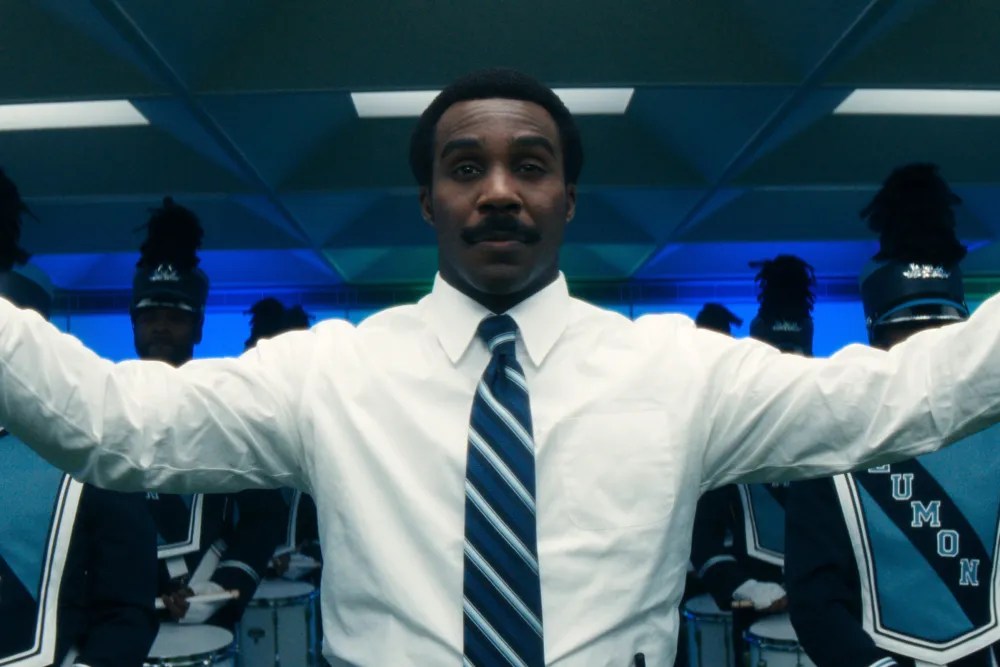
Dean: “With Cobel off-screen for most of the season, Mr. Milchick was drawn into much greater focus as the only unsevered member of the main cast, and Tramell Tillman didn’t just rise to the occasion, he soared above it. Whether sprinting from room to room in slapstick panic or leading a marching band, he was the most arresting thing on screen.
Milchick is, on paper, the ideal Lumon employee: more than just a company man, he is a true believer utterly devoted to the cult of Keir. But the whole point of a human potential cult like Lumon is that no one is ever good enough, and so perfect employee Milchick spends the whole season being humbled. He is assigned a precocious child assistant to undermine him and humiliated by a more senior manager for using too many long words. The scene where he furiously shortens ‘you must remove from your essence childish folly’ down to ‘grow’ while staring at himself in the mirror should be studied for years.
So much of Milchick’s characterisation comes out of how his emotions silently play on his face as he both represses and ruminates on them, and for all the flashy moments, it’s in these moments that the sheer breadth of Tillman’s talent truly becomes apparent. Watching him react to the ‘gift’ of a portrait of Keir painted as a black man sticks in my head as much as any of the mind-bending sci-fi surrealism. A treasure of a performance.”
Ciara’s Runner-Up: John Turturro as Irving B. / Irving Bailiff in Severance – “I constantly wanted to see what Irving was up to – his innie and his outie both. It is a testament to John Turturro’s performance that I was itching out of my skin wanting to see him make out with Christopher Walken. And I’ll think about him repeating ‘I’m ready’ for the rest of my life.”
Dean’s Runner-Up: Park Sung-woong as Nam Wan-seong in Dongjae, the Good or the Bastard – “Nam Wan-seong is an incredibly mundane kind of villain, a construction magnate who has the city of Cheongju under his thumb through his strategic corruption of high-ranking public officials. But Park Sung-woong, in his genius, plays him like he’s the Joker, an operatic madman who delights in flaunting his evil in people’s faces. He looks viscerally uncomfortable whenever he has to pretend to be a decent citizen, and the moment he is unmasked in public is one of the more entertaining ‘Perry Mason moments’ I’ve ever seen.”
—
OUTSTANDING SUPPORTING ACTRESS IN A DRAMA – Taylor Dearden as Dr. Melissa “Mel” King in The Pitt

Ciara: “Even though Mel has more medical experience than the other characters starting work that day, she immediately seems out of her depth. She’s awkward and uncomfortable, hugging her arms around herself or tearing up a little. She tells a medical student that she has an ‘emotional reaction’ to death. It’s the most natural and human thing in the world, but it doesn’t sound that way. It sounds strange. Not just, as he responds, that she might be in the wrong job. What’s striking is how it sounds like she sits outside her emotions, an observer of her own behaviour.
Mel was previously a full-time carer for her sister on the autism spectrum, who has high support needs. Though it seems that Mel hasn’t been diagnosed, ADHDer Taylor Dearden said she brought her own experience with neurodivergence to the role. I think of autistic or autistic-coded doctors on TV, and they’re usually geniuses with zero social skills – The Good Doctor, stuff like that. Mel is a great doctor, though not a perfect one. She makes mistakes. And her greatest strength, so often, is her empathy. An autistic patient comes in and she closes the door to block the loud hospital noises, and isn’t dismissive when he doesn’t know how to answer questions like ‘how painful from one to ten’. She treats a trans woman and casually tells her that she noticed her name wasn’t up-to-date on their records, so she updated it. There are times she rushes to help and gets things wrong – offering services to a homeless patient who clearly isn’t interested – but her greatest gift as a doctor is still the thing autistic people are so often wrongly imagined not to have.”
Ciara’s Runner-Up: Fiona Shaw as Angelica Collins in Bad Sisters – “Even before we have any reason to question the sisters’ dislike and distrust of Angelica – a classic type of older Irish woman, adamant Catholic and devoted GAA volunteer – Fiona Shaw always plays her like she feels herself to be the hero of her story. Not a scheming Machiavellian, but a woman trying her best to do what’s right – even if it doesn’t look like it.”
Dean’s Runner-Up: Carrie Coon as Laurie Duffy in The White Lotus – “The third season of The White Lotus was a turgid, overwritten, underrealised mess that felt like an endless wait for the most obvious shoes to drop. Most of the cast struggled to elevate it beyond its limits, but not Carrie Coon. Where others are rote, she is radiant, imbuing a very ordinary story of middle-aged divorcee sexual self-discovery with vivid and ineffably human pathos. She’s truly one of the greats.”
—
OUTSTANDING WRITING IN A DRAMA – Anna Ouyang Moench for Severance: “Woe’s Hollow”

Ciara: “A snowy work excursion enables a tight series of twists and reversals that I won’t reveal, but that I can assure you will have you sending a text that’s just exclamation marks to whoever in your life has been bothering you to watch Severance already. Watch Severance already!
In the spirit of this being a writing award, let me also note the odd and startling beauty of the phrase ‘night gardener.’”
Ciara’s Runner-Up: Jack Thorne & Stephen Graham for Adolescence: “Episode 3” – “Much of the discourse around Adolescence focused on the online radicalisation of young men. It’s something that’s explicitly brought up in episode 2, not particularly insightfully. But the following episode, where Jamie is interviewed by a forensic psychologist, isn’t really about that – it’s about how we try, often futilely, to make sense of violent crimes committed by children. This episode is written as a confrontation between Jamie and the psychologist, but it’s the audience who are most viscerally confronted.”
Dean’s Runner-Up: Megan Amram for Poker Face: “The Sleazy Georgian” – “By far the best episode of Poker Face’s second season sees Charlie exploring the world of a slick con artist played by John Cho, before burning it down in marvelous fashion when the shine comes off his facade. Megan Amram’s script is tight as a drum and runs like clockwork, alternately tense and propulsive in all the right places. It perfectly captures the moral self-deception of the con artist and tears it apart just as viciously. A great bit of television.”
—
OUTSTANDING DIRECTING IN A DRAMA – Damian Marcano for The Pitt: “7:00 P.M.”
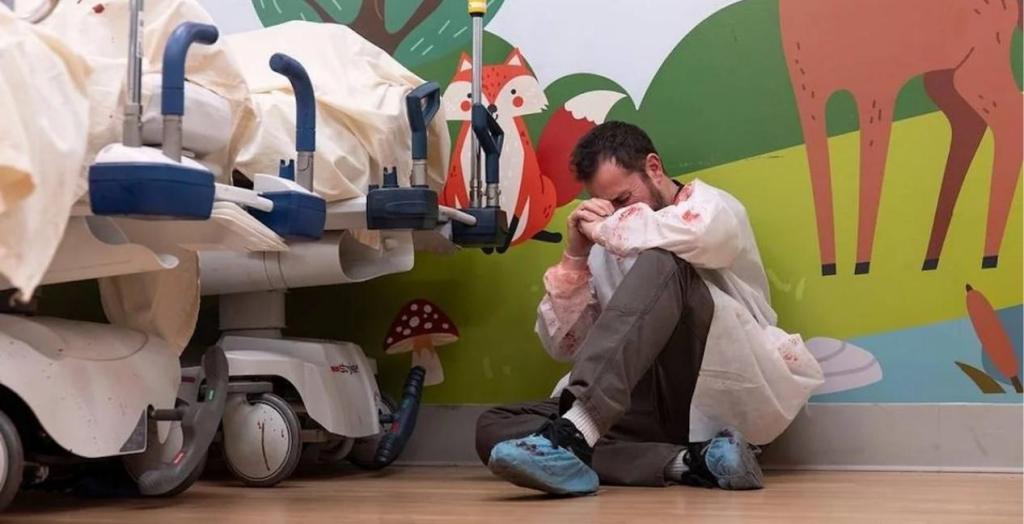
Dean: “It was obvious to us as soon as we watched The Pitt that it would be winning this award, and just as obvious that picking just one episode of The Pitt to win it would be virtually impossible. It’s not only that The Pitt is masterful television – though it is – but that its real-time format means episodes interlock with and inform each other much more tightly than in most TV shows. Every episode of The Pitt is a remarkable feat of choreography, not only of the cast but the camera whipping and weaving through an active, living set.
‘7:00 P.M.’ is the second of two episodes dealing with the fallout from a mass shooting, and it depends so much on the first that it feels almost like a snub to ‘6:00 P.M.’, but there is something brutally beautiful in how much worse things get for our characters even as the situation improves in the second. If “6:00 P.M.” was a storm blowing into the emergency room, then “7:00 P.M.” is its eye, all the eerier for its relative stillness. Robby spends almost the entire episode working – stubbornly, futilely – on a single patient long after the protocol dictates he should give up. When he fails anyway, all the guilt and shame of his previous failure to save his mentor crashes over him in a paralytic wave of despair.
Also, Whitaker drills a cannula into a clown’s skull while he’s still awake. Because all great dramas are also hilarious.”
Ciara’s Runner-Up: Amanda Marsalis for The Pitt: “6:00 PM” – “If it felt like a snub to give the win to ‘7:00 PM’, I had to shout out ‘6:00 PM’ as my runner-up. Just as the shift is approaching its natural end, the world shifts on its axis.”
Dean’s Runner-Up: Jessica Lee Gagné for Severance: “Chikai Bardo” – “Even with over a decade as a cinematographer under her belt, ‘Chikai Bardo’ is a breathtakingly impressive directorial debut for Jessica Lee Gagné. Given the task of simultaneously introducing the previously unseen testing floor with its bizarre visual vocabulary alongside the story of Mark and Gemma’s romance in flashback, she crafts a gorgeously surreal and haunting double tragedy that may well be the show’s finest hour.”
REALITY, VARIETY AND DOCUMENTARY
OUTSTANDING REALITY, VARIETY OR DOCUMENTARY SERIES – The Rehearsal

Ciara: “Considering that the first season of The Rehearsal ended with Nathan Fielder concluding that making the show was itself immoral, the existence of The Rehearsal season 2 is nuts. But things only get nuttier from there.
The season is ostensibly about how roleplaying can help pilots and co-pilots feel more comfortable communicating, reducing pilot error and making flying safer for everyone. In pursuit of this noble goal, Fielder:
- Creates a fake singing competition called Wings of Voice, inspired by his work as a junior staffer on Canadian Idol, in which the contestants only sing songs that are in the public domain
- Confronts Paramount+ about removing an episode of Nathan for You from streaming after the war in Gaza started
- Builds a perfect recreation of George Bush Intercontinental Airport, staffed with actors who imitate specific airport employees
- Relives the entire life of Sully Sullenberger, from infancy onward
- Spends two years training to get a commercial pilot’s licence
- Vigorously resists a potential autism diagnosis
You know, those old chestnuts. This season of The Rehearsal is the best thing Nathan Fielder has ever done, combining his usual biting and self-reflexive critique of reality television with surprisingly sincere and informative material about airline safety, before, in its final episodes, becoming a painful and moving psychological examination of autistic self-hatred. But most importantly, there’s a bit where Fielder-as-Sully, while recreating the Miracle on the Hudson, acts out his theory that Sully listened to ‘Bring Me to Life’ by Evanescence at a pivotal moment. I laughed so hard I choked.”
Ciara’s Runner-Up: The Daily Show with Jon Stewart – “It’s strange the way history repeats itself. Jon Stewart is, all these years later, the only truth teller on TV. He remains uniquely good at this very particular kind of comedy news broadcast, a fact thrown into stark relief by the sheer glut of imitators. I’m glad you’re back, Jon, despite the circumstances.”
Dean’s Runner-Up: Everybody’s Live with John Mulaney – “Everybody’s Live with John Mulaney is the show that most left me wanting more this year, because this is what an American talk show should be. The Eric Andre Show and The Chris Gerhard Show each deconstructed the talk show in opposing but equally thoughtful ways. Everybody’s Live reconstructs the talk show just as brilliantly. But my favourite thing about it might be the constant soundtrack of history’s greatest talk show sidekick Richard Kind laughing at every joke just off-screen.”
—
OUTSTANDING REALITY, VARIETY OR DOCUMENTARY SPECIAL – Stewart Lee, Basic Lee: Live at the Lowry

Dean: “Never has the risk of sounding like the kind of Stewart Lee fan that Stewart Lee makes fun of in his routines felt so precarious, but let’s give it a whirl. Basic Lee, as you might expect from the name, is a back to basics set for Stewart Lee: ‘one man, one microphone, one audience, pure, simple, classic’. And as you might expect from having ever watched Stewart Lee before, it is both a back to basics set and a dry, withering, self-aware deconstruction of the idea of a back to basics set that frequently devolves into Lee making unintelligible mouth sounds into the mic. It might be his best work since If You Prefer a Milder Comedian.
The most distinct aspect of Lee’s comedic sensibilities, and the one he hones in on as his essence through this show, is how he pretends to break character to comment on the form and structure of jokes, subvert his own material or mock his own audience for laughing at him. The bit in this where he interrupts his own joke about J.K. Rowling to furiously tell the audience it’s not about ‘that’ – ‘It’s not worth the grief. They put my home address on Mumsnet!’ – is as good as any he’s ever done. He spends probably more than fifty times the length of the joke ‘interrupting’ it only for it to be, in fact, about ‘that’.
But what makes this special more than just another great Stewart Lee special is how it reveals the first sixty minutes deconstructing himself was all set-up for one of his greatest punchlines: his own rage at how bleedingly obvious it is that he’s autistic once his doctor points it out.”
Ciara’s Runner-Up: Rachel Bloom: Death, Let Me Do My Special – “As Rachel Bloom tries to record a special where she sings about trees that smell like semen, Death himself heckles for her to talk about him. And she does: about her dog, about her baby in the NICU, about Adam Schlesinger dying, about how to wrestle with death when she doesn’t believe in God. She stares unflinchingly into a pandemic that pop culture has attempted to block out of memory, and never stops being funny to do it. Also, Death sings a song about how he feels just like Dear Evan Hansen and it’s amazing.”
Dean’s Runner-Up: RTÉ Investigates: Inside the Protests – “RTÉ journalist Barry O’Kelly endured harassment, abuse and assault while shooting this penetrating documentary on the frontline of the reactionary backlash against refugees in Ireland. I have been closely following the Irish far right for well over a year now, but it still provided shocking insight to see what was happening inside moments I’d watched from outside, not least the catastrophic failure of gardaí to protect workers in Coolock from an increasingly violent mob. An important snapshot from a grim time that we’re still living through.”
COMEDY
OUTSTANDING COMEDY SERIES – Abbott Elementary

Dean: “Abbott Elementary is one of the very best shows spawned from the long legacy of the US Office and it has only gone from strength to strength with its latest season. It can be difficult for a show with a central will-they-won’t-they couple to keep its momentum once they get together, but Abbott is as punchy, energetic and fun as ever now that Janine and Gregory are dating. It may sound like faint praise to say a show is staying its course, but for a sitcom in its fourth season, it has done a fantastic job of neither spinning its wheels nor jumping any sharks.
Among its wonders: Gregory freaking the fuck out during a ringworm outbreak, Melissa developing a profound friendship with a guinea pig, and Jacob singing ‘Last Resort’ by Papa Roach at karaoke. There’s an episode where a student’s father says he’s going to kick Gregory’s ass because he gave his son a pencil, and a crossover with It’s Always Sunny in Philadelphia that works way better than it should. A bunch of rich bastards start building a golf course near the school, causing all sorts of problems, so the staff end up blackmailing the shit out of them to get resources for students.
It took me too long to catch up on this show, but now that I have I will burn Disney to the ground if they cancel it.”
Ciara’s Runner-Up: We Are Lady Parts – “The second season of We Are Lady Parts doubles down on its feminist Muslim punk ethos while questioning its own role in the wider political-cultural milieu, and also somebody covers ‘The Reason’ by Hoobastank. So good that Malala cameos as a cowgirl and it’s not even the highlight of the season.”
Dean’s Runner-Up: Shoresy – “The fourth season of Shoresy sees our titular hero discovering what life has to offer a retired hockey player during the summer after his victorious final season, while the rest of the boys do whatever it takes to get invited to the freakiest sex party in Northern Ontario. What it lacked in characters gone home for the summer, it more than made up for with a greater role for the Jims. Jims are fuckin’ beauties, eh?”
—
OUTSTANDING LEAD ACTOR IN A COMEDY – Nathan Lane as Bunny Schneiderman in Mid-Century Modern

Dean: “Nathan Lane is at the height of his powers in Mid-Century Modern, so effortlessly brilliant as the lead in a multicam sitcom you’d be forgiven for assuming he was an icon of the genre playing the hits. But of course it makes perfect sense that he would thrive on such a show: the core of the multi-cam is transposing theatrical conventions to the screen, and Nathan Lane is a giant of the theatre. If Mid-Century Modern is explicitly an attempt to create a classic sitcom with modern sensibilities, who better to front it than one of the finest actors to strut the boards on an American stage?
Bunny Schneiderman is an old school queen, the nouveau riche owner of a chain of lingerie shops, a prissy sissy and proud of it. From the very first scene of the pilot, with Bunny trying to make himself cry at his best friend’s funeral, Lane milks his every word and gesture for laughs, in every register from dryly cutting to hysterically overreacting. His indignant monologue when Arthur dares to call him a drama queen – ‘I suppose an open heart makes an easier target to stab with a dagger of betrayal!’ – left my diaphragm sore from laughing.
All that would be enough and more, but when Bunny’s mother suddenly passes away (due to the death of her actress, Linda Lavin), Lane flexes his dramatic chops just as ably in showing the depths of his grief. I dearly hope this show runs for as long as possible.”
Ciara’s Runner-Up: Kelsey Grammer as Frasier Crane in Frasier – “This might be the last time Kelsey Grammer plays Frasier Crane, and I would happily watch him play Frasier Crane forever. Case in point: his hiding in the plants while he double Cyrano de Bergeracs a date. New Frasier is no Frasier, but Grammer will always be Frasier, and I’ll eat it up every time.”
Dean’s Runner-Up: Jared Keeso as Shoresy in Shoresy – “Jared Keeso already gave one of the great sitcom performances of our age as Wayne in Letterkenny, so doing it all over again with Shoresy is quite an accomplishment. Shoresy has spent his entire adult life defining himself as a hockey player to the exclusion of any other identity, so watching him naturally shift into a coach despite his constant protestations to the contrary was both very funny and surprisingly moving.”
—
OUTSTANDING LEAD ACTRESS IN A COMEDY – Quinta Brunson as Janine Teagues in Abbott Elementary

Ciara: “I previously described Quinta Brunson’s Janine as Leslie Knope for the Biden era, a period that feels more like a dream I once had than a time we all lived through with each passing day. It’s still true in Trump 2.0: she’s the rock on which Abbott Elementary is built, a shining, shimmery Energiser bunny devoted to doing the best job she can. But part of what has kept Abbott Elementary so good is that the show doesn’t bend its universe around her the way that Parks and Recreation did for Leslie. It never falls so in love with Janine that it forgets she’s a lame dork. Brunson never lets you forget – not with her pep and panic and overburdened attempts to be funny that succeed in being funny in the opposite way to her intent.
But this season, we got to see her and Gregory be dorks together. Most shows lose steam when their will-they-won’t-they become a couple, but Brunson keeps things fresh as she flexes new performance muscles as Janine in a happy relationship for the first time. She goes deeper on Janine’s anxieties and joys – radiating more than ever – as they surface in new ways. I’m obsessed with how pleased she was with her and Gregory’s Halloween costume, and how it gives way to uncertainty and self-consciousness when nobody gets it. I love how sure she is that her students not doing well on a standardised test must mean the test is broken. I love her buzzing with nerves about meeting Gregory’s dad, only to bubble with joy when they get along with him fabulously. A performance for the television history books.”
Ciara’s Runner-Up: Sarah Kameela Impey as Saira in We Are Lady Parts – “On the page, Saira’s disillusionment, disappointment and frustration with Lady Parts’ label might seem at odds with her being the most political and most cynical of the group. But as Sarah Kameela Impey plays her, it feels like a realisation that she has helped to build the very box they’re being put into – a much more complex and affecting mixture than a wide-eyed girl losing her innocence would be.”
Dean’s Runner-Up: Allison Tolman as Alex Mazurkian in St. Denis Medical – “Allison Tolman is so instantly perfect as head nurse Alex that it feels kind of weird she hasn’t been leading the cast of a medical sitcom for years already. She’s a compulsive caretaker and do-gooder, a fussier mother to her staff than to her kids, one of the most grounded characters and therefore all the more hilarious when she completely loses the run of herself.”
—
OUTSTANDING SUPPORTING ACTOR IN A COMEDY – Matt Bomer as Jerry Frank in Mid-Century Modern

Ciara: “Matt Bomer is thoroughly charming as Mid-Century Modern’s resident dumb hot guy. He’s disarmingly earnest and sweetly heartfelt. This is a show about gay guys in middle age and older, but Jerry is no more world-weary than a newborn baby. Bomer makes even his most sexually explicit dialogue feel wide-eyed innocent. And yet it feels natural when he is wise and kind and brave – like when he chooses not to repair his relationship with his estranged daughter at the cost of her relationship with her mother – as if this gay philanderer contains within him the contradictory mysteries at the heart of Christianity.
I’m always interested in stories about queer religious people, and Jerry’s relationship to the Mormon faith could easily feel cheap: fodder for casual jibes about the church’s homophobia more than a real part of his character. But Bomer plays Jerry as the most Mormon man you could imagine. His affect, his earnestness, his neighbourliness, even the way he holds his face – you don’t need to squint to see the idealistic and closeted Mormon missionary he was a few decades ago. He’s an ex-Mormon, but not necessarily a lapsed one: he was excommunicated after his wife outed him, forced to rebuild his life after the world he knew turned him away. It’s his foundational trauma, but other kinds of foundation, too. Donnie Osmond made him gay, after all. There’s complexity in Bomer’s portrayal of just this part of Jerry that you could untangle for days: the joy and pain and politics of a religion that he was forced to leave, but never left him. He says it feels like a fairy tale, all these years later. He doesn’t miss it, but he still knows the hymns.”
Ciara’s Runner-Up: William Stanford Davis as Mr. Johnson in Abbott Elementary – “Mr. Johnson is one of those joke supporting characters whose part seems to grow until he’s tangled into every corner. But you won’t catch me complaining, because William Stanford Davis does not spend a single second of that time not being extremely funny.”
Dean’s Runner-Up: Adam Devine as Kelvin Gemstone in The Righteous Gemstones – “Kelvin was always my least favourite Gemstone sibling in part because Adam Devine never quite imbued him with the same pathos as his co-stars. All that changed in season four, where Kelvin deals with the triumphs and defeats, the epic highs and lows of coming out as a gay man when you’re the scion of an evangelical megachurch dynasty. His speech at the Top Christ Following Man of the Year ceremony is the true climax for what was sadly this show’s final season.”
—
OUTSTANDING SUPPORTING ACTRESS IN A COMEDY – Sian Clifford as Maude in Everyone Else Burns

Dean: “Sian Clifford storms into the second season of Everyone Else Burns like a dark cloud portending doom for all, scheming to seduce an initially oblivious David away from his wife and family. Maude is ruthless, cold-blooded and duplicitous, but because this is a show about an apocalyptic cult of evangelical Christians, her femme fatale is the exact opposite of what you’re imagining. She’s not a sexpot, she’s a tradwife, looking for a nice pliable man to use as her gormless puppet in a patriarchal world.
So she seduces David with chaste hugs, a fresh shepherd’s pie and the promise of repairing a VCR. The way she talks about her pie still being inside David after he realises what she’s up to – ‘nourishing you’, she says breathily – is as funny as her quiet satisfaction at sticking her hand inside the VCR alongside his after blackmailing him, especially when his son walks in and he screams ‘I’m doing this for you, Aaron!’. That she accomplishes this all with essentially one smug, knowing facial expression just makes it all the funnier.
But, in all honesty, the main reason that Sian Clifford takes the gong this year is the scene where she keeps picking up a preposterous number of Crunchie bars while staring daggers at David’s wife Fiona. Little made me laugh so hard this past year.”
Ciara’s Runner-Up: Linda Lavin as Sybil Schneiderman in Mid-Century Modern – “Linda Lavin died during production of Mid-Century Modern at the age of eighty-seven. As final roles go, kind-hearted, clear-eyed and sharp-tongued Sybil is a good one. But Lavin’s performance made her indelible. Never a caricature of a gay man’s Jewish mother, she succeeded in being (to paraphrase Lady Bird) both scary and warm.”
Dean’s Runner-Up: Sheryl Lee Ralph as Barbara Howard in Abbott Elementary – “Sheryl Lee Ralph is so good it feels unfair that other TV shows have to compete with shows that have Sheryl Lee Ralph. Barbara’s discomfort with feeling old has been a reliable comic goldmine throughout Abbott Elementary, but it provides its richest returns in this season, particularly in the Halloween episode where Barbara aggressively bobs for apples to prove how fun it is, then has a breakdown when none of the kids recognise Jacob as Pat Sajak.”
—
OUTSTANDING WRITING IN A COMEDY – Riley Dufurrena for Abbott Elementary: “Strike”

Dean: “I’m a sucker for a sitcom episode built around a big comedic setpiece, and ‘Strike’ has one of the best I’ve seen in a while. The public transport union goes on strike, leaving most of the kids with no way to get to school. Some of the teachers are able to adapt with hybrid learning, but it’s completely unworkable for the youngest students. Janine can’t stand to let her kids down, but Melissa won’t let anyone hire a private bus driver to cross the picket line because she’s from a proud trade union and/or mafia family.
The only solution is, of course, for Janine to hire a party bus and drive it herself to pick up all the kids and get them to school on time, while Melissa tags along to make sure no adult passengers get on and break the strike. They are the perfect comedic pair for this adventure, with Janine’s increasingly anxious energy and Melissa’s delirious joy at workers sticking it to those fat cats at City Hall feeding into each other as their obstacles mount and their triumph seems more and more unlikely. It’s as much fun as you’ll ever have watching someone drive a bus.
And it’s very funny when Janine remembers she needs to do the whole trip again, backwards, to drop the kids home.”
Ciara’s Runner-Up: Jeremy Levick & Rajat Suresh for What We Do in the Shadows: “March Madness” – “Laszlo and Nandor become convinced that neighbour Sean’s ‘March madness’ is possession. Guillermo punches Colin Robinson. But most importantly, Nadja does the ‘pretending a banana is a phone’ bit, insistently and continuously, in complete confidence that it has wowed her human colleagues. Missing you already, What We Do in the Shadows.”
Dean’s Runner-Up: Jeremy Bronson & Hunter Toro for St. Denis Medical: “Sometimes It’s Good to Be Cautious” – “It’s a testament to how thoroughly the first season of St. Denis Medical establishes its tone and characters that it can so confidently raise the moral stakes with an episode like this. Cautious nurse Alex and cocky surgeon Bruce clash over a young baseball player’s informed consent for an experimental shoulder surgery that could save his career or leave him in permanent pain. Also Joyce goes insane, again, and develops history’s most one-sided rivalry with Tiger Woods.”
—
OUTSTANDING DIRECTING IN A COMEDY – Nida Manzoor for We Are Lady Parts: “Funny Muslim Song”
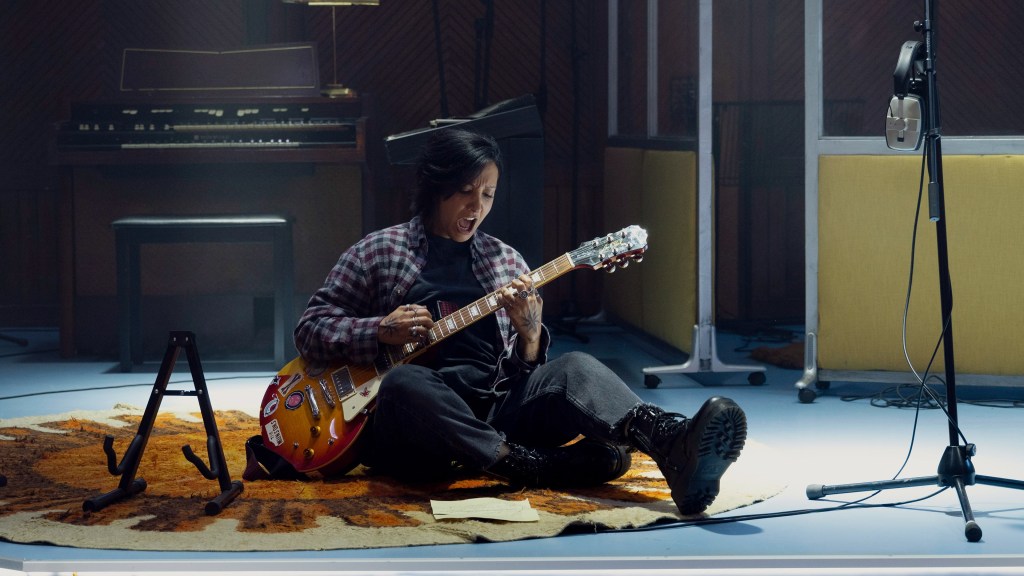
Ciara: “Most of ‘Funny Muslim Song’ is shot in We Are Lady Parts’ house style: there’s some fun split screen when the band sign their record contract, but it’s mostly function over form. As all the characters trundle along their story paths, Saira meets her hero, pioneering Muslim woman rocker Sister Squire (Meera Syal). Squire describes Lady Parts’ music as ‘funny Muslim songs,’ asking if Lady Parts will make use of the trail she blazed and use their platform to speak out about atrocities happening to Muslims around the world. Saira has an existential crisis about it. She insists they need to add serious political tracks to their album, and gets pushback from the band and the label for reasons legitimate (is it really their place, or should they be elevating other voices?) and not (there’s no ‘atrocity bangers’ playlist they can go on). The whole plot has an obvious metatextual relevance: should Nida Manzoor be making her funny Muslim show or does she have a duty to do something more?
The final scene of the episode breaks the show’s reality to try to answer that question. Saira sits at her piano, trying to write out her feelings. ‘I won’t mention the—’
A bleep covers the word. Her mouth pixelates. It’s diegetic, which comes as a shock for the audience and Saira both: she’s confused and distressed, and it looks like what happened hurt her throat. She tries again: ‘I won’t mention the…’ Same thing. She tries to scream, and the pixelation grows, the bleep becoming more discordant. The force of it knocks her to the ground, but she keeps going. ‘I WON’T MENTION THE—’ The invisible, censoring force chokes her, pushes her back against the wall, lifts her into the air by the throat. It feels like she might die trying to say that one little word: war. It’s an incredibly evocative use of a radical stylistic break on Manzoor’s part, and only feels more urgent as the British government, you know, threatens to arrest Sally Rooney for opposing the genocide in Gaza.”
Ciara’s Runner-Up: Ayo Edebiri for The Bear: “Napkins” – “Ayo Edebiri made her directorial debut with ‘Napkins’, a standalone flashback episode about how Tina came to work at the Beef. The absolute stand-out episode of the season, there is nothing hesitant or unsure in Edebiri’s approach. The combination of shots of Tina with ‘Sabotage’ by the Beastie Boys is iconic.”
Dean’s Runner-Up: James Burrows for Mid-Century Modern: “Hello, Fisty’s” – “Jim Burrows began his career as a television director over fifty years ago on The Mary Tyler Moore Show, learning the art of the multi-cam sitcom from the legendary Jay Sandrich, who himself learned it from the original master, Max Freund. And here Burrows is in 2025 still crafting sitcom episodes as perfect as ‘Hello, Fisty’s’. The boys take a trip to Fire Island, and each meet living reflections of their past that force them to rethink how they see themselves. Most moving is the scene where Frank and Mason sing a Mormon hymn together.”
—

 The Sundae