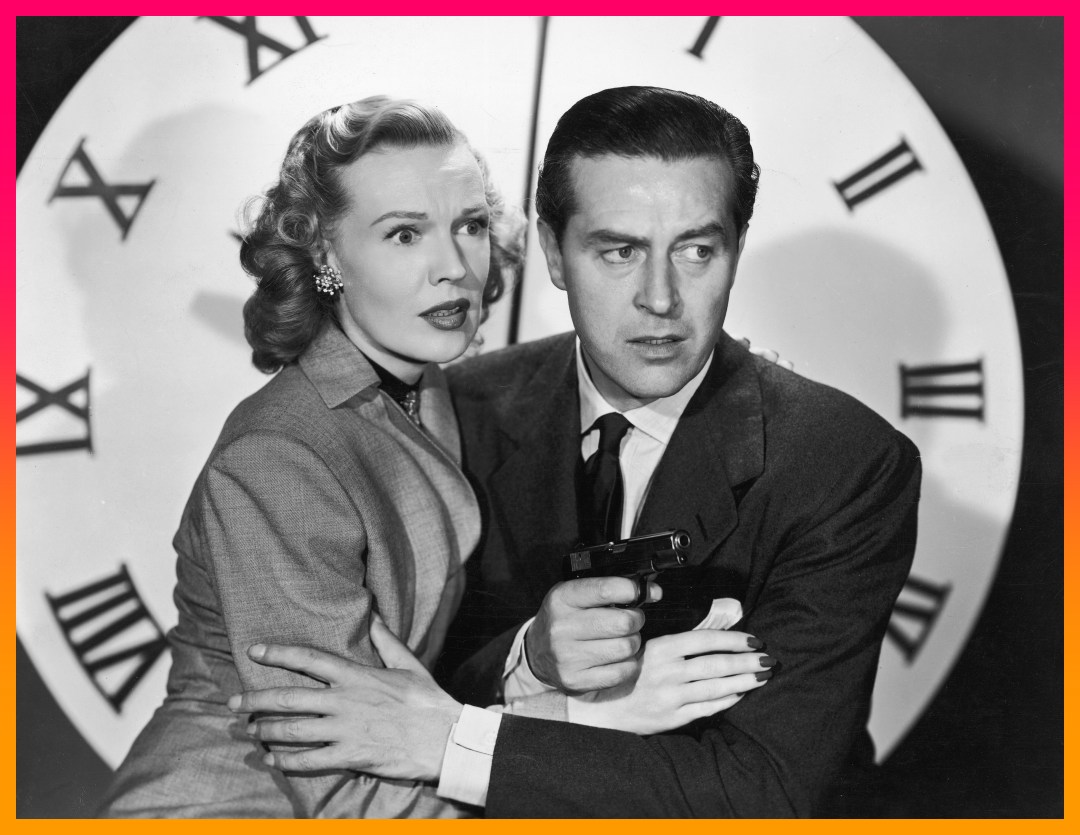
Friday Film Showcased – The Big Clock (1948): The Big Clock/No Way Out Special Part 1

Friday Film Showcased (FFS) returns with part one of a two part special on adaptations of Kenneth Fearing’s novel The Big Clock. We are doing this as a tribute to the late Gene Hackman, who is not in the movie discussed in this episode, but was alive when it came out. But was he a child? Listen and find out!

Ciara Moloney and Conor Hogan discuss topics including: Ray Milland (man), ray-millanding (verb), The Powerhouse Charles Laughton, queer coding and the Hays Code, clocks of various sizes and mechanisms, comedic genius Elsa Lancaster of Bride of Frankenstein fame, Maureen O’Sullivan who surely is only in this as a favour to her husband John Farrow (father of Tia, Mia, and this film, if directing is fatherhood), how much can you actually fit behind a bar, President McKinley, and the existential quest to find one’s self. Literally!

The Big Clock (1948) – The Big Clock/No Way Out Special Part 1 Friday Film Showcased

Listen and subscribe onSpotify || Apple Podcasts || Amazon Music || Castbox || Overcast || Pocketcasts || Goodpods

The Long Goodbye: The Sundae Presents Episode 27

Ciara and Dean co-host The Sundae Presents, a podcast in which they each make the other watch films they haven’t seen. It’s The Long Goodbye, and it happens every day! Dean turns the tables on Ciara and shows her a classic seventies film widely considered among the greatest ever made, Robert Altman’s neo-noir classic, starring Elliott Gould as Philip Marlowe. They talk about its portrayal of post-Manson L.A., the many iterations of its title song and the security guard’s amazing celebrity impressions.

The Long Goodbye The Sundae Presents

Listen on Spotify

Listen on Google Podcasts

Listen on Apple Podcasts

Listen on Amazon Music

Listen on Audible

Listen on RadioPublic

Listen on Pocket Casts

The Noirs of Melville [Current Affairs]

Film noir is an elusive, amorphous thing, something you recognise when you see it but is incredibly difficult to pin down. There are things you can point to that you expect from film noir—plots from hardboiled crime fiction, cinematography from German Expressionism, private eyes, and femme fatales—but nothing firm. 

Paul Schrader wrote that film noir is defined by its tone—a fatalistic, hopeless one—but even that is slightly too specific. More than a genre, a style or a tone, noir is a vibe: something’s film noir if it feels like it is, and any definition is an attempt to backfill a reasoning. When classic films noirs were being made in Hollywood, the industry wasn’t consciously making film noir, the way people consciously made westerns—as James Naremore outlines in More than Night: Film Noir in Its Contexts, the idea was only defined retrospectively. The dozens of tropes, stock characters, and shooting styles that make up film noir don’t have a standard arrangement, or even an obvious connection to one another, but through the act of repetition, they collectively acquired new meaning. Film noir is fall guys, cynical detectives, down-and-out boxers, and struggling writers; it’s shadows cast from Venetian blinds, rain on a city night, low angle shots and first-person voiceover narration; it’s Humphrey Bogart looking as cool as possible while smoking a cigarette.

I wrote an essay for Current Affairs about one of my top two artists who fought in the French Resistance, Jean-Pierre Melville, and film noir! You can subscribe to read it here, or buy a copy of the issue here.


UPDATE: You can now read this piece online here!