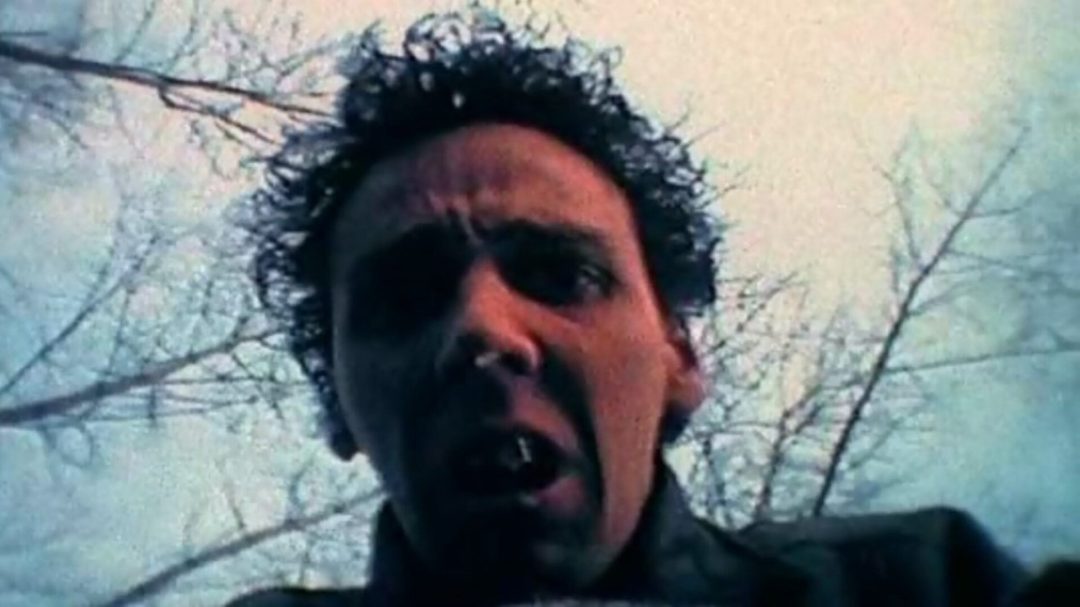
You Should (Not) Watch Julien Donkey-Boy

“I don’t know how much movies should entertain. To me, I’m always interested in movies that scar.”

David Fincher, interviewed by Mark Salisbury in Empire, February 1996

The first Harmony Korine film I saw was Spring Breakers, because Dean made me watch it for our podcast, The Sundae Presents. I did not like Spring Breakers, but in a way where saying whether I liked it or not seems like such a gross simplification that it becomes a lie. While watching it, I found what was great and awful about it impossible to parse, and from a distance, I mostly think of it as an epic troll – a movie whose existence is a joke despite it containing zero jokes. I remember the boring parts more than the unpleasantness that felt so visceral at the time.

Julien Donkey-Boy has not come out in the wash that way. I can feel its viscerality still wriggling in my blood. Korine’s sophomore directional outing, Julien Donkey-Boy is the sixth Dogme 95 film – it’s got the certificate and everything – though less because it strictly follows the Dogme 95 rules (no “superficial action,” no non-diegetic sound, only natural lighting, only handheld cameras) and more because what the hell else could it be? It is, at once, a family drama and totally outside the bounds of mainstream filmmaking. And since there are Dogme 95 movies that are both these things, fuck it, this one is too.

Continue reading “You Should (Not) Watch Julien Donkey-Boy”

The Miracle Worker Is Not The Film You Think It Is

The Miracle Worker is something of a middle school staple in the United States. Helen Keller is a significant figure in American history—she was the first deafblind person to earn a bachelor’s degree and a co-founder of the American Civil Liberties Union, among other things—and the 1962 film offers an accessible way into her story. But when something’s a middle school staple, you inevitably tend to continue viewing it through your middle school eyes, no matter how the years pass. It can take so much to let go of that—even though, if pushed, none of us would have trouble admitting that we were really stupid when we were 13. 

I’m from Ireland, where The Miracle Worker doesn’t have that kind of cultural cache, but I’ve spent enough of my life online to absorb it by osmosis. For American leftists in particular—eager to reassert Helen Keller’s socialism, since that doesn’t seem to come up in middle school—The Miracle Worker is almost a bogeyman. The more I learned about Helen Keller, the more it seemed like people talking about her life and work were actively countering The Miracle Worker, sometimes explicitly. The Miracle Worker is the official Helen Keller story, sanitized and shrink-wrapped for moral majority suburbanites, a reduction of a complex, trailblazing woman. For disability activists, it’s invoked the way Rain Man is by autistics: this is how they see us, this is what we are understood to be

I wrote about the 1962 Helen Keller biopic The Miracle Worker for Current Affairs. You can read it here!

The Best Years of Our Lives: The Sundae Presents Episode 28

Ciara and Dean co-host The Sundae Presents, a podcast in which they each make the other watch films they haven’t seen. Ciara takes Dean back to 1946 with The Best Years of Our Lives, William Wyler’s kitchen sink epic about soldiers returning from World War II. They talk about Harold Russell’s double-Oscar-winning performance as Homer Parrish, Gregg Toland’s groundbreaking deep focus cinematography and why Ayn Rand tried to complain about the film in Congress.

The Best Years of Our Lives The Sundae Presents

Listen on Spotify

Listen on Google Podcasts

Listen on Apple Podcasts

Listen on Amazon Music

Listen on Audible

Listen on RadioPublic

Listen on Pocket Casts