The Redistribution of Art

If you read a lot of pop culture criticism, you’ll very quickly come across three words: vital, essential and necessary. Critics, especially film and TV critics in my experience, love to describe the very best art in the same way most people describe things like food, shelter and healthcare. The instinct might be to treat this as hyperbole, but I like to take people at their word, and besides, there’s no shortage of writing out there that makes explicit what’s merely suggested in most uses of “vital”, “essential” and “necessary”. Moreover, I agree completely: art is an essential part of life.

There are as many explanations for why art is vital, essential and necessary as there are thinkpieces explaining why. Art is how we understand each other when we can’t see inside each other’s skull prisons. Art has profound social value, capable of transforming how people see the world by forcing them to confront unfamiliar realities or new perspectives on age-old issues. Art and the appreciation of art is what makes life meaningful at all for lots of people. I don’t disagree with any of those points of view, but they’re all a bit piecemeal for my taste, failing to provide a universal justification for why art is necessary.
Continue reading “The Redistribution of Art”

The Problem with Netflix Originals

Netflix is a very successful business, and I don’t know the first thing about business, so far be it from me to tell them what they should do. (I know so little about business that I can’t understand why owning a company that has never made a profit has made Jeff Bezos, the Amazon guy, the richest person on the planet.) But I do co-run this blog about pop culture, and Netflix has been one of the most important and transformative forces in film and TV (mostly TV) in recent years. The effects of that have been a mixed bag, but it’s hard to deny their sheer scale.

This kind of scares me, because Netflix’s share price does not seem at all proportionate to its profits, and while I don’t know anything about business I have seen Enron: The Smartest Guys in the Room, so a part of me is convinced that Netflix will suddenly and unceremoniously collapse one day. Which, aside from anything else, means all the art made exclusively for Netflix might just… disappear? The archival implications of the streaming model are pretty terrifying if you think about it for more than a minute, which is why I’m one of the few people my age that spends her money buying second-hand DVDs.

But, like I said, I don’t know the first thing about business, so that might be nonsense, and my DVD collection might be no different from stockpiling tins of food in a bunker in case the Cold War turned nuclear. But I do think I know a small bit about film and TV, and film and TV is Netflix’s business. So, on that basis I would like to make this humble suggestion to Netflix HQ: stop making so much fucking original content.

Continue reading “The Problem with Netflix Originals”

Weekend at Bernie’s Is Not the Film You Think It Is

Weekend at Bernie’s might be the most misunderstood film I know. It was a hit in 1989, despite bad reviews, and has had staying power since: the image of Andrew McCarthy and Jonathan Silverman propping up Bernie’s lifeless body is seared onto the cultural memory, one of those iconic cinematic images that has been parodied and homaged and referenced enough to take on a life of its own beyond the film itself. It’s a very famous film, is the point – though not exactly acclaimed – but when I watched it, I kind of felt like the first person to ever see it.

Here’s what I assumed Weekend at Bernie’s would be like: an extremely dumb, extremely wacky 1980s comedy, in the vein of Porky’s or a National Lampoon movie, that is probably not very good but has a kind of charm that not very good films from the 1980s tend to have. I knew the basic plot – two guys pretend another guy, Bernie, is alive, while staying at his place for the weekend. I assumed – either because it’s how it turns out in any given Weekend at Bernie’s-inspired TV episode, or because of the existence of Weekend at Bernie’s II – that Bernie wasn’t really dead. That our heroes found him unconscious and panicked, but, by the end of the film, Bernie would wake up, and we’d arrive at our happy ending.

Weekend at Bernie’s is something much stranger, and much more interesting.

Continue reading “Weekend at Bernie’s Is Not the Film You Think It Is”

The Real Lesson of Get Out’s Success

Get Out is one of the best horror films this year, and it’s been a particularly good year for horror. The directorial debut of comedian Jordan Peele, Get Out is the story of Chris Washington, a young black photographer who reluctantly agrees to meet his white girlfriend’s family for the first time. Bad things happen. As well as being really, really good, Get Out was phenomenally successful, grossing $254 million over a $4.5 million budget.

If a movie is critically acclaimed, financially successful and not a blockbuster, chances are that its financial success will be followed by a series of articles on what lessons Hollywood should take from its success. This isn’t a hard and fast rule, but it’s predictable enough that I wasn’t surprised when it happened to Get Out.

I hate these articles.

Continue reading “The Real Lesson of Get Out’s Success”

Video Game Movies and Why They Suck

It is a truth universally acknowledged that no one has ever made a good movie based on a video game, since the genre came into being with 1993’s Super Mario Bros. I don’t usually care for such truths, but that’s one I’m happy to accept, by and large. I would possibly carve out an exception for some of the Pokémon movies, though I haven’t watched any of them in a long time, and there are, of course, some good movies about video games or inspired by their aesthetic: Scott Pilgrim vs. the World, Wreck-It Ralph, Tron, etc. But as far as film adaptations of video games, it’s been one failure after another, with only occasional spells of mediocrity to shake things up.

Continue reading “Video Game Movies and Why They Suck”

All We’re Looking for Is Love from Someone Else

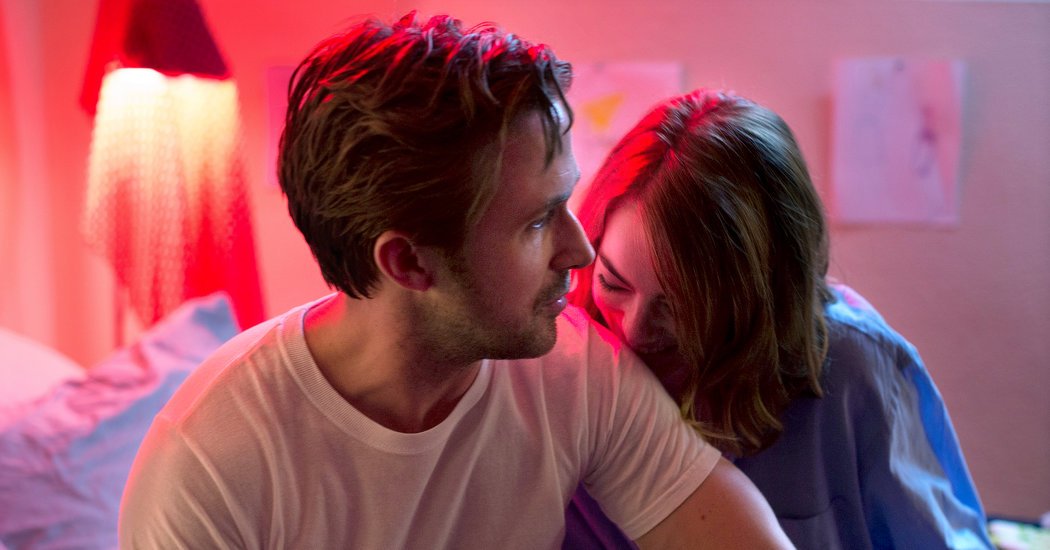
“They say you gotta want it more,” a young man sings in ‘Another Day of Sun’, La La Land’s opening number, “So I bang on every door.”

He came to LA with dreams of making it in the entertainment business, but his problem is not that he doesn’t want it enough. He wants it desperately, single-mindedly. He’s dancing in the middle of a traffic jam, singing about wanting it – as desperately as the dozens of other people singing the same song.

‘Another Day of Sun’ sounds bright and happy, but lyrically, it’s about constant rejection, about running out of money, about leaving loved ones to pursue unrealised dreams – and about a pressure to blame yourself. They say you gotta want it more.

The chorus initially sounds like an ode to perseverance:

And when they let you down

You’ll get up off the ground

‘Cause morning rolls around

And it’s another day of sun

But it’s more melancholy with every repetition, as getting knocked to the ground emerges as a habit. “It’s another day of sun” is a joke about LA not having seasons, but it’s also a comment on how that lack of weather can feel oppressive. It’s an environment that refuses to bend, impervious to your feelings. There’s weariness to it: constant sunshine, constant disappointment.

La La Land is not a film about how you should pursue your dreams.

Continue reading “All We’re Looking for Is Love from Someone Else”

Break the Studios, Save the Movies

Hollywood is in a prolonged state of crisis. Everybody knows this. Studios pump out a seemingly endless supply of sequels, spin-offs, remakes, reboots, and films otherwise based on any and all previously existing intellectual property, all of which invariably cost upwards of 100 million dollars. We call them tentpole films, because they’re supposed to be sure-fire bets that can make enough money to finance smaller, riskier projects across the studio’s slate, like tentpoles upholding a tent. The problem is that there is no tent. There’s just masses and masses of poles, sticking upright in a field, and we’re all so used to getting wet that we’re more likely to ask for the poles to be more interesting than ask for some tarp.

Continue reading “Break the Studios, Save the Movies”

The World is Going to Crack Wide Open

“HALT AND CATCH FIRE (HCF): An early computer command that sent the machine into a race condition, forcing all instructions to compete for superiority at once. Control of the computer could not be regained.”

Halt and Catch Fire has never been subtle about its view of capitalism. The very first thing that appears on screen at the start of the pilot is a definition of its title, worded to produce a clear double meaning: this is a story about how endless competition causes a system to implode.

Continue reading “The World is Going to Crack Wide Open”

A Town Called Fortitude

How do you talk about a show influenced by Twin Peaks without burying it in the shadow of Twin Peaks? Twin Peaks is widely considered one of the greatest TV shows of all time, and certainly one of the most important. Now more than ever we are awash in a sea of shows – good and bad – that follow an investigation into a murder or disappearance in a small town that kicks up buried secrets and drags unspoken darkness into the light. And whether a show like that is good or bad, someone is going to compare it to Twin Peaks.

Continue reading “A Town Called Fortitude”

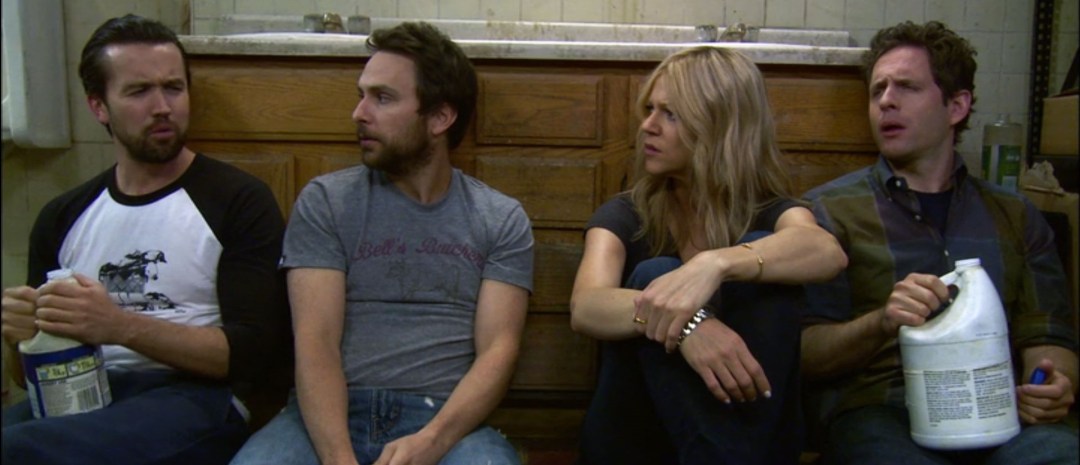
Mac MacDonald, Charlie Kelly, Dee Reynolds and Dennis Reynolds drinking in It's Always Sunny in Philadelphia

The Gang Fights Neoliberalism

American politics, for the past couple of decades up until just recently, has operated on a binary: liberal/conservative. A lot of the time, this leads to weird semantic problems – calling Bernie Sanders “very liberal” when he’s not a liberal at all, calling Donald Trump a conservative when his ideology has very little to do with conservatism  – but the way we talk about ideas informs what ideas become. If you only see things in terms of liberal and conservative, you can deeply misunderstand things happening in front of you. Worse, when you lose the words to describe them, the possibility of other distinct political philosophies can disappear.

South Park is a libertarian show. It’s always been a libertarian show. I find it hard to imagine a show more upfront with its ideology than South Park. Yet there are countless posts and articles debating whether South Park is secretly liberal or secretly conservative, as if it’s secretly anything. Even more bizarre is the common idea that South Park has no ideology at all. Interviews with titles like “Matt Stone & Trey Parker Are Not Your Political Allies (No Matter What You Believe).” Academic articles with titles like “Pseudo-Satire and Evasion of Ideological Meaning in South Park.” If an ideology does not fit within either of the boxes I have in front of me, it must not exist at all.

Continue reading “The Gang Fights Neoliberalism”