Vast Wasteland or Fertile Soil?: Redefining TV’s Golden Ages

In 1961, newly appointed Federal Communications Commission chairman Newton N. Minow referred to American television as a “vast wasteland.” The New Yorker TV critic Emily Nussbaum referred to this as “the medium’s most famous libel”—one repeated as an adage of discerning viewers turning their nose up at television as a whole. As Nussbaum notes, however, Minow’s point was not to dismiss television as a medium; quite the opposite. He was mourning what he viewed as the public interest programming of television’s original Golden Age—“the much bemoaned good old days” of live teleplays on Playhouse 90 or Studio One, which had given way to “a procession of game shows, formula comedies…violence, sadism, murder, western bad men, western good men, private eyes, gangsters, more violence, and cartoons.”

A couple of decades later, I’m a little kid, cross-legged in front of the television. Like Carol Anne in Poltergeist (1982), I was in communion with the box. Awash in its glow, watching, rapt, until my eyes went square. American sitcoms and Australian soap operas. A procession of game shows, violence, and cartoons. Television had by then been long considered a disreputable medium—the kind people denied as an “art form”—but its glimmer has enchanted me my entire life. It was my first, and maybe truest, love.

I reviewed some books about the so-called Golden Age of Television in a feature article for Cineaste last year. You can buy the issue here, and it’s also archived on JSTOR!

The Sundae Film Awards 2025

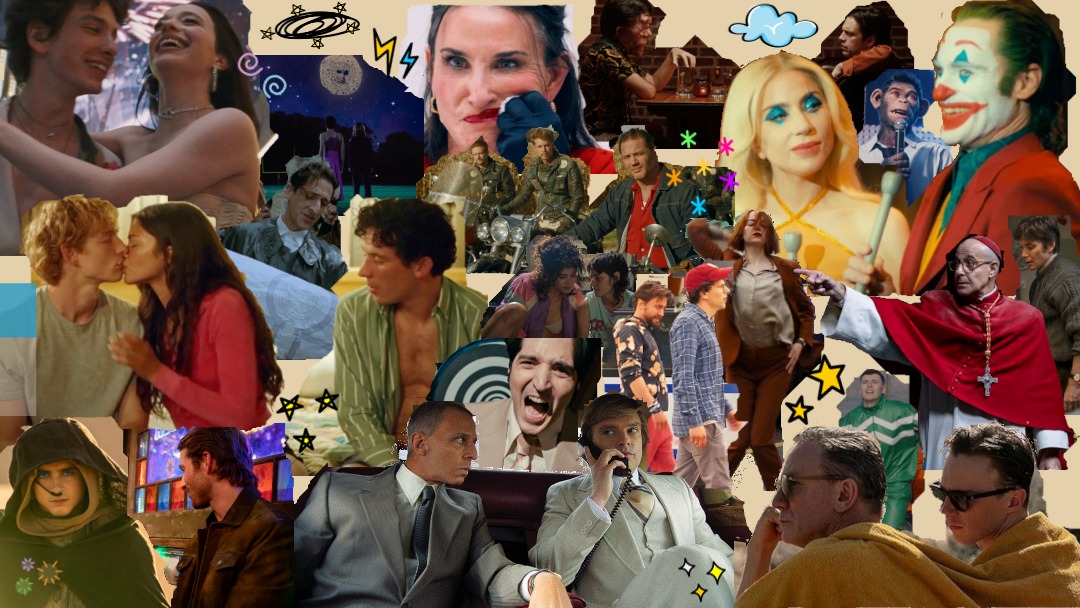
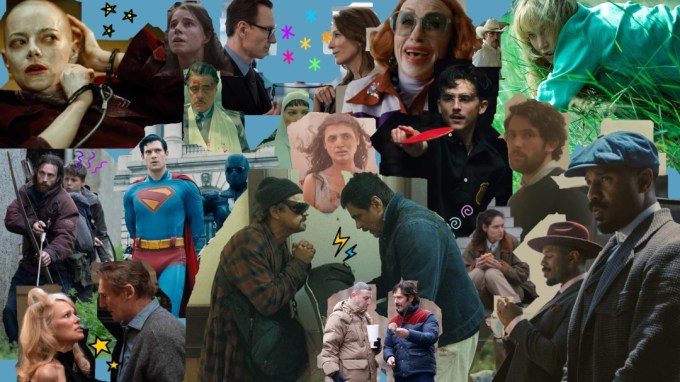
You don’t need us to tell you that 2024 was a terrible, horrible, no good, very bad year, but did you know that films came out during it also? We won’t hold it against if you forgot now that we’re two months that felt like years into a year that’s going to feel like decades. In fact, it’s the perfect reason to join us as we heap praise on the films that shone brightest through the dark. It was a great year for primates, body horror and homoeroticism, not to mention staring into the yawning abyss at the heart of American celebrity culture.

As with every year, we gave one award for each of the eight major Oscars: we care about most of the others (except for the fake awards like Best Original Song) but this post would be absurdly long if we picked those too. We each did out our personal nominees and then selected the winner by consensus, so the winners only come from films that both of us have seen and nominated, but we’ve each picked a personal runner-up regardless of whether the other has seen or nominated it. We also each gave a Special Achievement Award for something that doesn’t fit our other categories.

Continue reading “The Sundae Film Awards 2025”

The Straight Story: The Sundae Presents, Episode 40

David Lynch is dead, and the world is a darker place. Ciara and Dean pay tribute to one of their favourite directors by watching and discussing The Straight Story. They talk about mortality, its lack of resolution, and what it means to be “Lynchian”.

Showcased Selections: Head (1968) starring The Monkees! The Sundae Presents

Listen on Spotify

Listen on Apple Podcasts

Listen on Amazon Music

Listen on Audible

Listen on RadioPublic

Listen on Pocket Casts

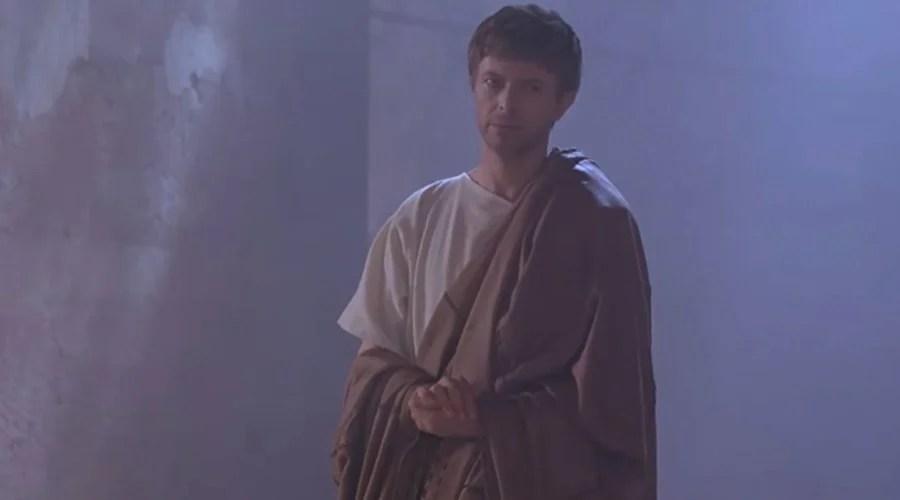
One Scene Wonders: David Bowie in The Last Temptation of Christ

A minosode! Again!

The Sundae Presents returns to our primordial ooze to talk about great performances that are only one scene long. This time: David Bowie as Pontius Pilate in one scene in The Last Temptation of Christ (1988).

One Scene Wonders: David Bowie in The Last Temptation of Christ The Sundae Presents

Listen on Spotify

Listen on Apple Podcasts

Listen on Amazon Music

Listen on Audible

Listen on Podchaser

Listen on Pocket Casts

Friday Film Showcased, Episode 5: Giallo – Don’t Torture a Duckling (1972)

For many years, with regard to their film-watching, Ciara and Conor have been theming their months. On Friday Film Showcased (FFS to friends, and sometimes enemies), they look back on themes gone by.

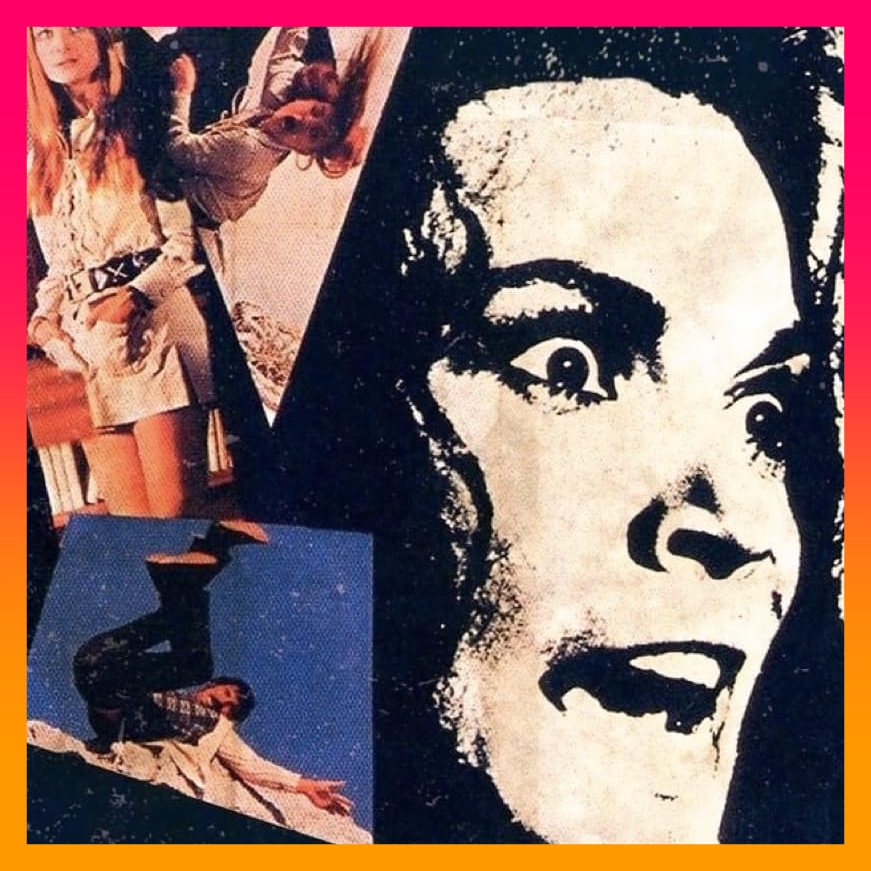
In the quintus episode of FFS, Ciara and Conor continue their discussion of the giallo genre with a deep dive on Lucio Fulci’s 1972 masterpiece, Don’t Torture a Duckling. Spoilers abound! You can find our previous instalment, where we discussed giallo more broadly, here. (Including an edition in which all screams have been replaced by bunny noises. How relaxing!)

And make sure to tune in to the end of the episode for Conor’s original song inspired by the film!

Episode 5: Giallo – Don't Torture a Duckling (1972) Friday Film Showcased

Listen and subscribe onSpotify || Apple Podcasts || Amazon Music || Castbox || Overcast || Pocketcasts || Goodpods

Giallo list on Letterboxdhttps://letterboxd.com/hoganassasin/list/giallo-season/

Mentioned in the podcast

Ciara’s Fangoria article about Don’t Torture a Duckling: ⁠https://www.fangoria.com/lucio-fulci-so-much-more-than-the-godfather-of-gore-dont-torture-a-duckling-at-50/

The Giallo Files: https://giallofiles.blogspot.com/

A Portrait of the Autist as a Young Woman

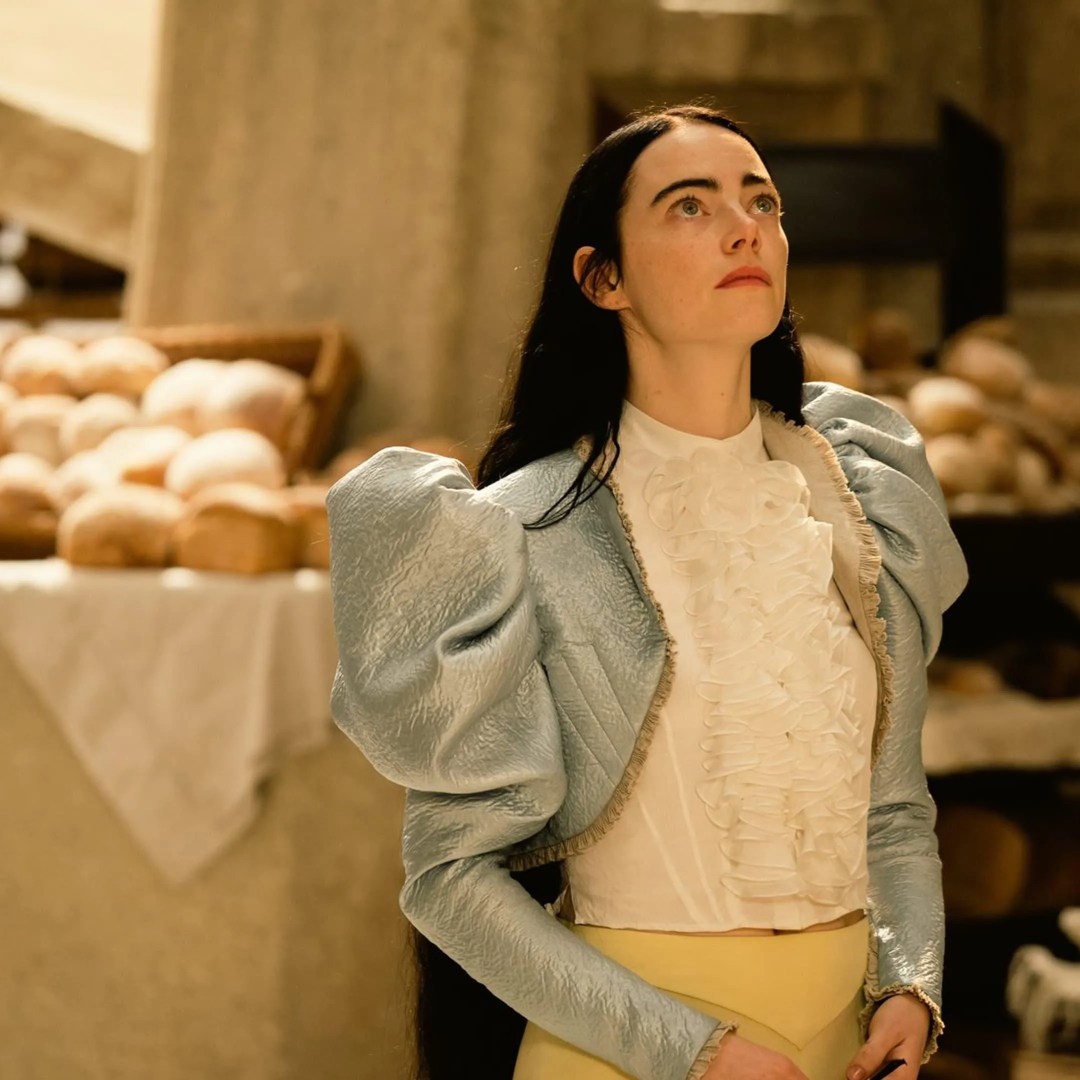
A woman stands atop the parapet at the edge of a bridge. Her dark hair is pinned in curls at the back of her head, loose strands near her face caught in the wind. Her deep blue dress has a Victorian high collar; its flared skirt would trail on the ground behind her if her feet were on the ground. The camera pans up to the endless blue of the sky, and then back down as the woman jumps into the endless blue below her. In Yorgos Lanthimos’s Poor Things, her death becomes a birth. Neither her own rebirth nor the birth of the unborn child in her womb, or maybe both those things. A new person is scavenged from the existing materials. Her name is Bella Baxter. 

The basic premise of Poor Things is this: Dr. Godwin Baxter (Willem Dafoe) found the corpse of a woman who had taken her own life, before rigor mortis had set in—dead but fresh, with a still-living fetus inside her. “It was obvious,” he tells his student Max McCandles (Ramy Youssef). “Take the infant’s brain out and put it in the full-grown woman, reanimate her, and watch.” The film is a riff on Frankenstein that shucks off two centuries of cultural baggage to recapture how messed up Frankenstein must have seemed when Mary Shelley first wrote it, long before Dr. Frankenstein’s creature was meeting Abbott and Costello (or Alvin and the Chipmunks). Part of what it discards in the process is any stability around who, if anyone, is the “monster” in a Frankenstein story.

Godwin—who Bella affectionately calls “God”—is himself both Frankenstein and the creature. As a child, he was subjected by his father to experiments that have left his face carved with deep, thick scars, his genitals non-functional, and a digestive system that requires being hooked up to machinery to produce gastric juices. “Dafoe plays every movement and gesture as labored,” Angelica Jade Bastién writes for Vulture. “He shuffles and sighs and sulks.” A student in his surgery class derisively calls him “the monster” because of his visible deformity. Yet God seems to regard his father not as an abusive sadist, but a man of science unwilling to put moral or emotional considerations above the pursuit of knowledge. He seems to admire this cool detachment and emulates it in his own work: “Our feelings must be put aside,” he tells Max. “Do you think my father could have branded me with hot irons on the genitals the way he did if he could not put science and progress first?” In Shelley’s original, Dr. Frankenstein shrunk with horror from his creation, next to which God’s problem is almost a photonegative: his paternal feelings towards Bella are an affliction he tries to overcome, though he never quite manages it. 

But the film’s point of view is wholly Bella’s: she, too, is both the creator and the creature, but entirely her own. She is her own mother and her own daughter, “born” into a crisply black-and-white, steampunk version of Victorian London and trapped in the confines of God’s mansion. When she meets Duncan Wedderburn (Mark Ruffalo)—a lothario who warns her not to become a jealous lover demanding constancy before himself becoming exactly that—she embarks on a journey of discovery, adventuring across a funhouse-mirror Europe in which trams traverse Lisbon’s skies and city streets come in the colors of lemon drops, cherry blossoms, and sherbet. 

Early last year I wrote about Poor Things as a film about autism and neurodivergence for Current Affairs. You can read it here.

2024 in Film(s That Didn’t Come Out in 2024)

Check out previous instalments here.


Thus spoke the prophet: “Well, the years start comin’ and they don’t stop comin’.” There were elections and wars, genocides that proceed unabated and natural disasters that we can hardly call natural when we’ve created conditions that make them inevitable. So many celebrities died that there would have been a whole “fuck you, 2016!”-style outcry if we didn’t have other things to worry about: those who lived long lives, like Maggie Smith, James Earl Jones or Donald Sutherland, and those whose lives were cut tragically short, from Shannen Doherty to Liam Payne. (Reports of Noam Chomsky’s death were greatly exaggerated.) But there were bright spots, too – Mickey Mouse finally entered the public domain, all that Mikey Madison stock we bought early is paying dividends, and Terrifier 3 made people throw up. (If that one doesn’t sound like good news, please factor in some 2000s kid nostalgia.)

It was a year of endings and beginnings, as are, admittedly, all years. Ciara finished her thesis after years of toiling in the PhD mines. Dean suddenly became an investigative journalist, and he rocks at it. Ciara’s extended family found out that she’s a writer or something when she wrote about her epilepsy journey for the Irish Independent, and Dean helped found a network of community groups to promote integration in Tipperary. Ciara watched all of Seinfeld for the first time, and Dean finally finished Fez, a video game he first purchased in 2012. We both launched new podcasts: Ciara’s is about films, as is her wont, and Dean’s is about Tipperary, as is his wont, these days. Both of them are excellent, if we do say so ourselves. 

As ever, we’ll be singing the praises of our favourite films released in 2024 in March, for the ninth (ninth!) annual Sundae Film Awards. Right now, we’re going to look back at the best films from the rest of the medium’s history that we watched for the first time this year, from North Korean kaiju adventures to camp classics about child abuse.

Continue reading “2024 in Film(s That Didn’t Come Out in 2024)”

Adult Swim Yule Log: The Sundae Presents Episode 39

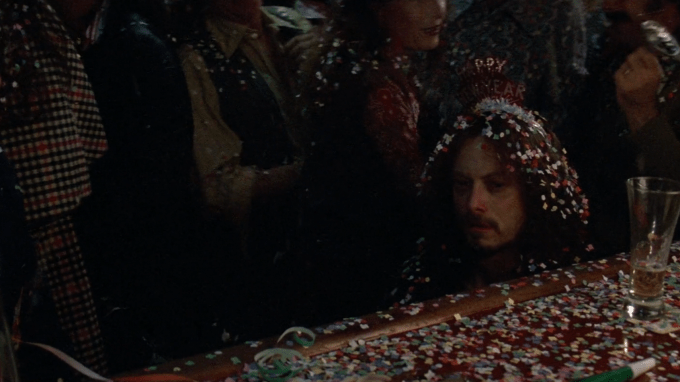
Ciara and Dean co-host The Sundae Presents, a podcast in which they each make the other watch films they haven’t seen. In our Christmas special, Dean made Ciara watch a recent film he hopes will become a new seasonal classic: Adult Swim Yule Log. They talk about traumatic guilt, Americana and the death of television.

Adult Swim Yule Log The Sundae Presents

Listen on Spotify

Listen on Apple Podcasts

Listen on Amazon Music

Listen on Audible

Listen on RadioPublic

Listen on Pocket Casts

Friday Film Showcased, Episode 4: Giallo – Screamless Bunny Edition

For many years, with regard to their film-watching, Ciara and Conor have been theming their months. On Friday Film Showcased (FFS to friends, and sometimes enemies), they look back on themes gone by.

In the Quatro episode of FFS, Ciara and Conor discuss the genre of giallo, including the films in the title of this episode and Stagefright Aquarius, Blood and Black Lace, Pieces, Lizard in a Woman’s Skin and Bird With the Crystal Plumage.

In the interests of listeners who don’t enjoy listening to screaming, we have released a version where screams, chainsaws and eyeball popping replaced with the soothing sound of bunny rabbits! The uncensored version is also available, but you can listen to the Screamless Bunny Edition here:

Screamless Bunny Edition – Episode 4: Giallo – Deep Red, Bay of Blood, Dressed to Kill, What Have You Done to Solange and More Friday Film Showcased

Listen and subscribe onSpotify || Apple Podcasts || Amazon Music || Castbox || Overcast || Pocketcasts || Goodpods

Giallo list on Letterboxd: https://letterboxd.com/hoganassasin/list/giallo-season/

We continue our discussion on giallo with a deep dive on Lucio Fulci’s 1972 masterpiece Don’t Torture a Duckling:

Episode 5: Giallo – Don't Torture a Duckling (1972) Friday Film Showcased

Mentioned in the podcast

Giallo in Casa Muppet: https://www.youtube.com/watch?v=h_AikJ8F5oY

Ciara’s article on Pieces: https://crookedmarquee.com/pieces-isnt-exactly-what-you-think-it-is/

The Giallo Files: https://giallofiles.blogspot.com/

YELLOW in ITALIANO Coldplay cover https://www.youtube.com/watch?v=I_PtHYQoC20

De Palma (2015) documentary, dir. Noah Baumbach: https://www.youtube.com/watch?v=5Zlxmwz55Tk

J.K. Rowling | ContraPoints https://www.youtube.com/watch?v=7gDKbT_l2us (discussion of transphobia in cinema including Psycho and Silence of the Lambs from 50:00)