Mythic Quest and the Pursuit of Anti-Capitalist Media [Current Affairs]

There’s an idea—passed down from Adorno in a game of telephone—that products of the culture industry must necessarily reflect capitalist values. This is superficially very convincing: if I were a capitalist, I would probably fund works that reassert the status quo, even subconsciously, since if I were a capitalist the status quo would be going pretty well for me. You can find lots of supporting examples if you look around: the valorization of ragstoriches stories that obscure the near-impossibility of real-life social mobility, particularly in the United States; the entire cop show genre, which essentially functions as propaganda for the police; even the original Ghostbusters, which has a plotline about how the EPA shouldn’t investigate unlicensed nuclear reactors.

I wrote an essay for Current Affairs about Mythic Quest: Raven’s Banquet and the problem of making art in a corporate environment. You can read it here!

We Are the Sunshine Nation

McFly – guitarist and singer Danny Jones, guitarist and singer Tom Fletcher, bassist and singer Dougie Poynter, and drummer Harry Judd – had seven number ones in the UK. With their 2004 debut Room on the 3rd Floor, they became the youngest band to ever have a number one album, a title previously held by the Beatles. And I hated them. I hated them in the shallowest way imaginable. I was a Kerrang! kid, dressed in black, listening to pop punk and emo and nu-metal. Genres were much more stratified then, and I thought pop music was more or less inherently suspect. I thought McFly were a boy band, so I turned my nose up at them on principle.

I was a dumb kid, but I wasn’t alone. “[A]ll the usual credibility-gap closers – numerous Beatlesque albums, gigging at the Barfly, releasing on an indie label – still haven’t quite shifted the perception of McFly as Busted Club Juniors,” Iain Moffatt wrote for the BBC in 2010. McFly were a punching bag, more often than not: dissing McFly was a shorthand to credibility. Kasabian went after them, calling them a “pop band for kids”. An extremely young Daniel Radcliffe went after them, lamenting that the kids at his school like McFly instead of The Libertines. Someone who came fifth on RTÉ’s talent show You’re A Star in 2005 went after them. They were nominated four times at the NME Awards… for Worst Band and Worst Album.

All these years later, pop music is taken seriously by default. Rock is basically dead, and everybody listens to everything now. Calling something “pop” as a way to dismiss it seems like a relic of a time long past. No-one would claim that Beyoncé, Taylor Swift, Rihanna or Ariane Grande aren’t serious artists, even when they’re criticising them. Rolling Stone declared One Direction one of the greatest rock bands of the century this year, tongues barely in their cheeks.

Yet McFly have not gotten the re-evaluation they deserve. I got into McFly as an adult, basically by accident, and discovered a yawning gap between the band McFly are and the band they were, and still are, perceived to be.

Part 1 – the boys in the band

vlcsnap-2020-07-04-20h38m20s271

McFly have spent pretty much their whole career being referred to as a boy band. But were they ever one?

Continue reading “We Are the Sunshine Nation”

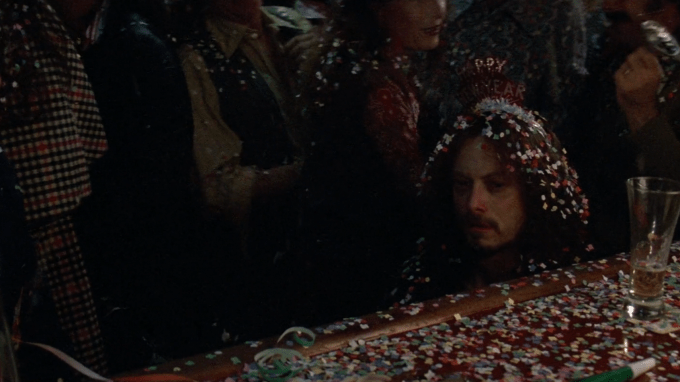
Mickey Rourke: The Star That Should’ve Been

I used to think no one pursued a career in entertainment without hoping to be famous, but that’s not true. There are plenty of faces you’ve seen in films over and over, but couldn’t tell me their names if your life depended on it – and they like it that way. There are plenty of working actors, writers, musicians who just want to make a living doing something they love. But with Mickey Rourke, it seemed he was destined to be a star, regardless of what his initial goals were. The look he had, the roles he played: he should’ve been the next big thing. And he kind of was, but he kind of wasn’t. Either way, it stopped. The general consensus is that it stopped because Hollywood had enough of him and his attitude. Maybe he had enough of Hollywood. Maybe it was suicide by cop. Maybe he didn’t know that an actor couldn’t want the amazing heights of fame and so, like someone too cowardly to break up with someone, even when they know they should, he made them make the decision for him. He made the cop shoot him, the girl leave him, the industry toss him.

And so that might be the key to understanding the whole “reluctant star” thing. “Careful what you wish for” may not always apply, especially when referring to someone who did no such thing. Did Mickey Rourke sit in his bedroom daydreaming of – wishing for – the Hollywood glitz and glamour? I doubt it. He just wanted to be good and for people – not everyone, but some nebulous, satisfactory someone – to respect him for it.

Continue reading “Mickey Rourke: The Star That Should’ve Been”

You Should Watch Even More Short Films

One of the reasons I’m such a proselytiser for short films, despite the overwhelming evidence that the vast majority of them (especially nowadays), are quite shit, is that shorts have always been the refuge of upstarts and underdogs, experimenters and innovators, and weirdos of various stripes too non-commercial to ever command a feature budget. Some truly great, influential and just bizarre filmmakers have cut their teeth and even built their careers in short films, and it’s not fair they’re lumped in with the glut of grey-toned anti-bullying PSAs and twee self-indulgent positivity culture shite that’s plastered all over social media for some reason. They deserve better. And you deserve better.

Here’s even more short films that are actually good.

Continue reading “You Should Watch Even More Short Films”

Don’t Tell Mama: Women’s Body Horror in Sharp Objects

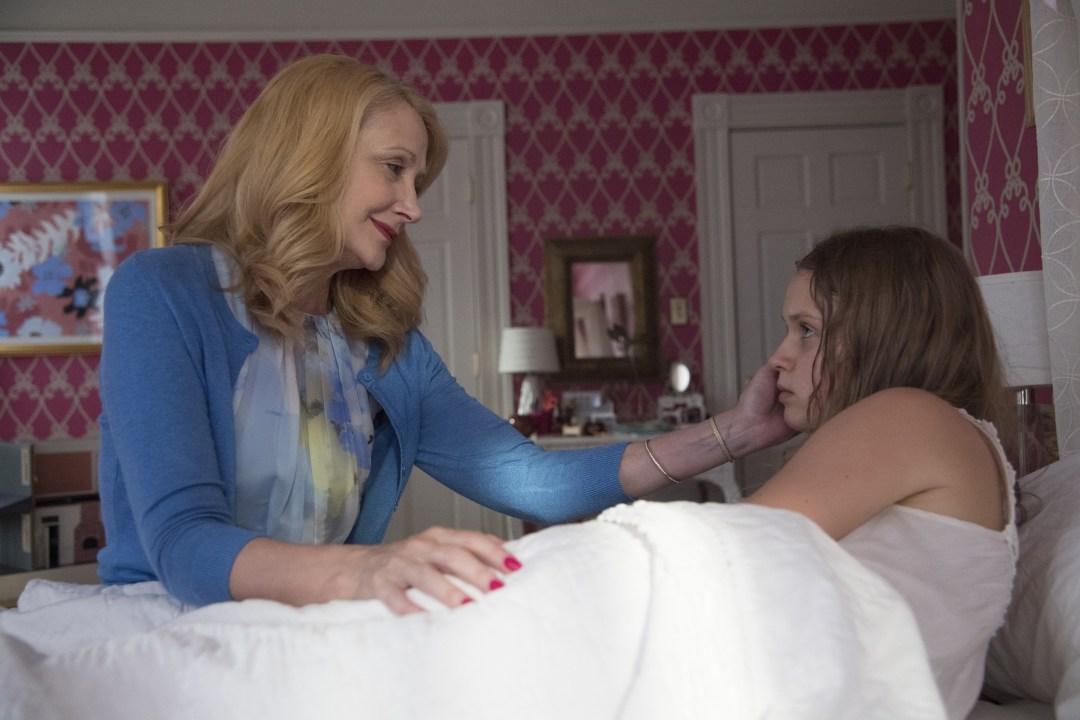
Body horror is a genre characterised by what Ronald Cruz calls the “manipulation and warping of the normal site of bodily form and function”. It is a genre which unsettles us through its disregard for the human body as it assaults audiences with distortions of the familiar sights, sounds, movements, and functions of the body. Throughout the eight episodes of HBO’s gothic thriller Sharp Objects (2018), there is a growing unease regarding the body which erupts in moments of supreme shock and disgust. The three central characters – Camille Preaker, her mother Adora and sister Amma – all display the genre’s “gruesome disregard for the human body” in various ways as they exist within the narrow confines of femininity permitted in the small town of Wind Gap, Missouri. The female body in Sharp Objects is the site of the series’ most shocking moments of horror and the driving force of the entire mystery plot: the horror it endures and produces is the horror of the series.

Continue reading “Don’t Tell Mama: Women’s Body Horror in Sharp Objects”

I Was Cured, All Right

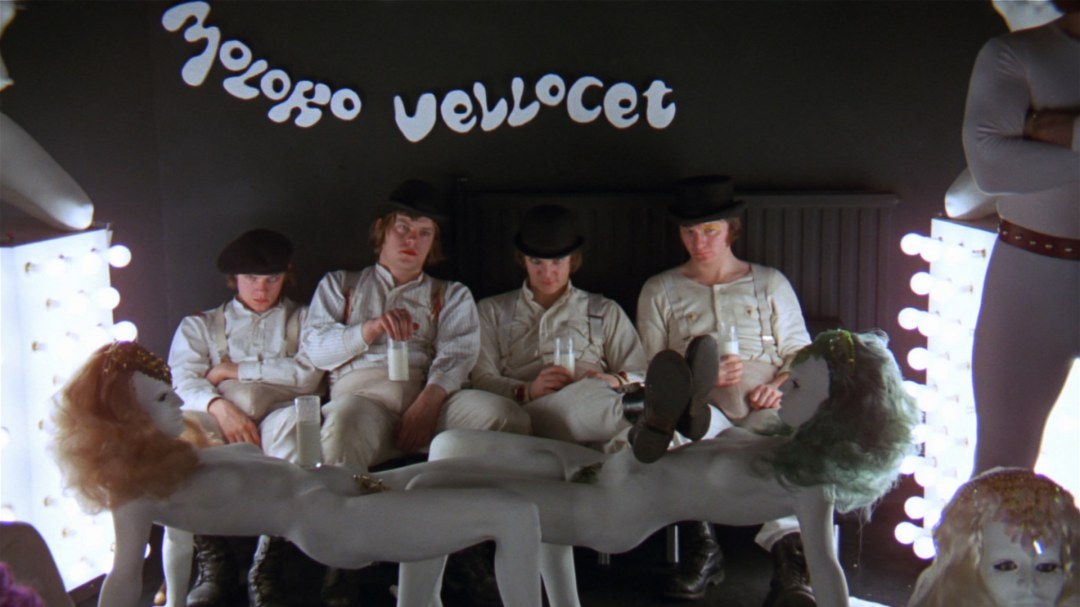
“The book is always better” is one of those pieces of conventional wisdom that people tend to parrot back and forth to each other without really believing. It’s obviously untrue in a dozen different ways: even if we leave aside all the ways that books and films being just fundamentally different artforms makes direct comparison reductive at best, I don’t think anyone would argue that The Godfather or Jaws are better books than films, because the books are enjoyable pulpy novels and the films are masterpieces. Besides, good and great films are adapted from books that nobody cares about, or has even heard of, all the time. It’s hardly worth taking “the book is always better” seriously as an idea because the weight of counterexample is so strong.

But people still say it, as a way to fill a silence if nothing else. You mention some new film adaptation of a literary classic or a recent bestseller, and they say, “well, I think the book is always better,” as you nod along sagely, even though neither of you actually think that Alfred Hitchcock’s Psycho is a pale imitation of the novel. “The book is always better” is just the visible trace of something larger, in how we think about adaptation and how different mediums relate to one another.

Continue reading “I Was Cured, All Right”

Patching the Zeitgeist

It all started with George Lucas.

The man who once wrote that “people who alter or destroy works of art and our cultural heritage for profit or as an exercise of power are barbarians” released the Special Editions of the original Star Wars trilogy on VHS in 1997, using new digital technologies to alter these works of art with bafflingly hideous changes like making Han Solo’s neck jerk awkwardly to dodge a clumsily-inserted blaster shot from Greedo. He altered them again for the 2004 DVD release, the 2011 Blu-Ray release and the 2019 4K release on Disney+, in which Greedo now says “Maclunkey” as he shoots. (Lucas apparently made that change before selling the copyright to Disney.) Obviously, directors had been releasing new cuts of their movies for some time when Lucas decided that, actually, being a profiteering, power-hungry barbarian sounded pretty good, but no one else in the era of home media had ever decided to make the original cuts totally unavailable by legal means and keep them that way seemingly forever. (The original trilogy will enter the public domain at some point, assuming we don’t turn the planet into a charred lifeless husk, but that won’t be for another seventy-something years at minimum.)

In the years since, few others have made the original versions of popular works of art unavailable in quite so calculated and malicious a manner. But in a world where art is increasingly available only in digital formats – and especially one where such art is increasingly stored on faraway servers and streamed to our computers rather than stored on them – the ability of copyright holders to alter or destroy works of art has grown exponentially. There’s Kanye West repeatedly “updating” his 2017 album The Life of Pablo on streaming services after release and Netflix letting Mitch Hurwitz recut the Rashomon-like fourth season of Arrested Development into a chronological order with shorter episodes (the original cut is still available on Netflix, but buried with the trailers). It’s not necessarily a power they frequently flex in obvious ways, at least outside the video game industry. But it’s still a power they have, and it should worry us.

Continue reading “Patching the Zeitgeist”

Just Because It Never Happened Doesn’t Mean It Isn’t True

I’ve lost track of how many times I’ve seen the 2015 movie Steve Jobs. It’s the one that stars Michael Fassbender, not Ashton Kutcher. I’ve lost track of how many times I’ve tried to nudge my friends and family toward watching it, too. To them, it’s a movie that was seen and left behind by many in 2015; it’s no big deal. I’ve lost track of how many times my friends said they’d never watch this one pretty well-received, but otherwise, probably unremarkable movie, just because I’d seen it maybe 30 times or more. They’re concerned.

Continue reading “Just Because It Never Happened Doesn’t Mean It Isn’t True”

Double Features #6: The Same, But More

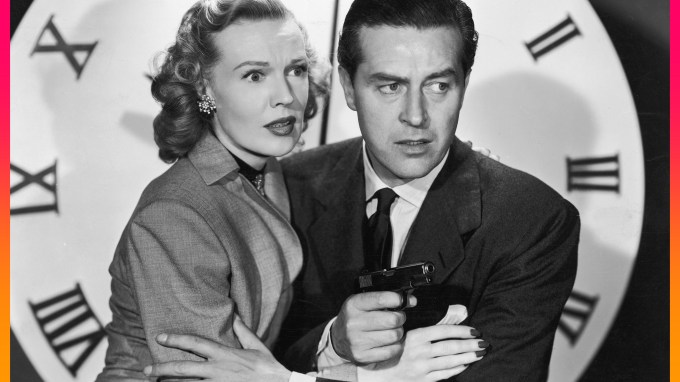
This article is part of the Double Features series, which pairs great films that go great together. Check out previous installments hereherehere, here and here


Films are great, so why not watch two in a row? And if you’re going to watch two films, why not watch two that complement each other well?

Here are four more double feature recommendations.

Continue reading “Double Features #6: The Same, But More”