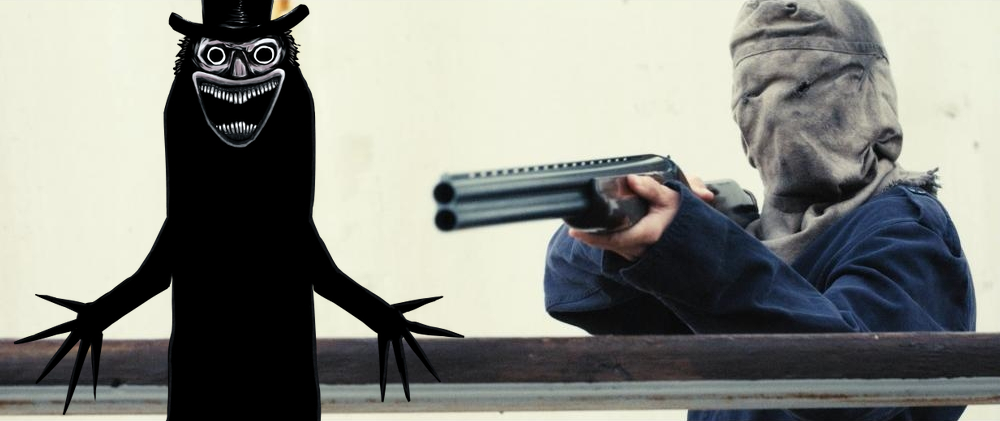
Notes on Mary Magdalene

This article is part of the Notes on Failure series, which discusses interesting cinematic failures. Previously, notes on Hamlet (2000)


I was looking forward to Mary Magdalene for like a year. I liked Lion, director Garth Davis’s debut film, and Rooney Mara has an outsized place in my heart thanks to her work with David Fincher. But mostly, I love religious films. It’s hard to say that when Pure Flix have made a cottage industry out of crap like God’s Not Dead, films designed to reassure Christians that of course you’re better than everyone else, don’t worry. But great religious films can wrangle with all the messy complications, can be free to be more art than indoctrination. A lot of the best ones are made by atheists – usually Marxists from Italy. Great religious films are great films that focus thematically on something I care intensely about, and they inevitably mean a lot to me.

But you’re always rolling those dice. Christianity is an extremely loaded thing, and it often seems like reviews are written in code: I’m pretty sure Martin Scorsese’s Silence didn’t get its due because secular audiences didn’t or couldn’t fully engage with it and religious audiences found it uncomfortable, challenging viewing, but then it’s hard to know what the reviews would be like if it really was a dull slog.

So I was excited to see Mary Magdalene, even if the reviews were pretty mixed. I love religious films, and I love unorthodox Gospel retellings, and I’m a feminist, and I’d been looking forward to it for like a year.

It was a disappointment. Here’s why.
Continue reading “Notes on Mary Magdalene”

It’s a Little Childish and Stupid, But Then, So Is High School

Here’s a brief cultural history of “the villain is actually right” hot takes, as I understand it. People were like “What if Claudius is the real hero of Hamlet? Makes you think” and it didn’t really stick. Then a couple of hundred years passed and someone pointed out Walter Peck from Ghostbusters was obviously correct to not let the Ghostbusters run a nuclear reactor without permission, and it got clicks, so people were like “I wonder if I can do that with other eighties movies” – haven’t you ever noticed it’s always eighties movies? – and now we live in a world where three people in the comments of an already terrible article about why some eighties bad guys were the secret heroes of their movies suggested Mr Vernon from The Breakfast Club be added.

Just in case you’ve forgotten, this is a man who threatens a teenager with assault before leaving him locked unsupervised in a closet. I understand why unscrupulous click-hungry hucksters publish this rubbish, but the traction it gets online is baffling and a little scary, to be honest. I know that people disregard and even hate teenagers, consistently treating their problems as if they didn’t matter and then acting shocked – SHOCKED, I tell you – when they kill themselves at higher and higher numbers. I know this, I’ve written about it before, I’ll probably write about it again. But, I have to admit, I don’t understand why. I don’t see what anyone gets out of shitting on teenagers except, I guess, the grim, bloodthirsty satisfaction of kicking someone while they’re down. People do like to just hate and hurt other people for its own sake, though they also tend to come up with ad-hoc rationalisations for it, so they don’t have to acknowledge their own sadism. Maybe the reason so many people get older and suddenly start yammering about how the antagonistic authority figures of teen movies were actually the heroes all along is because it lets them tell themselves they’re still the heroes of their own lives, now that they’ve become the villains of their adolescence.

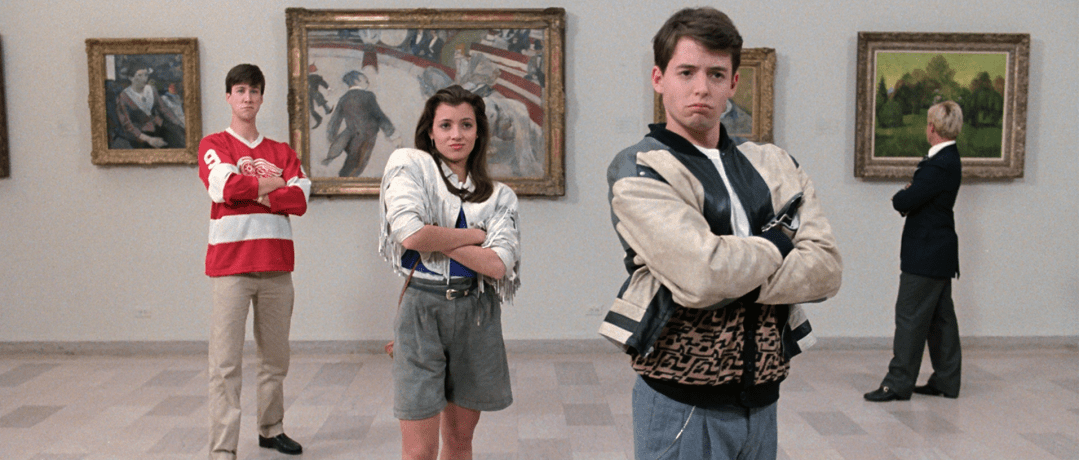
Ed Rooney is not the secret hero of Ferris Bueller’s Day Off.

Continue reading “It’s a Little Childish and Stupid, But Then, So Is High School”

Double Features #1: See Them and Weep

The double feature dominated popular cinema for thirty-odd years, back when a night out at the cinema was actually a whole night out. After sitting through a mix of newsreels, shorts, serials, cartoons and advertisements, the audience would watch two films. First, the B-movie, shorter, cheaper and uglier, with nobody actors and hacky writing, and then the main feature, with its big stars and exquisite Hollywood production values.

Nowadays, unless you’re a professional journalist, seeing multiple films in one day is, unfortunately, an extravagance. Apart from just wishing people could just see more films more often if they want, my own experience of irresponsibly blowing all my money on going to the cinema, especially around awards season, has often resulted in me discovering movies that pair wonderfully as double features, because of similar subject matter expressed in different aesthetics, opposing or at least disparate takes on the same themes, or a combination of both.

It’s not the same kind of magic as those you stumble across on your own, but I have suggestions of double features that would make a great night in. Two of them were spontaneous discoveries (the ones where both films came out the same year, obviously) while I developed the others from the highly scientific method of watching a film and thinking “huh, that would pair well with this other film I like”.

Fair warning: these are all pretty heart-wrenching movies.

Continue reading “Double Features #1: See Them and Weep”

My Body is a Cage

The first thing you know about your body is that you’re stuck in it. Only later, when your tiny infant brain develops object permanence, do you learn your body is stuck in the world.

Cake is a 2014 black comedy-drama film starring Jennifer Aniston as Claire Bennett, a woman living with chronic pain after a car crash. Claire is, to put it mildly, not the most pleasant person. The film opens on a support group meeting following the suicide of a member, Nina (Anna Kendrick), where everyone is encouraged to voice their feelings about her death by speaking to the group leader as if she was Nina. Some express sorrow, others anger that she didn’t reach out and that she left her five-year-old son motherless. Claire watches with part-amused, part-scoffing indifference until she’s finally prompted to share against her will:

“She jumped off a freeway overpass, right? Specifically where 110 meets the 105? And is it true that she landed on a flatbed truck that was full of used furniture that was heading to Mexico? And that no one discovered the body until it reached Acapulco? That was, like, more than 2,000 miles away? And that they sent her body back in a Rubbermaid cooler which then got stuck in customs for, like, a week before Nina’s husband could even claim it? Way to go, Nina. Personally, I hate it when suicides make it easy on the survivors. But please, continue.”

Critics didn’t seem to know what to do with Cake. While there was near-uniform praise for Aniston’s performance (for which she was nominated for a Golden Globe), the rest of the film received a more mixed response, especially the screenplay, and was often treated as mere fodder for puns. “This cake needs more layers” goes a typical riff. I’m not sure why, because Cake is one of the richest and most rewarding films about suicide I’ve ever seen, and probably the only one to seriously explore suicidality as an embodied experience.

Continue reading “My Body is a Cage”

You Should Watch Freddy Got Fingered

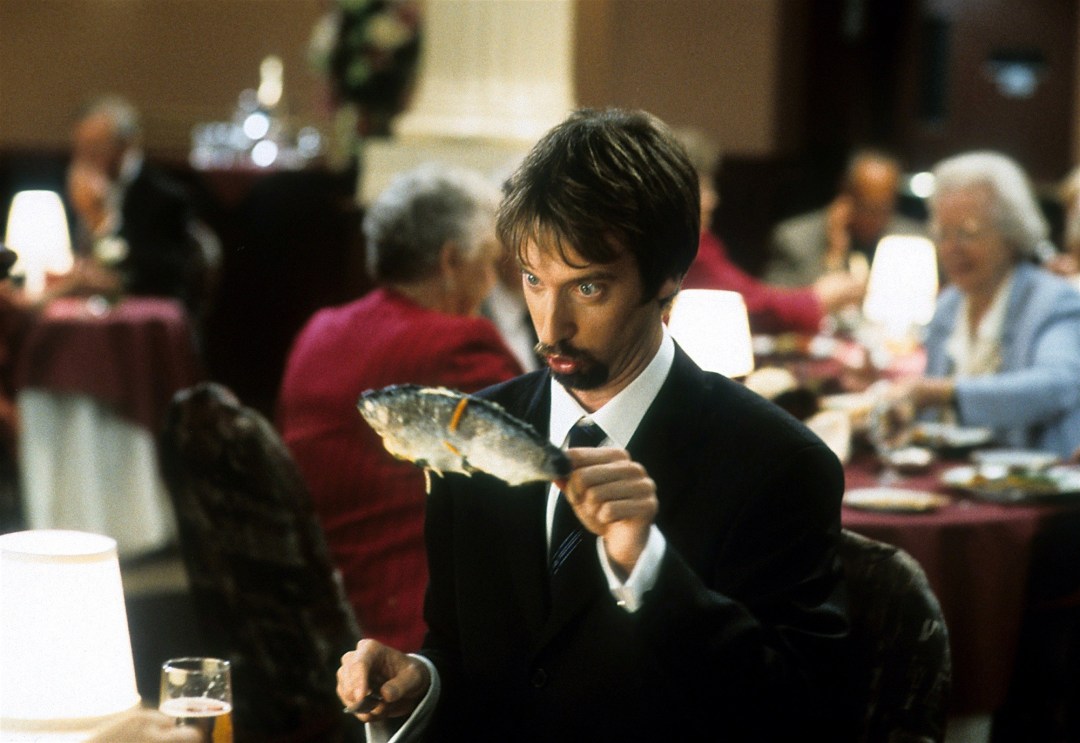
Freddy Got Fingered is generally considered one of the worst films ever made. Roger Ebert said it “doesn’t scrape the bottom of the barrel… This movie doesn’t deserve to be mentioned in the same sentence with barrels.” Leonard Maltin called it “the poster child for all that’s wrong with movie comedy.” CNN’s film critic Paul Clinton said it was “quite simply the worst movie ever released by a major studio in Hollywood history.” The Toronto Star literally gave it negative one star out of five.

There was some dissent at the time – most notably from AO Scott, who wrote that the film’s “comic heart consists of a series of indescribably loopy, elaborately conceived happenings that are at once rigorous and chaotic, idiotic and brilliant” – and since, including a glowing retrospective by Nathan Rabin in The AV Club. But it has yet to reach the critical mass of a cult following to get a director’s cut released, so I’m here to do my part.

Freddy Got Fingered is a masterpiece.

Continue reading “You Should Watch Freddy Got Fingered”

Scenes from the Class Struggle in Medieval Europe

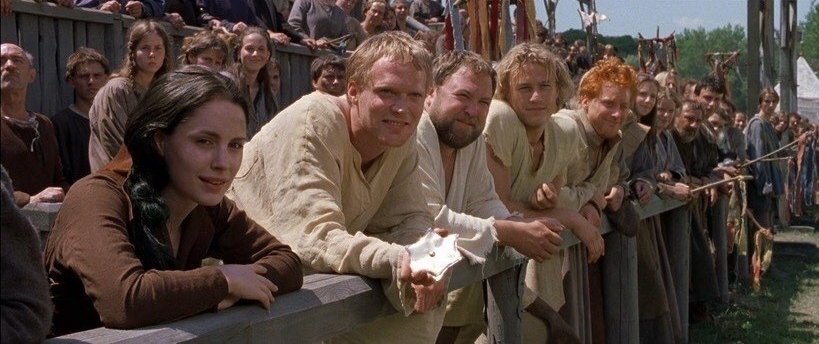
The critical reception to 2001’s A Knight’s Tale is full of terrible, lazy takes deriding it as mind-numbing trash. They’re full of disdain for low culture that places the film’s detractors squarely on the side of the its villains, a comparison that seems utterly lost on the whole pompous lot. The presumed audience of the film – teenagers – gets as much scorn as the film itself. The reviewers then scorn the film all the more in turn for its “pandering”. There are tons of complaints about its anachronistic 70s rock soundtrack, though some of the same reviewers, like Entertainment Weekly’s Lisa Schwarzbaum, would go on to name Moulin Rouge one of the best films of the year.

Admittedly, A Knight’s Tale isn’t as good as Moulin Rouge: this isn’t one of those articles where I try to convince you a largely dismissed piece of trash is actually a masterpiece. A Knight’s Tale is a pretty good popcorn flick, well-cast and competently made, with a straightforward plot and some good set-pieces. Reviewers were fond of referring to it as a “Middle Ages Rocky” or “Rocky on horseback” with exactly the tedious predictability they accuse its plot of epitomising, which is weird for two reasons: first, because Rocky is a gritty minimalist drama, and second, because, somehow, the comparison never made them consider that A Knight’s Tale, much like Rocky, is a film about class.

Continue reading “Scenes from the Class Struggle in Medieval Europe”

What Is It You Like About This House So Much?

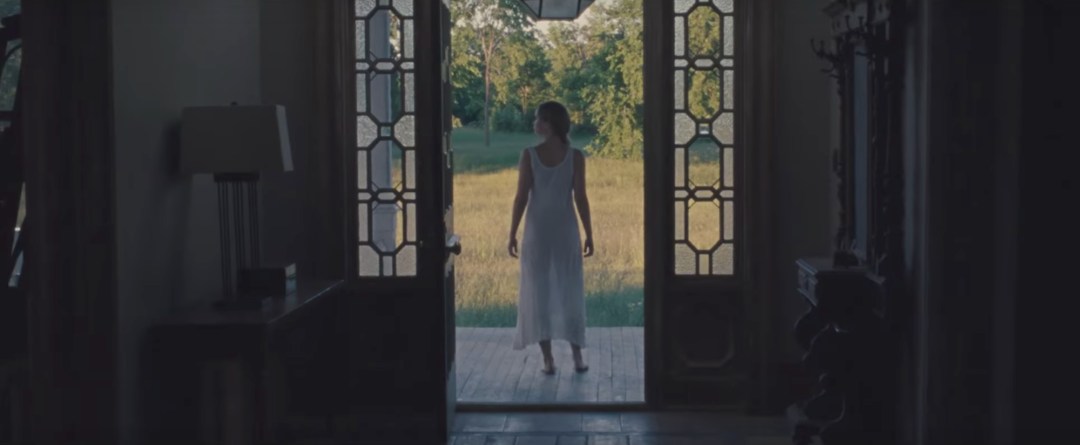
When I saw mother! in the cinema, I could feel the discomfort of people around me. Shortly before the film ended, I heard a woman declare at the full volume, “Well, that was crap.” It was a big chain cinema in a screen with rows going back to Q or something ridiculous, and it was almost empty.

mother! was given about as wide a release as is possible, and it was buzzy and controversial and starred Jennifer Lawrence, one of the most bankable stars in Hollywood, and besides, it’s a horror film, which are virtually guaranteed to make a profit. But most people will not like mother!, and lots and lots of people hated it. It’s a brave, strange thing, that made me think I can’t believe what I’m seeing in a way that I thought was kind of impossible in the internet age. Every swing it takes is big. And it couldn’t give less of a shit if you don’t like it.

Continue reading “What Is It You Like About This House So Much?”

Against Relatability

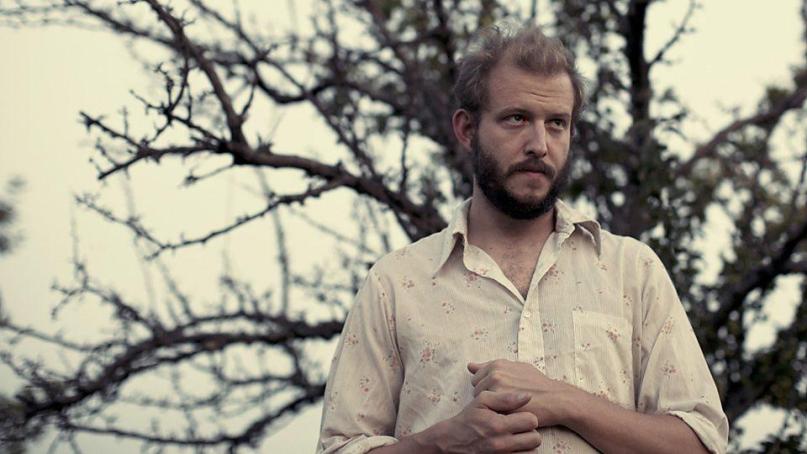
I once had a friend question how I could possibly like Bon Iver’s debut album For Emma, Forever Ago when I’d never been through a breakup. (That isn’t strictly true, but I’ve been with the same person for my whole adult life, so it’s much of a muchness.) I can’t remember exactly how I responded, but it was something like: just because I haven’t been sad over a breakup doesn’t mean I can’t relate to being sad. He seemed sceptical but didn’t push the point.

Roughly six years later, I have a better answer.

Fuck relatability.

Continue reading “Against Relatability”

The Recession, by Soderbergh

When I was thirteen years old, the world economy collapsed.

I feel like that’s worth stating baldly because it seems at times like people have forgotten, or at least misremembered. It wasn’t a little blip on the road to progress, or a tough couple years we all made it through relatively unscathed. The economy didn’t disappoint or underwhelm, it fucking imploded. The financial crisis became the Great Recession became the “recovery”. It wasn’t that long ago – and it arguably never ended – but its impact on popular culture seems absurdly slight for something that transformed the world. For something that killed so many people. So I feel like it’s worth stating baldly.

When I was thirteen years old, the world economy collapsed.

Continue reading “The Recession, by Soderbergh”

The Rashomon Effect Effect

The “Rashomon effect” describes the tendency of witnesses to or participants in the same events to give mutually contradictory accounts of what happened due to the subjectivity and fallibility of human memory. It’s named after the 1950 film Rashomon, directed by Akira Kurosawa, in which four witnesses to a murder give contradictory accounts of what happened. The term is bandied about a lot in pop psychology (and philosophy) articles, and one of its more recent applications is, of course, This Age of Trump, This Age of Brexit. In the aftermath of the two major political upsets of 2016, the mainstream media churned out hundreds of handwringing articles about the “post-truth world”, because it’s insufficient for cloistered political and media elites to have merely been wrong, their opinions and expertise are so important that if they were wrong, the only explanation was that the fundamental human ability to distinguish reality from fiction had completely disintegrated.

With its emphasis on an immutable failing of human nature – a fundamental inability to ever truly recall events accurately or, in effect, to know the world at all – it was inevitable that the Rashomon effect would be trotted out as a buzzy term to explain the new reality. Michael Wolff even mentions it in his insider account of the Trump administration, Fire and Fury. The appeal of the term is easy to understand: it describes a basic and insurmountable flaw, so it absolves everyone of responsibility to think about how and why falsehoods may have played a more decisive role in recent politics than in a supposed past era where people were more honest, or at least where the public was harder to hoodwink. I’m not saying they have done – I’m sceptical of the notion of a “post-truth world” – but if they did, I could think of reasons other than the Rashomon effect. Off the top of my head, it’s possible formerly authoritative news sources destroyed their credibility with the public by, among other things, helping the Bush administration manufacture the pretext for a war that killed hundreds of thousands of people. I’m no expert, but I have to wonder if perhaps public trust in the media was damaged when literally no one lost their job over one of the most massive and systemic failures of journalism in recent times.

Of course, that’s just my interpretation, and here’s where I should be putting the obvious joke about how it’s just like in Rashomon, where everyone remembers things differently. But there’s a problem. Unlike most people who reference the Rashomon effect, I’ve seen Rashomon. And Rashomon isn’t about the subjectivity and fallibility of memory. It’s about lying.

Continue reading “The Rashomon Effect Effect”