
Adam Sandler is one of the biggest film stars of the past quarter of a century and no one knows why.

We All Live On a Lonely Island
Five years ago, Andy Samberg made his final appearance as a cast member of Saturday Night Live. It was the end of a seven-year run in which he and his comedy partners, Akiva Schaffer and Jorma Taccone, not only helped to save the show from cultural irrelevance but redefined popular culture for decades to come.
We gather today to remember their impact, their accomplishments and their dick jokes.

Hamilton Tickets
We live in a time of great crisis and upheaval. The contradictions of the grotesque global atrocity known as capitalism continue to tear holes in the fragile fabric of the post-war liberal consensus that has guided the political culture of the western world for over seventy years. Each tear creates a new opening for resurgent fascists and other far-right extremists, who march openly in the streets of major cities for the first time in decades. The liberal centre offer no resistance to their rise, while conservatives, who have always been craftier and more pragmatic, prove eager collaborators.
After decades of failure by the professional political class, the dispossessed and disenfranchised of the world look elsewhere for solutions, and every attempt by the left to offer a more compelling alternative vision of the world than either the capitalists or the fascists is scuppered either by our own disunity or the constant treachery of centrist elites more afraid of a tax hike than eugenics. Meanwhile, poverty tortures and kills us, and the state tortures and kills us, and we torture and kill each other, and the greatest fear of all is not that some great and terrible calamity will happen, but that nothing will happen at all, and the only future is the violence and oppression of this present moment stretching infinitely forever and ever.
But let’s not talk about any of that today. Instead, it’s time we addressed another plague of modern civilisation, a malady that infects both our artistic and political culture, and threatens to consume everything that lays before it like a horde of rats.
I speak, of course, of the hit musical Hamilton.

A Town Called Fortitude
How do you talk about a show influenced by Twin Peaks without burying it in the shadow of Twin Peaks? Twin Peaks is widely considered one of the greatest TV shows of all time, and certainly one of the most important. Now more than ever we are awash in a sea of shows – good and bad – that follow an investigation into a murder or disappearance in a small town that kicks up buried secrets and drags unspoken darkness into the light. And whether a show like that is good or bad, someone is going to compare it to Twin Peaks.
Written in the Stars or Some Crap Like That
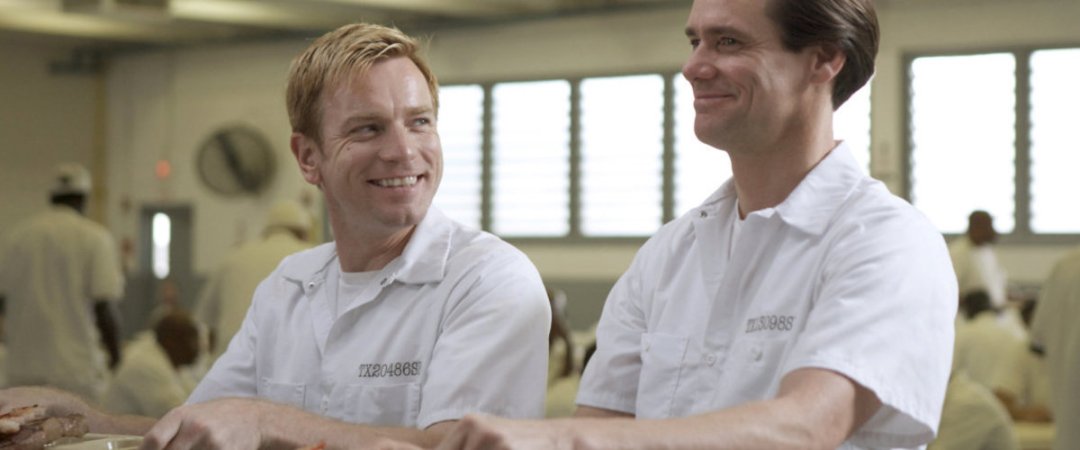
I Love You Phillip Morris is the lost film of the noughties, a masterpiece of filmmaking that no one remembers less than ten years later. Everyone who loves film has a movie they champion in the face of an indifferent world, and I have several, but none so much as I Love You Phillip Morris. Wikipedia calls it a “black comedy drama” but I Love You Phillip Morris is one of those rare multi-genres films that layers each element so perfectly the result is pure alchemy, a work of art so inexplicably magical that even an accurate label can only ever be a reductive one. I Love You Phillip Morris is a biopic, a caper, a black comedy and a tragedy, but if it’s any kind of film, it’s a romantic comedy, and not just a romantic comedy, but one of the greatest romantic comedies of all time.
Continue reading “Written in the Stars or Some Crap Like That”

Notes on Tom Hooper’s Les Misérables
Tom Hooper’s Les Misérables is not a good movie. But it’s an interesting movie to watch, if only as a cautionary tale of how a reasonably talented director can lead an excellent cast into a quagmire of poorly-executed ideas, both good and bad, through a singular absence of artistic vision.
The Last Show on Earth
Popular criticism of television is, in many ways, a nascent art form still struggling to grasp a young medium just as it goes through drastic and convlusive changes. Possibly because it has its roots in journalistic practice, it has suffered from one specific and troublesome tendency that is hardly unique to any form of criticism, but seems especially problematic for criticism of a serial art form like television that is typically reviewed episode-by-episode, namely a rush by critics to plant a flag on TV shows as quickly as possible, as if they’re afraid of being scooped on making the definitive statement on what a show is.
 The Sundae