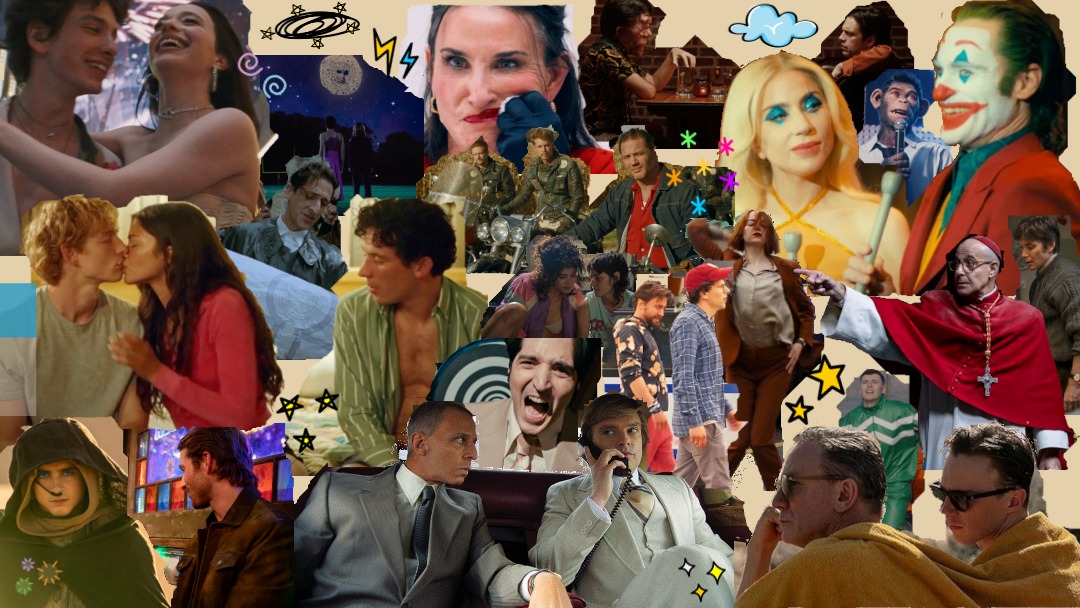
You don’t need us to tell you that 2024 was a terrible, horrible, no good, very bad year, but did you know that films came out during it also? We won’t hold it against if you forgot now that we’re two months that felt like years into a year that’s going to feel like decades. In fact, it’s the perfect reason to join us as we heap praise on the films that shone brightest through the dark. It was a great year for primates, body horror and homoeroticism, not to mention staring into the yawning abyss at the heart of American celebrity culture.
As with every year, we gave one award for each of the eight major Oscars: we care about most of the others (except for the fake awards like Best Original Song) but this post would be absurdly long if we picked those too. We each did out our personal nominees and then selected the winner by consensus, so the winners only come from films that both of us have seen and nominated, but we’ve each picked a personal runner-up regardless of whether the other has seen or nominated it. We also each gave a Special Achievement Award for something that doesn’t fit our other categories.
BEST PICTURE – Anora
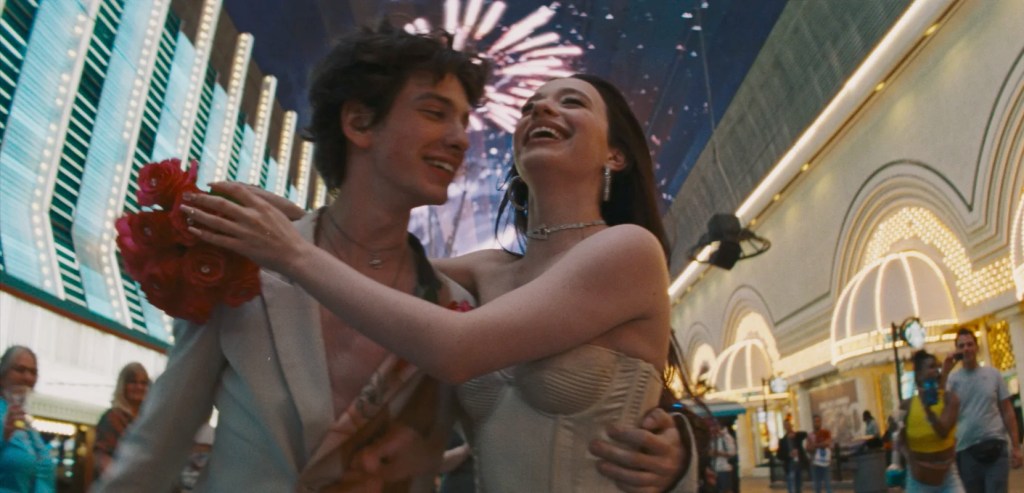
Dean: “Sean Baker, on paper, has a very narrow niche as a filmmaker: he makes social realist tragicomic dramas about the lives of proletarian sex workers in the contemporary US, shot in a photorealist visual style. Yet every single one of his films feels so distinct, even as they are in constant conversation with each other. Anora is a propulsive caper set over the holidays like Tangerine. It’s a contemporary take on classic screwball the way The Florida Project is a Little Rascals film. Like Red Rocket, its soundtrack is built around a boy band song, but instead of NSYNC’s ‘Bye Bye Bye’ it is, bafflingly but wonderfully, a remix of Take That’s ‘Greatest Day’ from the jukebox musical movie of the same name. It’s by far the sweetest of the four, without losing any of the bleak or bitter.
It’s also a fantastic new addition to the canon of films where a character literally lives on the wrong side of the tracks. Like its title character and her pitch perfect mix of worldly and naïve, Anora is both very romantic and very cynical. Whether and how much each of Ani and Vanya are sincerely in love with and/or just using each other is in a constant queasy flux whose resolution lands like a gut punch when it finally comes.”
Ciara’s Runner-Up: The Apprentice – “The Apprentice is Scarface, it’s The Social Network, it’s Nixon, it’s Frankenstein. It’s the story of why the world is like this. It’s the movie of the year. You didn’t see it because it’s about Donald Trump, and you fucked up in that respect. Maybe one day I will forgive you. There’s still time.”
Dean’s Runner-Up: Queer – “Queer took my breath away. It was shot almost entirely on soundstages and looks like it, in the best way. I spent the whole thing bewitched by its lighting, its use of colour and shadow. ‘Lush’ is the word I keep coming back to, the depth of texture and richness of tone. Also, I will never again hear ‘Come As You Are’ without seeing Daniel Craig strutting down the street in my mind’s eye, and I’m glad.”
—
BEST DIRECTOR – Luca Guadagnino for Challengers and Queer


Ciara: “The fact that Luca Guadagnino directed Challengers and Queer the same year is the kind of gobsmacking show of talent on par with Steven Spielberg making Schindler’s List and Jurassic Park at the same time. Challengers and Queer aren’t as contrasting a pair as that – they are both, in essence, queer love stories – but they are still very different. Challengers races and thrills: the innovative way the tennis matches are shot – from the ball’s POV, from below the court – makes you feel so inside of the action your heart might burst. It is a technical marvel in on-screen sports on par with the Steadicam shots in the first Rocky. I still feel it thrumming in my blood.
Queer is a slower movie: sensuous and aching, it is a film full of haunting. It’s like a Powell and Pressburger movie with blowjobs. It uses Lynchian dream sequences the way Lynch did: perfectly conveying emotional reality while being logically indescribable. It seared my skin, and I can’t stop picking at the scab.
When I think of both films, I think of texture. Most films are full of smooth, neutral planes. But in Challengers, human skin is such a complexly textured sensory object that is overwhelming to observe, an effect multiplied thousandfold by sweat. In Queer, every wall in the background of a shot looks just a little rough or uneven, in the way basically all walls are, but I have never seen in a movie before. Touch is one of the senses that cinema can’t access, and yet Guadagnino manages it.”
Ciara’s Runner-Up: Coralie Fargeat for The Substance – “A feminist remake of Jerry Lewis’s The Nutty Professor in the key of Reanimator, Coralie Fargeat made The Substance for me personally. Most fascinating is the way she shoots women’s bodies, combining satire of the male gaze with a kind of auto-homoeroticism that reminded me of Sylvester Stallone at the peak of his powers.”
Dean’s Runner-Up: Sean Baker for Anora – “One of Sean Baker’s finest qualities as a director is having such a distinctly realist visual style into which he seamlessly integrates genre influences. In that respect, little on screen this year gave me as much pure delight as the slapstick buffoonery of the hostage-taking scene in Anora, in which the two most low-level goons in history get their ass kicked by a waif-thin 23-year-old who’s tied up for most of the fight. The continuous payoff of the big goon’s deteriorating head injury getting brushed off by his boss is icing on the cake.”
—
BEST ACTOR – Sebastian Stan as Donald Trump in The Apprentice and Edward Lemuel in A Different Man

Ciara: “We at The Sundae bought Mikey Madison stock early, and have made a tidy profit since. But in the interests of transparency, it’s important to acknowledge our misses. Sebastian Stan is a ‘what if I had bought Bitcoin when I first heard about Bitcoin’ kind of miss. Dean saw him play the Mad Hatter or something on Once Upon a Time. Ciara has watched all of Kings, which would be her favourite show of all time if it was any good at all. He seemed good in the Marvel movies, but they tend to flatten out history’s all-time screen greats and some guy off the street into a mush, so it’s hard to say.
So, in 2024, Sebastian Stan becoming my favourite actor in the world was like getting hit by a train.
Both The Apprentice and A Different Man involve Stan’s physical transformation. In The Apprentice, he starts out as a blonder Sebastian Stan and gradually becomes the Donald Trump we know, and in A Different Man, he starts as a man with neurofibromatosis – benign tumours that disfigure his face – who undergoes a sci-fi cure that turns him into Sebastian Stan. Despite the opposite directions, both transformations reflect a moral degradation, a destabilisation of self, and new roadblocks in relating to other people. In The Apprentice, he discards the people who have loved him, and in A Different Man, he refuses to move on from people who do not. In The Apprentice, he doesn’t understand that he’s become a monster. In A Different Man, he realises he wasn’t a monster when it’s too late.”
Ciara’s Runner-Up: Kieran Culkin as Benjamin “Benji” Kaplan in A Real Pain – “Kieran Culkin has won a slew of awards for his performance, all richly deserved. He just should have won them for lead. He’s in close to every second of A Real Pain, so magnetic that everything is caught in his orbit. All accusations that he ‘always plays himself’ are because, like Jack Nicholson before him, he doesn’t get caught up in the pursuit of ‘range’ when what really matters is depth.”
Dean’s Runner-Up: Daniel Craig as William Lee in Queer – “Daniel Craig portrays William Lee as a painfully fearful creature, clad in layers of armour – his charm and wit, his arrogance, his snobbish detachment and disarming forthrightness – that do absolutely nothing to hide what a wounded and needy man he is. No one is fooled, everyone sees through him, but he plays the part all the same, because he’s not really trying to convince anyone but himself. He talks obsessively about telepathy, but when he finally gets to experience something like it, he recoils from the vulnerability it both requires and exposes.”
—
BEST ACTRESS – Demi Moore as Elisabeth Sparkle in The Substance

Dean: “This is the fourth time we’ve given this award to the lead performance in a horror film, but the first time our winner was also nominated for the Oscar. Even more bafflingly, Demi Moore is one of the frontrunners to win the Oscar this year. None of this is to suggest she doesn’t deserve it, to be clear. It’s just insane that a film this bizarre, disgusting and cool could be an Oscars contender. It’s too good for them.
Elisabeth Sparkle is an over-the-hill actress in an especially cartoonish Hollywood. When she’s fired from her cheesy exercise show after turning fifty, she turns to sci-fi goo magic to hatch a younger, ‘better’ body she can occupy for seven days at a time, followed by seven days in her own. Though she is repeatedly told she and her younger self are one person, not two, ‘each’ of ‘them’ immediately begins to act like the other is a separate being, and quickly grow to hate and resent ‘each other’.
Playing a recluse, Moore is often her own sole scene partner, and it’s a real testament to her skill as an actor that she makes every scene of Elisabeth hatefully examining herself in the mirror so tense, sad, hilarious and terrifying. That subtle, simmering work perfectly pays off in the scenery-chewing delight of her grand guignol descent into madness and body horror as she becomes her own portrait of Dorian Gray, diminishing and deforming into a monstrous hag screaming at her youthful self on TV while maliciously mashing liver into foie gras.”
Ciara’s Runner-Up: Mikey Madison as Anora “Ani” Mikheeva in Anora – “We loaded up on Mikey Madison stock early in these parts. We watched her grow into herself as an actor on Better Things and delighted in her being literally on fire in Once Upon a Time in Hollywood. But her performance in Anora has made her a star – in the sense of her industry stature, sure, but more importantly, in the way she commands the screen. She’s going to take over the world.”
Dean’s Runner-Up: Kristen Stewart as Louise “Lou” Langston in Love Lies Bleeding – “Rarely has a film made better use of Kristen Stewart’s talent for playing twitchy, prickly, anxious characters than Love Lies Bleeding. Lou is a butch lesbian living openly in a small town in New Mexico in 1989, so it doesn’t exactly raise alarm bells for her to be standoffish, defensive and withdrawn, which only makes the gradual revelation of the true depths of her inner darkness all the more compelling.”
—
BEST SUPPORTING ACTOR – Jeremy Strong as Roy Cohn in The Apprentice

Dean: “I have a special affection for the art of low-affect acting, or playing characters who don’t express themselves much facially. Think Keanu Reeves, as adept at playing an airhead as an icy cool murder genius, or Ben Affleck, whose somewhat wooden manner is used to blackly comic effect in Gone Girl and with great tragedy in The Way Back. Tim Heidecker has exactly one facial expression throughout the short-lived TV show Moonbase 8, but he wrings so much pathos from that one facial expression that it still tugs at my heart years later.
Jeremy Strong’s performance as Roy Cohn – famously described as ‘the lodestar of human evil’ in Angels in America – is some of the most incredible low-affect acting I’ve ever seen. His voice is a hollow drone, but hypnotic all the same. Contra the warm and personable Trump, Cohn is dead-eyed and cold-blooded, like a malevolently bored shark forever watching for prey. He’s a miserable hedonist, drinking, drugging and dicking down without so much as a smirk. He revels in his reputation as a villain – you can tell he’s told the story of how he got Ethel Rosenbeg executed a hundred times – even as he’s constantly furious he’s not praised as a hero.
But much like Angels in America before it, The Apprentice manages to find the humanity in this most monstrous of men. His fatherly love for Donald is bafflingly but achingly sincere, and his slow-then-sudden betrayal by the closest thing he’s ever had to a son is genuinely harrowing to behold.”
Ciara’s Runner-Up: Guy Pearce as Harrison Lee Van Buren in The Brutalist – “Guy Pearce is back, baby. His performance as Harrison is fascinating in how he combines the palatable face of a generous patron with the endemic malevolence of wealth, whether aristocratic or bourgeois. The Jewish-Hungarian protagonist is merely a dolly for him to play with: amusing for a time but easily discarded. Even more easily abused.”
Dean’s Runner-Up: Tom Hardy as Johnny Davis in The Bikeriders – “Tom Hardy is the heart and soul of The Bikeriders as Johnny, founder of the Vandals MC. Ill at ease in his life of postwar domesticity, he tries to find a sense of belonging and purpose by starting a motorcycle club after seeing Marlon Brando in The Wild Ones. In a story of only tragic figures, he might be the most tragic of all: he can only be his authentic self in a world based on fiction, and his own creation destroys him as it curdles into something dark and criminal.”
—
BEST SUPPORTING ACTRESS – Lady Gaga as Harley “Lee” Quinzel in Joker: Folie à Deux

Ciara: “Before Joker: Folie à Deux came out, I read Lady Gaga talking about how she didn’t sing as herself in the film, saying it was unlike anything she had done before. I rolled my eyes. I thought she was massively underselling acting-while-singing as some new venture, rather than an embedded part of musicals and opera forever. But as Lee, Lady Gaga doesn’t sing like Lady Gaga. Gaga can belt her lungs out. Lee’s voice is a wisp of a thing, slight and shaky but pretty, too. Like the main characters in La La Land, it is the singing voice of someone who doesn’t know how to sing, but is filled with an emotion that cannot be expressed any other way. It is a perfect complement to Joaquin Phoenix’s warbly vocals, and an instant insight into who Lee is as a person. Vulnerable, brave, desperate, yearning. Mad. Half-doomed, semi-sweet.
Joker: Folie à Deux is a great movie. I don’t understand at all why everyone hated it, but I am happy in the knowledge that hating Folie à Deux only makes it stronger. The first Joker was a riff on New Hollywood antihero movies, and every New Hollywood guy deserves to blow up their career with a big-budget musical flop. I am sure that, like those movies, Folie à Deux will find its audience in time. But if not, Lady Gaga’s performance will remain one for the ages. Nominating her for Worst Actress will one day be a stick we beat the Razzies with. They hired one of the biggest popstars alive to star in a musical, and instead of coasting, she developed a whole new way of singing just to reflect her character. Holy fucking shit, man.”
Ciara’s Runner-Up: Maria Bakalova as Ivana Trump in The Apprentice – “I called Maria Bakalova a revelation back in 2021 for her performance in Borat Subsequent Moviefilm, and The Apprentice vindicates the faith I put in her. Ivana could easily be a thankless role, but Bakalova makes her the film’s heart, equal in weight to Donald and Roy Cohn despite her lesser screentime. Most impressive is her performance in the scenes where she and Donald fall in love: she convinces us, at least for a time, that this empty, selfish man is worth loving.”
Dean’s Runner-Up: Margaret Qualley as Sue in The Substance – “Much of The Substance hinges on believing that Sue is so magnetic and charismatic on screen that she becomes an overnight sensation basically as soon as someone watches her in a camera, and I believe it because Margaret Qualley is so magnetic and charismatic in this. Sue is simultaneously a fifty-year-old actress trying to recapture her lost youth, a bratty young woman trying to break free of her controlling mother (who is her) and a newborn abomination struggling to grasp the boundaries of her own existence.”
—
BEST ORIGINAL SCREENPLAY – Sean Baker for Anora
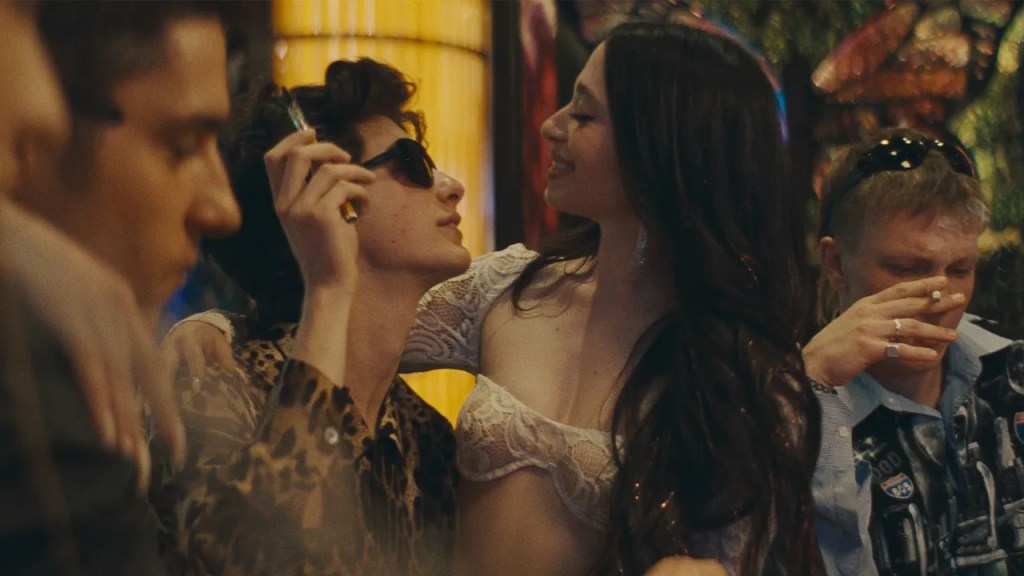
Ciara: “Anora is to screwball comedies as The Florida Project was to Little Rascals shorts: it is emphatically the same thing for a new era, and simultaneously, a social realist drama about class. The stretch where its principals are separated toys with becoming a comedy of remarriage, in which the couple marry, part, and remarry. The emphasis is different than in Florida Project, though: this is a Sean Baker movie for the masses. It is the funniest film that Baker has made: I don’t think I’ve laughed as hard at someone attempting to take someone hostage ever. The underlying sadness only really emerging towards the end – and hitting all the harder because of it.
There are gags I could cite for days. The phone call during the baptism. How bad Vanya is at sex. Everything that happens during the long night of trying to find him. But probably the clearest example of how well-constructed Anora’s screenplay is occurs in the film’s final act, when a character who has been present but peripheral to the story moves to centre stage. You don’t see it coming, but it emerges totally naturally: without holding your hand or giving you reminders, you have slowly gotten to know this character enough that it makes sense when the shift occurs, we know him well enough.”
Ciara’s Runner-Up: Jonathan Abrams for Juror #2 – “Juror #2 is a film that has such a good premise – the protagonist is called to serve on the jury for a murder trial, only to realise that he unknowingly caused the victim’s death – that it would have been easy to coast. This is a script that never coasts. It turns the screws tighter and tighter, until it leaves an imprint on your brain for weeks after.”
Dean’s Runner-Up: Jane Schoenbrun for I Saw the TV Glow – “I am a child of the same Internet as Jane Schoenbrun – the halcyon days of fan forums, creepypasta and dangerously anonymous chatrooms – and it’s genuinely thrilling to watch them make such bracing and original films from the social and cultural ephemera of that time. I Saw the TV Glow understands that screens are mirrors, windows, portals and prisons all at once: we can see ourselves in them, but we can also seal ourselves away in them. Escapism isn’t escape, after all, just a simulation of it.”
—
BEST ADAPTED SCREENPLAY – Justin Kuritzkes for Queer
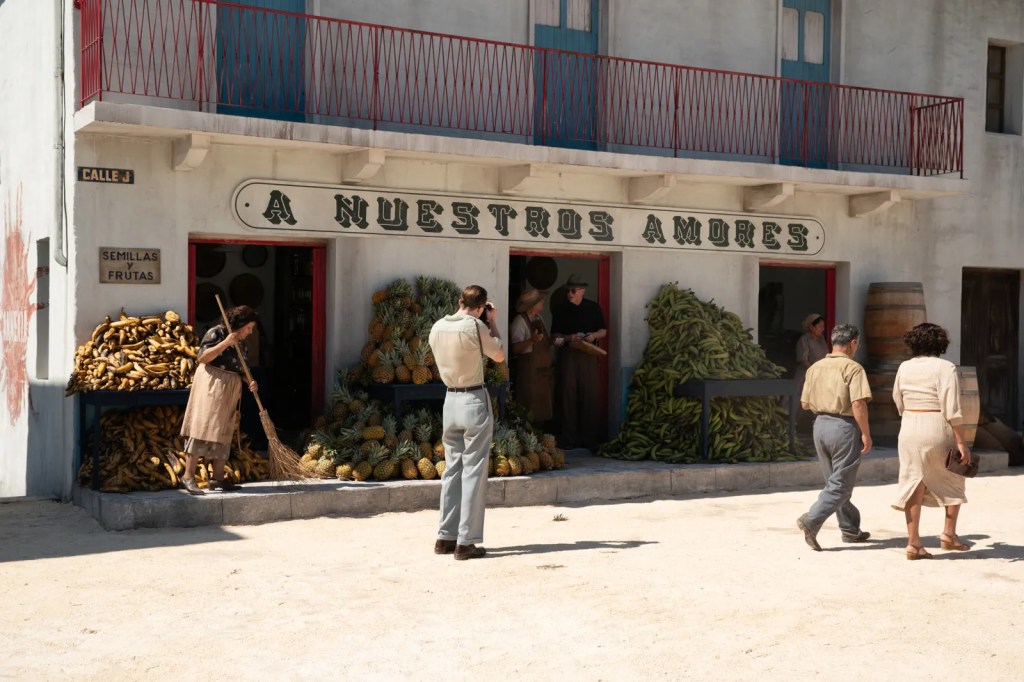
Dean: “Queer is one of William Burroughs’ most curious works, not for its content, but its context. It was written in the early 50s, first as an extension of his then-unpublished semi-autobiographical debut novel Junkie, then as a sequel to it. Like Junkie, it’s a straightforward modernist novel written in dry, direct prose reminiscent of Hemingway. But Queer wasn’t published after Junkie in 1953, it was published over thirty years later, long after Burroughs had become a famously experimental writer. Burroughs, it’s said, didn’t even review the manuscript before publication because it was too painful: he wrote it while under investigation for shooting and killing his common-law wife Joan Vollmer in disputed circumstances.
When this film was announced, I expected – and expected to enjoy – a fairly straightforward adaptation of a fairly straightforward novel with a couple of scenes of hallucinogenic surrealism during the climactic drug trip.
I was delighted to be wrong. Justin Kuritzkes’ script thrillingly reintegrates the pioneering postmodernism of Burroughs’ later work through Lynchian dream sequences that both visually and emotionally enrich the story, expressing Lee’s inner turmoil in ways he never can, even to himself. Two of the sequences also fold the shooting of Vollner into the film, threatening to collapse the thin boundary between the real Burroughs and his fictional avatar.”
Ciara’s Runner-Up: Peter Straughan for Conclave – “The genius of Conclave is that it’s a pulpy procedural about some catty bitches having a popularity contest that is also a revelatory insight into the political machinations of the Catholic Church. It is also, like Apocalypto or Marie Antoinette, about how something feels very important before you know what’s coming next. Obsessed with how every time someone insists that they would never want to be pope, that means they’re running for pope.”
Dean’s Runner-Up: Richard Linklater & Glen Powell for Hit Man – “I love a con man film, and Hit Man is a great one, even if it’s about a guy who doesn’t think of himself as a con man, at least initially. Gary Johnson is a mild-mannered professor with a side gig posing as a contract killer to help cops catch/entrap people trying to take a hit out, until he finds himself sitting opposite someone too sympathetic and sexy for him to go through with it. It’s a romantic comedy thriller that completely nails being romantic, funny and thrilling, all built on this cracking script co-written by its director and star.”
—
SPECIAL ACHIEVEMENT AWARD (MONKEY MOVIE OF THE YEAR) – Better Man

Ciara: “The last twelve months have been big for monkey cinema. Kingdom of the Planet of the Apes. Monkey Man. Oh hell, The Monkey. But the only monkey that really mattered was Robbie fucking Williams.
Better Man exemplifies the highest possibilities within the musical biopic trend. It doubles down on all the things that made Rocketman a breath of fresh air – it uses Williams’ back catalogue as a jukebox for its all-singing, all-dancing musical fantasia – but also, portrays Robbie Williams as a chimpanzee. You could dismiss that as a cheap gimmick. It is in fact actually a very expensive gimmick. But as well as being a gimmick, it’s a stroke of genius.
The chimp captures some essential truth of Williams as a person: his cheeky chappie persona, his energy, but also his low self-image, his defaulting to people’s expectations – transforming him from a metaphorical to a literal performing monkey. (Steve Pemberton as Robbie’s dad manages to convey a lot of those same qualities without being a chimp. He has a chimp heart.) You adjust pretty quickly and stop thinking about it: the chimp just becomes Robbie Williams. But every so often it strikes you just so, and it aches.
Where a film like Wicked seems to shrink from its musical numbers, almost embarrassed to be what it is, Better Man treats what are in essence unrelated pop songs as vehicles for cinematic storytelling, combining narrative propulsion with the joy of pure spectacle. Robbie Williams has so many great songs, but Better Man doesn’t just sit back and rely on the songs to do the work. The ‘Rock DJ’ sequence is a brilliant piece of choreography that succinctly conveys Take That’s shoot to fame – it’s the kind of thing that makes you wonder why all movies aren’t like this.”
—
SPECIAL ACHIEVEMENT AWARD (MAKEUP & HAIRSTYLING) – Sasquatch Sunset

Dean: “I am the target audience for a film following a year in the life of four sasquatches as they travel the forests of the Pacific Northwest, living off the land and trying to find other members of their fading species in the long twilight of ecological modernity, and also there’s poop and stuff. I adore fiction’s capacity to imagine ways of being and living beyond the human, I love movies that patiently observe characters in the details of living their lives, I regard the sasquatch very highly among North American cryptids, and I think poop is funny.
I still loved Sasquatch Sunset more than I expected. It’s usually described as an absurdist film, not least because the sasquatches speak in unsubtitled hoots and hollers, but it is also a realist drama from a sasquatch’s point of view. It’s funny, moving, disgusting and horny, though I was most surprised by the thrilling scenes of peril that left me genuinely on the edge of my seat.
But none of it would come off if not for the incredible work of makeup and hair designer Steve Newburn – who described it as a ‘bucket list’ job – in transforming four human actors into the four most plausible sasquatches ever put on screen. Their hair especially is both textured and coloured so well to reflect the wear and tear of getting matted and groomed constantly. It’s in the sum of such small details that movie magic is found, and I was constantly blown away by the details in this film.”
—

 The Sundae