How South Park is saving free speech in America

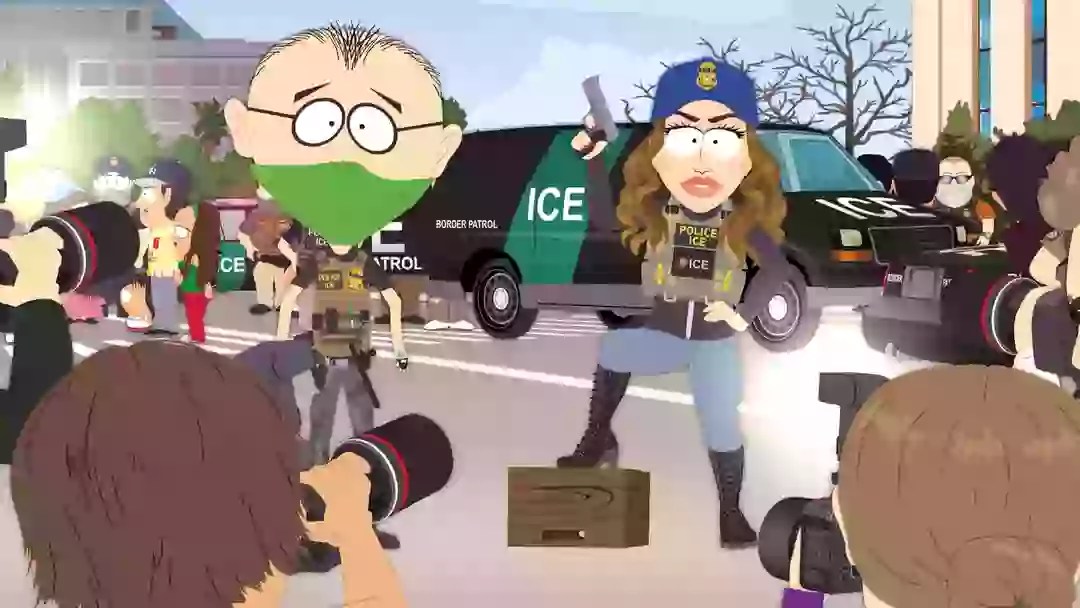
I was on the latest episode of the podcast The Bunker: News Without The Nonsense to discuss the new season of South Park, its criticism of Trump, and the show’s shifting place in the US culture wars. Listen below:

How South Park is saving free speech in America The Bunker – News without the nonsense

You can also find it on SpotifyApple, or wherever you get your podcasts.

If you want more of my South Park takes, check out this article I wrote for Current Affairs in 2023. An extract to whet your appetite:

In 2017, the two-headed monster of Donald Trump’s inauguration and South Park’s 20th anniversary prompted much hand-wringing over the show’s legacy. In the post-2016 rush to point fingers, a cartoon about the adventures of some potty-mouthed 8-year-old boys was made to bear at least some of the blame. Dana Schwartz tweeted that it was impossible to overstate the cultural damage of South Park’s portrayal of “earnestness as the only sin” and mockery as “the ultimate inoculation against all criticism”—and then, her point seemingly proven, she was descended on by trollsSouth Park didn’t invent the alt-right, Sean O’Neal wrote for The AV Club, “but at their roots are the same bored, irritated distaste for politically correct wokeness, the same impish thrill at saying the things you’re not supposed to say, the same button-pushing racism and sexism, now scrubbed of all irony.” For Lara Zarum in The Village Voice, the show’s misogyny—the creators “never seem content just to make fun of women; they relish sexually humiliating them, too, all while shunting the show’s female characters, young and old, to the maddeningly familiar role of disapproving nag”—is deeply tied to Hillary Clinton’s election loss. 

The consensus that seemed to calcify was that South Park’s corrosive influence on popular culture raised a generation of nihilistic trolls that revived American fascism for the lulz. At best, it inculcated a wilful apathy, political and otherwise. According to Lindsay Ellis, South Park creators Trey Parker and Matt Stone spent the whole 2000s “explaining that things were fine actually, both sides bad”: both symptomatic of, and feeding into, a wider apathetic cultural attitude towards social injustice in the 2000s. As Schwartz outlines, South Park has always skewered “both the left and the right—and anyone who believed in anything—as equally ridiculous. The smart people were those detached enough to know that everyone was full of it.”

There is some ring of truth to all this. The best of these critiques—like Zarum’s or O’Neal’s—are rooted in an acknowledgement that South Park is and has always been extremely funny, and that its cultural effect is not necessarily reflective of Stone and Parker’s intentions. But even still, a fundamental rift inevitably opens up between these arguments and my experience of the show itself.
Vast Wasteland or Fertile Soil?: Redefining TV’s Golden Ages

In 1961, newly appointed Federal Communications Commission chairman Newton N. Minow referred to American television as a “vast wasteland.” The New Yorker TV critic Emily Nussbaum referred to this as “the medium’s most famous libel”—one repeated as an adage of discerning viewers turning their nose up at television as a whole. As Nussbaum notes, however, Minow’s point was not to dismiss television as a medium; quite the opposite. He was mourning what he viewed as the public interest programming of television’s original Golden Age—“the much bemoaned good old days” of live teleplays on Playhouse 90 or Studio One, which had given way to “a procession of game shows, formula comedies…violence, sadism, murder, western bad men, western good men, private eyes, gangsters, more violence, and cartoons.”

A couple of decades later, I’m a little kid, cross-legged in front of the television. Like Carol Anne in Poltergeist (1982), I was in communion with the box. Awash in its glow, watching, rapt, until my eyes went square. American sitcoms and Australian soap operas. A procession of game shows, violence, and cartoons. Television had by then been long considered a disreputable medium—the kind people denied as an “art form”—but its glimmer has enchanted me my entire life. It was my first, and maybe truest, love.

I reviewed some books about the so-called Golden Age of Television in a feature article for Cineaste last year. You can buy the issue here, and it’s also archived on JSTOR!

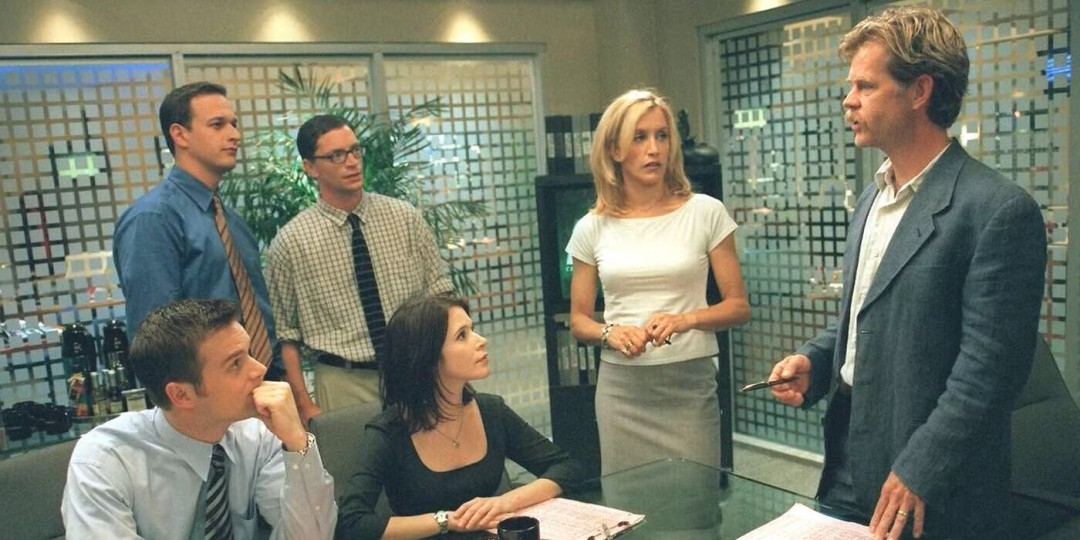
25 Years Later, Sports Night Is Still Aaron Sorkin’s Greatest Work

Nearly everyone agrees: Aaron Sorkin’s career lives in the shadow of his early masterpiece. He has tried to recapture the magic of this small-screen triumph over and over again, mostly in vain. “What if I did the same show but set at Saturday Night Live?” he asked, and gave us Studio 60 on the Sunset Strip. “What if I did the same show but set in a newsroom?” he asked, and gave us The Newsroom. It’s a truism of Sorkin studies, generally mentioned within the first two paragraphs of a review of any movie he had a hand in. And everybody’s right—except for one thing: they think it’s The West Wing he’s trying to recreate. 

I wrote about Sports Night for Paste. You can read it here!

In Defense of South Park

In 2017, the two-headed monster of Donald Trump’s inauguration and South Park’s 20th anniversary prompted much hand-wringing over the show’s legacy. In the post-2016 rush to point fingers, a cartoon about the adventures of some potty-mouthed 8-year-old boys was made to bear at least some of the blame. Dana Schwartz tweeted that it was impossible to overstate the cultural damage of South Park’s portrayal of “earnestness as the only sin” and mockery as “the ultimate inoculation against all criticism”—and then, her point seemingly proven, she was descended on by trollsSouth Park didn’t invent the alt-right, Sean O’Neal wrote for The AV Club, “but at their roots are the same bored, irritated distaste for politically correct wokeness, the same impish thrill at saying the things you’re not supposed to say, the same button-pushing racism and sexism, now scrubbed of all irony.” For Lara Zarum in The Village Voice, the show’s misogyny—the creators “never seem content just to make fun of women; they relish sexually humiliating them, too, all while shunting the show’s female characters, young and old, to the maddeningly familiar role of disapproving nag”—is deeply tied to Hillary Clinton’s election loss. 

The consensus that seemed to calcify was that South Park’s corrosive influence on popular culture raised a generation of nihilistic trolls that revived American fascism for the lulz. At best, it inculcated a wilful apathy, political and otherwise. According to Lindsay Ellis, South Park creators Trey Parker and Matt Stone spent the whole 2000s “explaining that things were fine actually, both sides bad”: both symptomatic of, and feeding into, a wider apathetic cultural attitude towards social injustice in the 2000s. As Schwartz outlines, South Park has always skewered “both the left and the right—and anyone who believed in anything—as equally ridiculous. The smart people were those detached enough to know that everyone was full of it.”

There is some ring of truth to all this. The best of these critiques—like Zarum’s or O’Neal’s—are rooted in an acknowledgement that South Park is and has always been extremely funny, and that its cultural effect is not necessarily reflective of Stone and Parker’s intentions. But even still, a fundamental rift inevitably opens up between these arguments and my experience of the show itself.

I wrote about South Park, shock humour, and morality in art for Current Affairs. You can read it here!

The Great Wipeout of Television History

I’m not much given to ranking such things, but if you put a gun to my head and asked me to rank my favourite sitcoms, The Likely Lads would easily make the top tier. It aired three seasons on BBC between 1964 and 1966—which, because it’s British television, means twenty episodes and a Christmas sketch—following Terry and Bob, two young men working in a factory in the north-east of England. It was commissioned because The Beatles were big and that made someone at the BBC want a show about young northerners, even if they ended up in Newcastle instead of Liverpool. 

Terry and Bob are instantly, vividly realized: they are united in their shared ambitions of getting drunk, picking up girls, and watching football, but there is always a tension between Terry’s pride in being working-class and Bob’s ambitions for social mobility. Bob will always blame Terry for his bad behavior, but the phrase “pushing an open door” was invented specifically to describe Bob. While many 1960s sitcoms are warm, wholesome and full of wacky misunderstandings, The Likely Lads is vulgar, realistic and incredibly modern. Season one’s “Older Women Are More Experienced”—in which Terry dates an older woman and Bob dates a younger one—ends on a punchline that wouldn’t feel out of place in Peep Show. It’s a show I adore, that I will evangelise for any chance I get.

Of the twenty episodes produced, only ten survive. 

Continue reading “The Great Wipeout of Television History”

It’s Unnatural, Innit? Men in Cages

Most people don’t think about prisons very often. Unless you are forced to interact with the prison system in some way, it mostly just hums along in the background. It’s unquestioned. It’s unquestionable. There are some people who are actively into it – who comment “bring back hanging!” on every news article about literally any crime and think high rates of reoffending are due to prisons being too nice – and there are certainly lots of people who object to the criminalising of specific actions, from drug possession to sex work to digital piracy, but for most people, most of the time, prisons just… exist. Always have, always will.

Television as a medium has a long love affair with the criminal justice system, but for the most part, only up until you get to the prison gates. There are an unfathomable number of shows about cops investigating crimes and lawyers prosecuting crimes, that take place in police stations and courts and even jails where the defendant awaits trial, but a relatively tiny few set among convicts in prison. There’s Orange Is the New Black, obviously. Oz. Prison Break. That time Deirdre went to prison on Coronation Street. I could probably name ten if I really tried (whereas I’m pretty sure I could name fifty cop shows in half the time while standing on my head). Partially this is due to the nature of the medium: police procedurals and courtroom dramas are both ideally suited to the hour-long TV episode, telling a self-contained story with characters we know and care about, with twists and suspense ideally timed to the ad breaks. It’s both exciting and familiar, and they always get the bad guys in the end. Truly great police or legal procedurals are, in many ways, what TV does best.

But there’s still something odd about a medium so obsessed with retelling the story of how someone gets sent to prison having almost no interest in what happens when they get there. I don’t particularly buy into on-screen representation as any kind of be-all end-all, but when most people don’t think about prisons very often, and television doesn’t portray prisons very often, it’s hard not to see it as an endless feedback loop, each reinforcing the other. The incarceration system relies on this: on us turning away, choosing not to see, not to think, not to question. Cop shows function in large part as propaganda for the police, but the prison system is harder to propagandise for. Cop shows depict a kind of idealised police force, facing down unimaginable danger to catch the bad guys, but there is no similar idealised vision of prison, that makes the audience root for heroic prison officers and glad the bad guys are locked up there. Invisibility is about the best they can do. Television teaches us to root for hero cops, but when it comes to prisons, it asks us to turn away, avert our eyes, keep our heads down. Just don’t think about it at all.

This is part of what makes Porridge such a special show. Originally airing on the BBC from 1974 to 1977, it’s a sitcom set in the fictional Slade Prison in Cumberland. The sitcom may seem like an unnatural format to set in a prison, but that format allows Porridge to depict prison life at a kind of mundane, everyday level. A lot of prison dramas portray the most fucked up, horrible stuff that happens in prison, like rape and violence, but Porridge depicts the thousand tiny dehumanisations that make up prison life even when things are running perfectly smoothly. The oppressiveness inherent to the system, and the tiny victories that make it bearable.

Continue reading “It’s Unnatural, Innit? Men in Cages”

Swift as Jackass: The Forgotten Genius of Nathan Barley

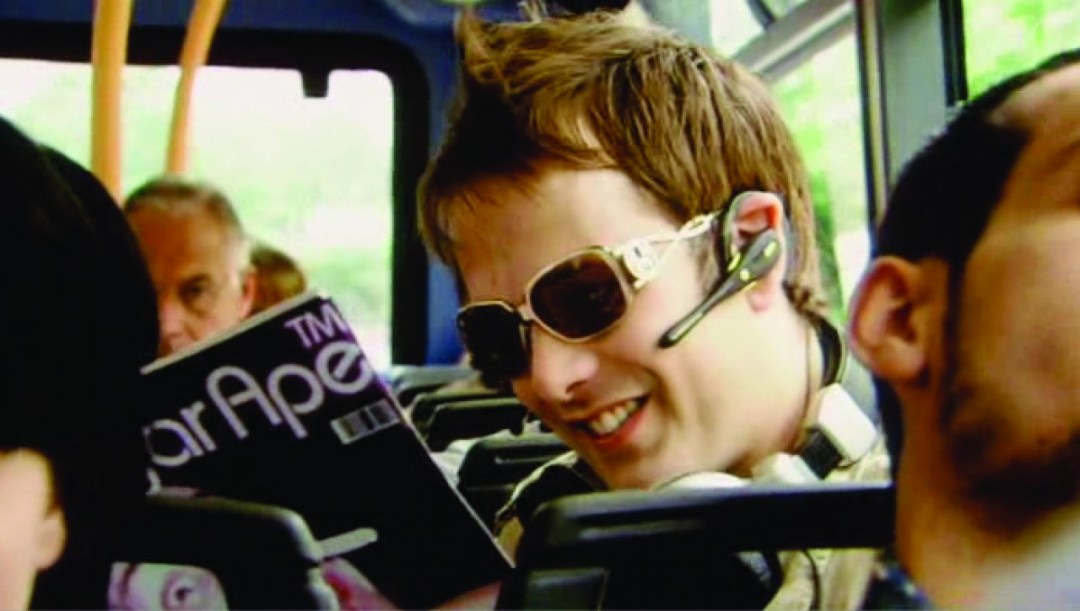
Nathan Barley, Chris Morris and Charlie Brooker’s 2005 satirical sitcom about the East London media scene and tech-saturated hipsterdom, was a flop when it first aired on Channel 4: by episode five of its six-episode run, its audience had dropped to just 500,000 (a 2% share). The title character, played by Nicholas Burns, was originally created for Brooker’s TV listings parody website TVGoHome as the star of a documentary called Cunt. Nathan is softened for the sitcom from an outright cunt into an insufferable twat: he’s a self-described “self-facilitating media node”, running a website called Trashbat.co.ck (registered in the Cook Islands) where he posts prank videos and assorted shite. “It’s an online urban culture dispatch,” he says. The sitcom puts Nathan in contrast with Dan Ashcroft (Julian Barratt), a frustrated cynic working at SugarApe magazine (stylised to emphasis “rape”), an obvious parody of Vice. In the first episode, Dan writes an article about the rise of the idiots, lambasting people like Nathan and his colleagues at SugarApe. Nathan and all the other idiots think it’s genius. It’s a brilliantly funny, weird little show, alternating between unabashed silliness and jet-black shock humour.  

A second season of the show was never commissioned. Morris and Brooker both went on to bigger things – Brooker created Black Mirror, and Morris continues to be an incomparable genius – as did much of the cast – a host of now big stars play bit parts, from Benedict Cumberbatch to Ben Whishaw – but it has not prompted much of a return to Nathan BarleyDigital Spy once claimed it became a cult hit on DVD, but they would say that, wouldn’t they? Every retrospective on some flop no-one remembers claims it later became a cult hit. It’s not like people are going to Nathan Barley conventions dressed as Nikolai the Barber’s dead cat. 

Continue reading “Swift as Jackass: The Forgotten Genius of Nathan Barley”

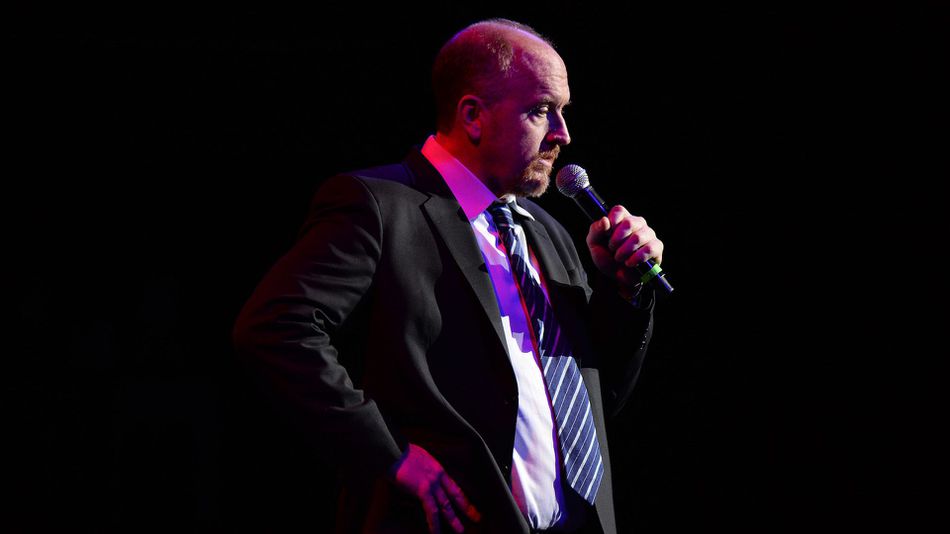
Deconstructing Louis CK, Part 2

Read Part 1, on the fraught expectations around reexamining the artistic works of bad people, here. 


“There were some changes in how certain shows are classified this year. For example, Orange is the New Black is now technically a drama, while Louie is now technically jazz.”

– Andy Samberg, 2015 Emmys Opening Monologue

The word “innovative” is thrown around a lot in contemporary cultural criticism. It’s hard to say why, though I have some theories: a lack of historical literacy, particularly with younger critics; an increase in critics, especially reviewers and recappers, using broad language and easy shorthand due to the punishing deadlines demanded by a hectic 24/7 online publishing environment; a growing tendency towards a mindset of critic-as-advocate in a crowded pop culture marketplace, which encourages critics to overstate the virtues of works of art they want to support in the hopes it will persuade more of their audience to give them a shot. Probably there are other reasons, but I like my theories because of all the first-hand evidence I have. I’ve called movies and TV shows innovative out of ignorance, expedience and a desperate want to convince other people to like the things I like so I have someone to talk about them with. Sometimes the truth – that something is “merely” fresh, interesting or novel – can seem a bit lacklustre. But “innovative” is a word with some heft behind it: not just new, but so new it represents a major break with the old way of doing things.

But artistic innovation is rare, and only gets rarer the longer a medium is around. Every medium has its limits, and while its early days will be a flurry of invention as artists create the basic vocabulary of material, structure, form, etc. eventually most things an artist can possibly do with paint on canvas or light on film will have already been done. Irmin Roberts, an uncredited second-unit cameraman (or cinematographer, sources vary), invented the dolly-zoom in 1957 during the making of Vertigo, and that was the first and last time a dolly-zoom was innovative. People have used them in new and interesting ways since then – the reverse dolly-zoom from Goodfellas melts my face off to this day – but it was innovative once. It opened up the medium to new possibilities once.

Maybe this seems pedantic, and it would be if “innovative” was a perfect synonym for “fresh” and “new” and “original”, but the concept of innovation is an extremely loaded one. It’s no surprise the term has grown in use over the last few decades given the valorisation of “innovation” spread by Silicon Valley and its pantheon of “visionary geniuses”, each as mythical as the last. But it’s exactly in that source we should see the danger in throwing it around so loosely. Technological innovations are constantly credited in the public imagination to people who did not create them, treated as the breakthroughs of singularly brilliant minds whose sole role, very often, was owning the companies where the workers who actually created the innovations were working at the time. Even to credit those workers is usually too simplistic, because their breakthroughs are frequently just the final step in a years- or even decades-long process of inquiry, research, design, testing, etc. that likely involved dozens if not hundreds of people who deserve recognition for their contributions. But they don’t get it. Even the one who makes that final jump doesn’t get it. Irmin Roberts invented the dolly-zoom and he doesn’t even have a Wikipedia page.

The word “innovative” is thrown around a lot in contemporary cultural criticism, and it wigs me out. It’s such a bold claim to make: not just something you’ve never seen before, but something no one has ever seen before. And even when you’ve correctly identified something as innovative, if you’re not careful, you can credit it in such a way as to bury the contributions of people without whom it would not exist. It’s not a word to be used lightly, not when criticism is often where the history of an art form – or at least the dominant narrative of that history – is written.

Let’s talk about Louie.

Continue reading “Deconstructing Louis CK, Part 2”

Deconstructing Louis CK, Part 1

For the last several years, an increasing number of celebrities and other powerful figures – mostly but not exclusively men – have been exposed for sexual assault and harassment. People call it the #MeToo “moment” and it’s fair to say the outing of Harvey Weinstein as a serial sexual predator in the pages of the New York Times and New Yorker was a kind of tipping point. But it was a tipping point in a trend that’s been growing for years and many of the people exposed since Weinstein are people whose behaviour were the stuff of rumour for a while before. Sometimes, people ask me why I’m so willing to believe accusers when they speak out when it’s all just “he said, she said”, and there are a lot of reasons, but one is definitely that I’d been hearing things about several of the people recently exposed years before anyone came forward. I’m not some celebrity insider or anything. I’m just some guy from a small town in Ireland who’s never met a famous person I couldn’t fail to make small talk with before falling completely silent and walking away mumbling to myself, as Father Ted’s Ardal O’Hanlon could attest if our encounter in a pub in Galway had been memorable in any way whatsoever. I’m not connected. But if someone had asked me to name sexual predators in Hollywood a year before the Weinstein story broke, I could have named at least a few of the men whose crimes were about to be dragged into the light: Bryan Singer, John Lasseter, Louis CK.

These past few years have raised a lot of challenging questions about how to relate to artistic works made, at least in part, by sexual predators. I’ve written about some of these questions before, and I will probably write about them again in the future. They’re not questions with easy, straightforward or final answers, if they have answers at all. An argument that might persuade you in one case could fail in another: when people say Woody Allen’s movies are inseparable from the man and his crimes, something about it just rings truer to me than when people say the same about the songs of Brand New, whose lead singer Jesse Lacey admitted to sexually exploiting teenage girls while he was in his twenties, and it’s hard to pin down why. Why can I listen to Brand New without guilt but just the thought of listening to Lostprophets, whose lead singer Ian Watkins is a convicted child rapist, turns my stomach? Why do Lostprophets songs turn my stomach when I was recently able to watch multiple episodes of Glee starring Mark Salling, who plead guilty to possessing child pornography before hanging himself, with minimal discomfort? The details differ, obviously, but all four of these men hurt children. What makes me want to take back Brand New’s music from its association with Jesse Lacey but not Lostprophets’ from Ian Watkins?

I’m not sure and may never be. Certainty may not even be the point. Perhaps constantly questioning ourselves and our judgement is the response these issues require. Not to the extent that we suspend judgement indefinitely and let ourselves off the hook from making decisions, obviously, but maybe a satisfying answer shouldn’t be the goal.

Let’s talk about Louis CK.

Continue reading “Deconstructing Louis CK, Part 1”

Rape Jokes: The Michael Scott Story

The American version of The Office is a much lighter, goofier show than its BBC counterpart. Ricky Gervais’ and Stephen Merchant’s original show is cynical and essentially misanthropic, such a pure distillation of cringe comedy that it’s uncomfortable to watch. Although the NBC version started as an almost beat-for-beat remake, it quickly became a radically different show: warm and pleasant, with characters who seem like nice people. The BBC show is painful, exquisitely so; the American remake is a go-to comfort show for many.

So it’s kind of weird that it’s in the American version that the main character gets raped.

Continue reading “Rape Jokes: The Michael Scott Story”