A woman stands atop the parapet at the edge of a bridge. Her dark hair is pinned in curls at the back of her head, loose strands near her face caught in the wind. Her deep blue dress has a Victorian high collar; its flared skirt would trail on the ground behind her if her feet were on the ground. The camera pans up to the endless blue of the sky, and then back down as the woman jumps into the endless blue below her. In Yorgos Lanthimos’s Poor Things, her death becomes a birth. Neither her own rebirth nor the birth of the unborn child in her womb, or maybe both those things. A new person is scavenged from the existing materials. Her name is Bella Baxter.
The basic premise of Poor Things is this: Dr. Godwin Baxter (Willem Dafoe) found the corpse of a woman who had taken her own life, before rigor mortis had set in—dead but fresh, with a still-living fetus inside her. “It was obvious,” he tells his student Max McCandles (Ramy Youssef). “Take the infant’s brain out and put it in the full-grown woman, reanimate her, and watch.” The film is a riff on Frankenstein that shucks off two centuries of cultural baggage to recapture how messed up Frankenstein must have seemed when Mary Shelley first wrote it, long before Dr. Frankenstein’s creature was meeting Abbott and Costello (or Alvin and the Chipmunks). Part of what it discards in the process is any stability around who, if anyone, is the “monster” in a Frankenstein story.
Godwin—who Bella affectionately calls “God”—is himself both Frankenstein and the creature. As a child, he was subjected by his father to experiments that have left his face carved with deep, thick scars, his genitals non-functional, and a digestive system that requires being hooked up to machinery to produce gastric juices. “Dafoe plays every movement and gesture as labored,” Angelica Jade Bastién writes for Vulture. “He shuffles and sighs and sulks.” A student in his surgery class derisively calls him “the monster” because of his visible deformity. Yet God seems to regard his father not as an abusive sadist, but a man of science unwilling to put moral or emotional considerations above the pursuit of knowledge. He seems to admire this cool detachment and emulates it in his own work: “Our feelings must be put aside,” he tells Max. “Do you think my father could have branded me with hot irons on the genitals the way he did if he could not put science and progress first?” In Shelley’s original, Dr. Frankenstein shrunk with horror from his creation, next to which God’s problem is almost a photonegative: his paternal feelings towards Bella are an affliction he tries to overcome, though he never quite manages it.
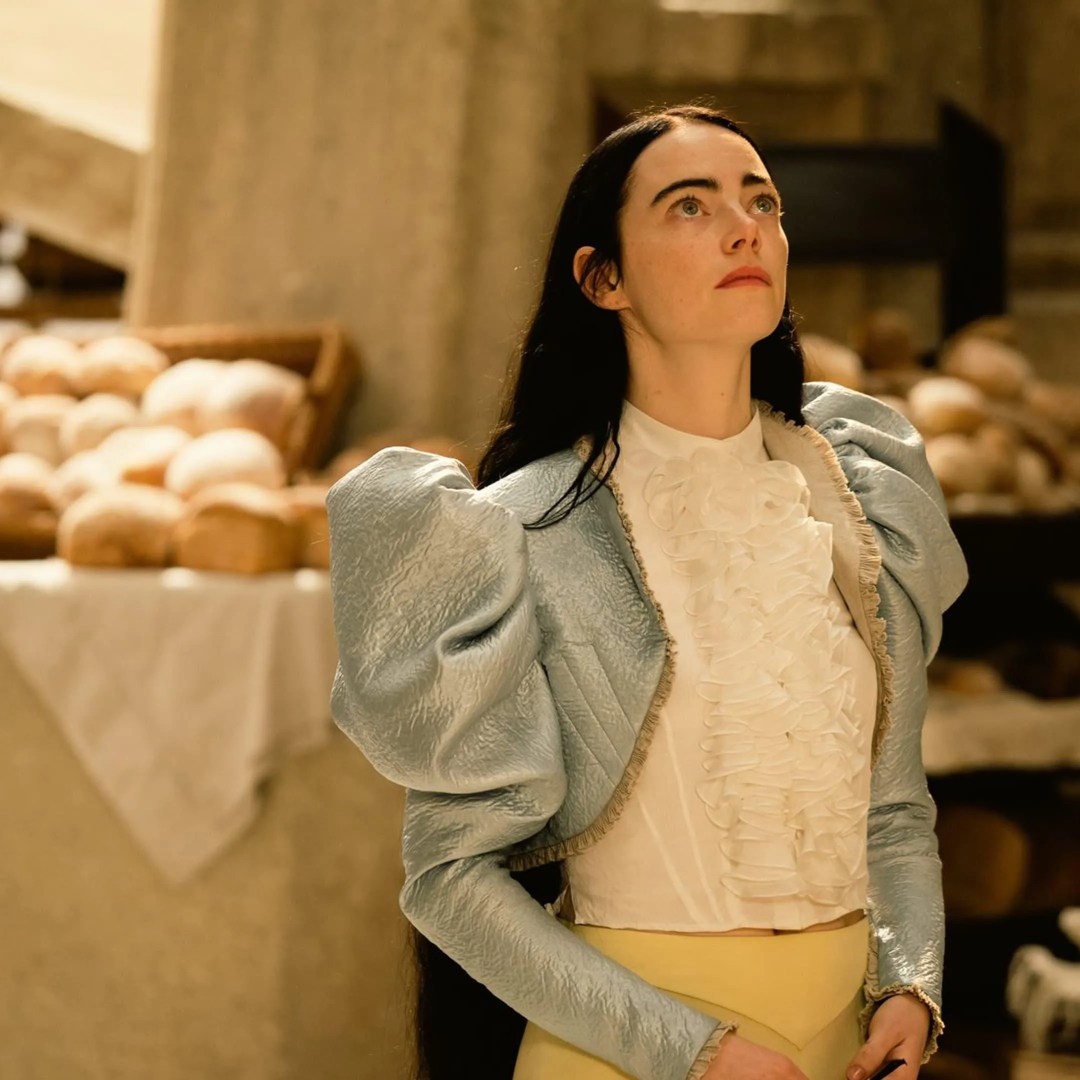
But the film’s point of view is wholly Bella’s: she, too, is both the creator and the creature, but entirely her own. She is her own mother and her own daughter, “born” into a crisply black-and-white, steampunk version of Victorian London and trapped in the confines of God’s mansion. When she meets Duncan Wedderburn (Mark Ruffalo)—a lothario who warns her not to become a jealous lover demanding constancy before himself becoming exactly that—she embarks on a journey of discovery, adventuring across a funhouse-mirror Europe in which trams traverse Lisbon’s skies and city streets come in the colors of lemon drops, cherry blossoms, and sherbet.
Early last year I wrote about Poor Things as a film about autism and neurodivergence for Current Affairs. You can read it here.
 The Sundae