The Rashomon Effect Effect

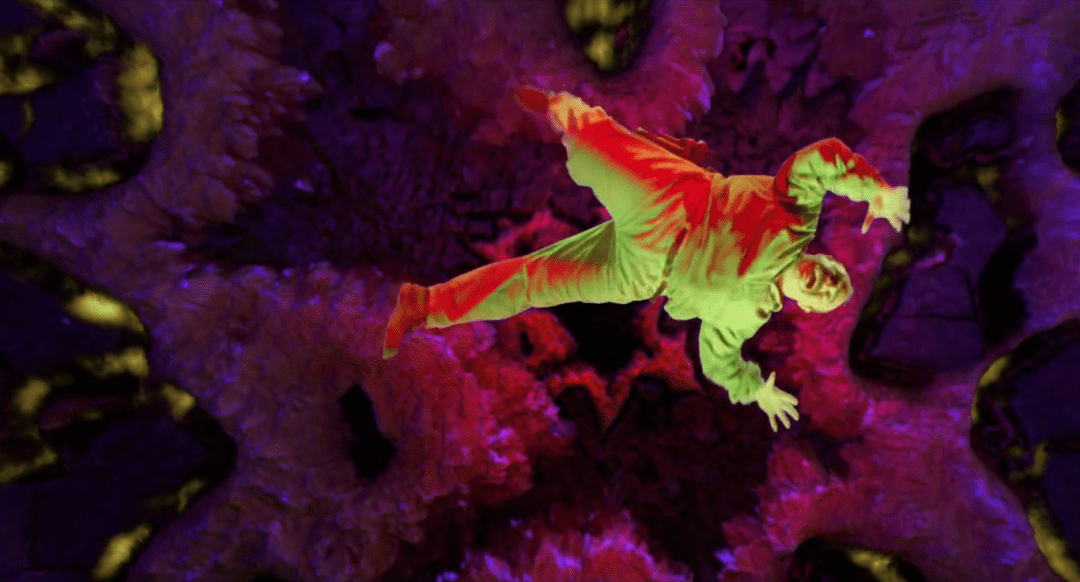
The “Rashomon effect” describes the tendency of witnesses to or participants in the same events to give mutually contradictory accounts of what happened due to the subjectivity and fallibility of human memory. It’s named after the 1950 film Rashomon, directed by Akira Kurosawa, in which four witnesses to a murder give contradictory accounts of what happened. The term is bandied about a lot in pop psychology (and philosophy) articles, and one of its more recent applications is, of course, This Age of Trump, This Age of Brexit. In the aftermath of the two major political upsets of 2016, the mainstream media churned out hundreds of handwringing articles about the “post-truth world”, because it’s insufficient for cloistered political and media elites to have merely been wrong, their opinions and expertise are so important that if they were wrong, the only explanation was that the fundamental human ability to distinguish reality from fiction had completely disintegrated.

With its emphasis on an immutable failing of human nature – a fundamental inability to ever truly recall events accurately or, in effect, to know the world at all – it was inevitable that the Rashomon effect would be trotted out as a buzzy term to explain the new reality. Michael Wolff even mentions it in his insider account of the Trump administration, Fire and Fury. The appeal of the term is easy to understand: it describes a basic and insurmountable flaw, so it absolves everyone of responsibility to think about how and why falsehoods may have played a more decisive role in recent politics than in a supposed past era where people were more honest, or at least where the public was harder to hoodwink. I’m not saying they have done – I’m sceptical of the notion of a “post-truth world” – but if they did, I could think of reasons other than the Rashomon effect. Off the top of my head, it’s possible formerly authoritative news sources destroyed their credibility with the public by, among other things, helping the Bush administration manufacture the pretext for a war that killed hundreds of thousands of people. I’m no expert, but I have to wonder if perhaps public trust in the media was damaged when literally no one lost their job over one of the most massive and systemic failures of journalism in recent times.

Of course, that’s just my interpretation, and here’s where I should be putting the obvious joke about how it’s just like in Rashomon, where everyone remembers things differently. But there’s a problem. Unlike most people who reference the Rashomon effect, I’ve seen Rashomon. And Rashomon isn’t about the subjectivity and fallibility of memory. It’s about lying.

Continue reading “The Rashomon Effect Effect”

To Love Pure and Chaste From Afar: Queer Coding in The Mary Tyler Moore Show

“Queer coding” is one of the more interesting ideas in media analysis to be almost exclusively applied to the same thinkpiece about Disney villains over and over. It’s not a well-defined term but I’d describe it something like this: characters and relationships in art are queer-coded when they have traits that read as queer to at least some of the audience, but are not explicitly so. It’s slippery and subjective and can easily get muddled up with other ideas. It’s sometimes used interchangeably with ideas like queer subtext (when queer themes run under the surface of a piece of art otherwise not overtly queer) or queerbaiting (when writers tease that characters are queer and may form relationships to pander to LGBT fans, but never follow through). Queer subtext has a long history in literary studies, e.g. The Great Gatsby as a story of Nick Carraway’s unrequited love for Jay Gatsby, while queerbaiting is a very recent term, originating in fandom and mostly used in reference to serial formats, e.g. TV shows like Supernatural (with baited characters Dean and Castiel) or film series like Pitch Perfect (with baited characters Beca and Chloe).

Queer coding is different: it doesn’t need to hold up to scrutiny like an argument for subtext does, and it doesn’t have to be deliberate on the part of the artist like an accusation of queerbaiting does. It gets at something narrower and subtly distinct – queer coding often describes stereotypical traits (e.g. limp wrists) but it can also refer to ineffable qualities that aren’t burdened with connotations of queerness in larger society. Taking it back to Disney villains for a second, sometimes I totally see where people are coming from when they read them as queer. Jafar from Aladdin is unmarried, wears winged eyeliner and has a lisp, I get it. But then someone says Hades is like a sassy gay guy and it just doesn’t connect at all. We’re into something altogether more subtle and subjective, because there are lots of “sassy” or “snarky” character archetypes – black women and Jews spring to mind – and characters can even be those things without fitting into or referencing archetypes. That can just be their personality. Yet, even without anything in the story that implies it’s the case, there’s something that makes Hades read queer to some people and not to others. (He reads Jewish to me, for the record.) And while a lot of queer coding can be explained as a kind of glint of recognition in the eye of an LGBT audience, that’s not exclusively the case. Characters and relationships can come off as queer to straight people too.

I’ve been thinking about queer coding a lot ever since I watched The Mary Tyler Moore Show.

Continue reading “To Love Pure and Chaste From Afar: Queer Coding in The Mary Tyler Moore Show”

The Redistribution of Art

If you read a lot of pop culture criticism, you’ll very quickly come across three words: vital, essential and necessary. Critics, especially film and TV critics in my experience, love to describe the very best art in the same way most people describe things like food, shelter and healthcare. The instinct might be to treat this as hyperbole, but I like to take people at their word, and besides, there’s no shortage of writing out there that makes explicit what’s merely suggested in most uses of “vital”, “essential” and “necessary”. Moreover, I agree completely: art is an essential part of life.

There are as many explanations for why art is vital, essential and necessary as there are thinkpieces explaining why. Art is how we understand each other when we can’t see inside each other’s skull prisons. Art has profound social value, capable of transforming how people see the world by forcing them to confront unfamiliar realities or new perspectives on age-old issues. Art and the appreciation of art is what makes life meaningful at all for lots of people. I don’t disagree with any of those points of view, but they’re all a bit piecemeal for my taste, failing to provide a universal justification for why art is necessary.

Continue reading “The Redistribution of Art”

God Allegedly Has Bigger Plans for Me: Religion in Lost

When Michael Schur was coming up with The Good Place, he asked Lost co-creator Damon Lindelof for advice. “[Lindelof] told me, ‘Here are the pitfalls. Here are the traps you can fall into. Here’s the problem you’re going to hit’…” Schur said, “He actually I think said to me, ‘You just need to know where you’re going.’”

Lindelof’s advice was presumably drawing from experience, because Lost absolutely did not know where it was going. For the six full-length seasons it ran, it was an incredibly messy show, narratively convoluted and incoherent, brimming over with set-ups that were never paid off – and not in a David Lynch way, where it’s meant to be surreal and not intended to be “solved”. It only took Lost until its second season to do a “what if this character is in a psych ward and this is all in his head” episode, something Buffy managed to stave off for six years. The finale of Lost aired eight years ago to a polarised reception, and its reputation has only depreciated in the interim. It regularly makes lists of the worst finales of all time, and is practically synonymous with “all the mystery-box shit turning out to be nonsense” and “wasting years of your life on a show that turns out to be crap.”

So here’s the thing: Lost was a great show, finale and all. And I think that those who came away from the finale scratching their heads kind of missed the whole point of the show – because Lost was always a show about religion.

Continue reading “God Allegedly Has Bigger Plans for Me: Religion in Lost”

Art and the Artist

If you read a lot of pop criticism and entertainment journalism, you’ll be a familiar with a debate about “separating the art from the artist” or some similar turn of phrase. This is a very old debate, but it’s come to occupy ever more space in discussions about art, especially popular art, in recent years. The main driving force behind its increasing prominence has been the proliferation of online publications covering entertainment news and producing reviews and criticism over the last ten or so years. Such platforms are making more information and commentary on the entertainment industry and more opinions about art available to more people than ever before. Over the years, plenty of people who make art have been exposed for doing bad things, and so naturally the issue of how we should relate to art made by bad people has come up pretty regularly in these publications.

But that was before Jodi Kantor and Megan Twohey (for the New York Times) and Ronan Farrow (for the New Yorker) exposed Hollywood mega-producer Harvey Weinstein as a serial sexual predator. I don’t know why this one was the tipping point, but in the months since, dozens of other sexual predators working in the entertainment industry, in news media and in sports have been similarly exposed. In fact, there’s been a seemingly endless wave of revelations about powerful public figures – almost exclusively men, to no great shock – who have abused their power in order to sexually harass and assault other people, including minors.

What used to be a largely seasonal phenomenon of finding out a celebrity was a bad person, getting bombarded with thinkpieces about it and then forgetting about it when something else came along to make you anxious about the world has now become an apparently permanent state of revelation.

Continue reading “Art and the Artist”

The One Where Pop Culture Disintegrates

Why do people still love Friends so much?

To be clear, I love Friends. I’ve seen every episode of Friends multiple times. It was a good show, and often a great one. It was such a massive juggernaut hit at the time that it’s inevitable that it would have some staying power – I can’t imagine a world where Friends was forgotten, consigned to the ash heap of history. Anything that big hangs around for a while. Culture doesn’t have a reset button, you just turn it at right angles and draw over what’s already there.

But Friends isn’t just hanging around in the background. It’s still hugely, actively popular. BuzzFeed’s clickbait pop culture listicle/quiz department pumps out posts about Friends on at least a biweekly basis. People get engaged on the Central Perk couch on tours of the Warner Brothers lot. The whole series was recently added to Netflix in Ireland and the UK, and – even though the show finished fourteen years ago, even though it’s been in reruns constantly, unavoidably since then – it was treated as a legitimately big deal.

And that’s weird. It is so far outside of the norm of televisual afterlife that “it’s a good show” doesn’t go a tenth of the way to explaining it.

Continue reading “The One Where Pop Culture Disintegrates”

Weekend at Bernie’s Is Not the Film You Think It Is

Weekend at Bernie’s might be the most misunderstood film I know. It was a hit in 1989, despite bad reviews, and has had staying power since: the image of Andrew McCarthy and Jonathan Silverman propping up Bernie’s lifeless body is seared onto the cultural memory, one of those iconic cinematic images that has been parodied and homaged and referenced enough to take on a life of its own beyond the film itself. It’s a very famous film, is the point – though not exactly acclaimed – but when I watched it, I kind of felt like the first person to ever see it.

Here’s what I assumed Weekend at Bernie’s would be like: an extremely dumb, extremely wacky 1980s comedy, in the vein of Porky’s or a National Lampoon movie, that is probably not very good but has a kind of charm that not very good films from the 1980s tend to have. I knew the basic plot – two guys pretend another guy, Bernie, is alive, while staying at his place for the weekend. I assumed – either because it’s how it turns out in any given Weekend at Bernie’s-inspired TV episode, or because of the existence of Weekend at Bernie’s II – that Bernie wasn’t really dead. That our heroes found him unconscious and panicked, but, by the end of the film, Bernie would wake up, and we’d arrive at our happy ending.

Weekend at Bernie’s is something much stranger, and much more interesting.

Continue reading “Weekend at Bernie’s Is Not the Film You Think It Is”

The Real Lesson of Get Out’s Success

Get Out is one of the best horror films this year, and it’s been a particularly good year for horror. The directorial debut of comedian Jordan Peele, Get Out is the story of Chris Washington, a young black photographer who reluctantly agrees to meet his white girlfriend’s family for the first time. Bad things happen. As well as being really, really good, Get Out was phenomenally successful, grossing $254 million over a $4.5 million budget.

If a movie is critically acclaimed, financially successful and not a blockbuster, chances are that its financial success will be followed by a series of articles on what lessons Hollywood should take from its success. This isn’t a hard and fast rule, but it’s predictable enough that I wasn’t surprised when it happened to Get Out.

I hate these articles.

Continue reading “The Real Lesson of Get Out’s Success”

Video Game Movies and Why They Suck

It is a truth universally acknowledged that no one has ever made a good movie based on a video game, since the genre came into being with 1993’s Super Mario Bros. I don’t usually care for such truths, but that’s one I’m happy to accept, by and large. I would possibly carve out an exception for some of the Pokémon movies, though I haven’t watched any of them in a long time, and there are, of course, some good movies about video games or inspired by their aesthetic: Scott Pilgrim vs. the World, Wreck-It Ralph, Tron, etc. But as far as film adaptations of video games, it’s been one failure after another, with only occasional spells of mediocrity to shake things up.

Continue reading “Video Game Movies and Why They Suck”

Duct Tape on Armchairs: Frasier and the Working-Class Sitcom

It’s the golden age of TV.

455 scripted television shows aired in America in 2016 – that’s compared to 192 in 2006. There’s been years of back and forth about whether current TV is the best thing ever – quite possibly the central cultural output of our time – or actually not very good at all, because so-called prestige TV is so often shallow self-serious bullshit. The obvious fact that TV has always been good, and that the “golden age of TV” corresponds only to the rise of paid subscription services (HBO, Netflix, Amazon) and cinematography that made TV look like movies, might be mentioned, but is never of concern. We’ll talk about the fracturing of the television audience – how three of the last five TV seasons had football at the highest rating, because sport is the only thing diverse audiences watch live anymore – but we’ll pretend that it fractures more or less at random, and its only implications are for advertisers.

Continue reading “Duct Tape on Armchairs: Frasier and the Working-Class Sitcom”