This article is part of the Notes on Failure series, which discusses interesting cinematic failures. Previously, Mary Magdalene.
The Great Famine is the most significant event in Irish history by some distance. It killed around a million of the eight and a half million or so people on the island of Ireland, and turned another million into refugees. The loss of population didn’t stop there either: devastated economically, mass emigration drove the island’s population down to around four and a half million by the 1920s, where it hovered for a good fifty years. It began to climb steadily from the 1970s onward, so that now, over 150 years later, we’ve just about returned to where we were after a plague wiped out a quarter of our population in less a decade.
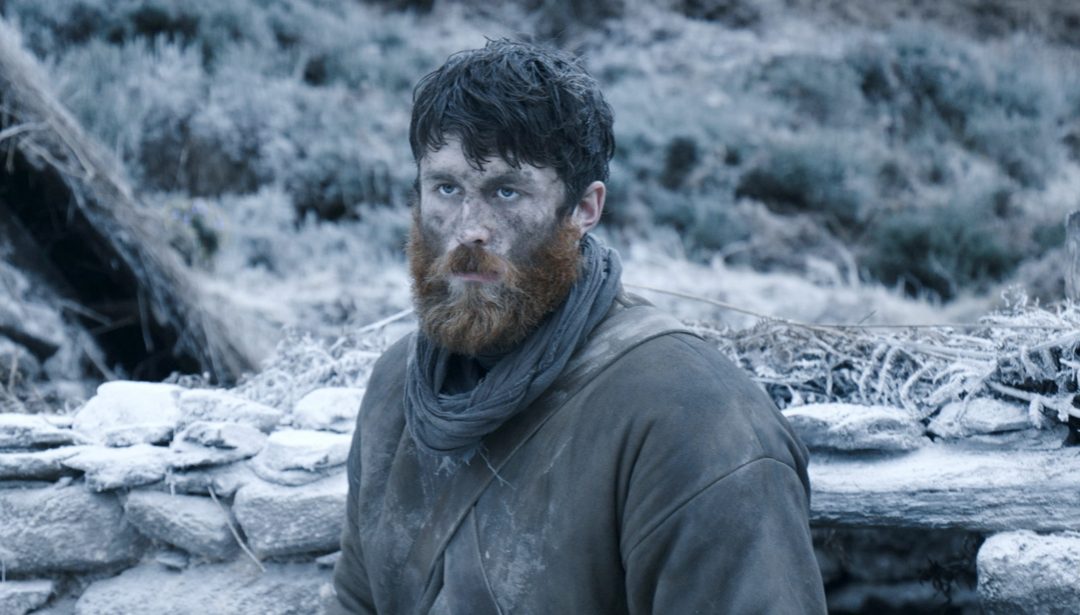
The Famine is well-represented in literature and song, but, until last year, with the release of Black ’47, never in film. There was, some might argue, the increasingly obscure silent feature Knocknagow (1918), based on the novel of the same name, which is ostensibly set in rural Tipperary in 1848, but it only depicts evictions, not starvation. The Irish communist author Liam O’Flaherty, whose novel The Informer was adapted for screen by John Ford, wrote his novel Famine with the explicit intention it be made into a film, but it never came to pass. Stephen Rea, who stars in Black ’47, told Today FM he’d been approached about a famine movie in the nineties, but the American producers thought it was too heavy. (“How are you going to lighten it?” Rea’s agent asked, “Feed them?”) So, here we are, with Black ’47, the first film about the Great Famine.
Because the Famine looms so large in the Irish consciousness, yet is so invisible on screen, I’ve often thought about different ways the subject could be approached in a film. The Western seemed the perfect fit, the ruined Irish countryside replacing the lawless desert wastes, so I was really excited when Black ’47 was announced.
Folks, it was bad.
Continue reading “Notes on Black ’47” →

 The Sundae