To Love Pure and Chaste From Afar: Queer Coding in The Mary Tyler Moore Show

“Queer coding” is one of the more interesting ideas in media analysis to be almost exclusively applied to the same thinkpiece about Disney villains over and over. It’s not a well-defined term but I’d describe it something like this: characters and relationships in art are queer-coded when they have traits that read as queer to at least some of the audience, but are not explicitly so. It’s slippery and subjective and can easily get muddled up with other ideas. It’s sometimes used interchangeably with ideas like queer subtext (when queer themes run under the surface of a piece of art otherwise not overtly queer) or queerbaiting (when writers tease that characters are queer and may form relationships to pander to LGBT fans, but never follow through). Queer subtext has a long history in literary studies, e.g. The Great Gatsby as a story of Nick Carraway’s unrequited love for Jay Gatsby, while queerbaiting is a very recent term, originating in fandom and mostly used in reference to serial formats, e.g. TV shows like Supernatural (with baited characters Dean and Castiel) or film series like Pitch Perfect (with baited characters Beca and Chloe).

Queer coding is different: it doesn’t need to hold up to scrutiny like an argument for subtext does, and it doesn’t have to be deliberate on the part of the artist like an accusation of queerbaiting does. It gets at something narrower and subtly distinct – queer coding often describes stereotypical traits (e.g. limp wrists) but it can also refer to ineffable qualities that aren’t burdened with connotations of queerness in larger society. Taking it back to Disney villains for a second, sometimes I totally see where people are coming from when they read them as queer. Jafar from Aladdin is unmarried, wears winged eyeliner and has a lisp, I get it. But then someone says Hades is like a sassy gay guy and it just doesn’t connect at all. We’re into something altogether more subtle and subjective, because there are lots of “sassy” or “snarky” character archetypes – black women and Jews spring to mind – and characters can even be those things without fitting into or referencing archetypes. That can just be their personality. Yet, even without anything in the story that implies it’s the case, there’s something that makes Hades read queer to some people and not to others. (He reads Jewish to me, for the record.) And while a lot of queer coding can be explained as a kind of glint of recognition in the eye of an LGBT audience, that’s not exclusively the case. Characters and relationships can come off as queer to straight people too.

I’ve been thinking about queer coding a lot ever since I watched The Mary Tyler Moore Show.

Continue reading “To Love Pure and Chaste From Afar: Queer Coding in The Mary Tyler Moore Show”
The Redistribution of Art

If you read a lot of pop culture criticism, you’ll very quickly come across three words: vital, essential and necessary. Critics, especially film and TV critics in my experience, love to describe the very best art in the same way most people describe things like food, shelter and healthcare. The instinct might be to treat this as hyperbole, but I like to take people at their word, and besides, there’s no shortage of writing out there that makes explicit what’s merely suggested in most uses of “vital”, “essential” and “necessary”. Moreover, I agree completely: art is an essential part of life.

There are as many explanations for why art is vital, essential and necessary as there are thinkpieces explaining why. Art is how we understand each other when we can’t see inside each other’s skull prisons. Art has profound social value, capable of transforming how people see the world by forcing them to confront unfamiliar realities or new perspectives on age-old issues. Art and the appreciation of art is what makes life meaningful at all for lots of people. I don’t disagree with any of those points of view, but they’re all a bit piecemeal for my taste, failing to provide a universal justification for why art is necessary.

Continue reading “The Redistribution of Art”

Oliver in the High Castle: Nazis in Pop Culture

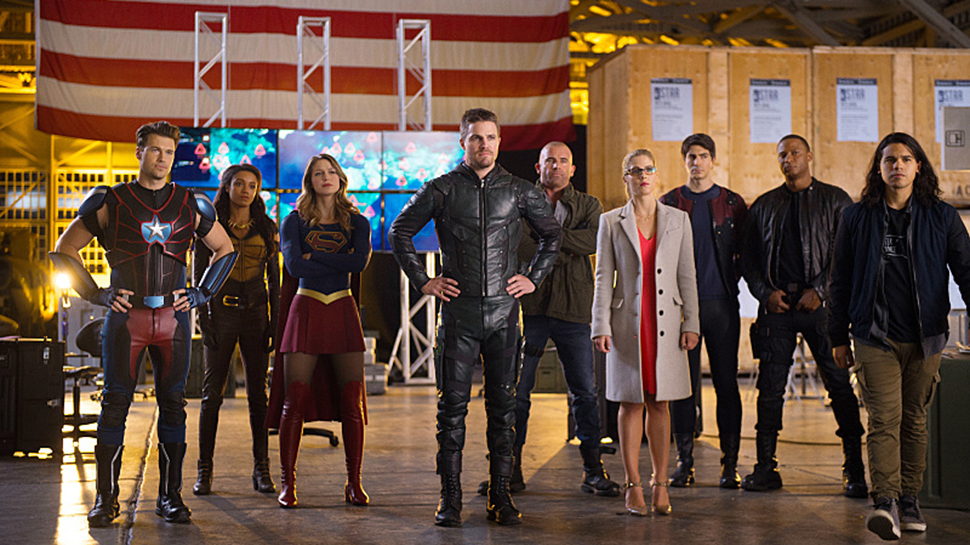
The fourth annual Arrowverse crossover event – bringing together characters from The CW’s Arrow, The Flash, Legends of Tomorrow and Supergirl – was called “Crisis on Earth-X” and I…enjoyed it? I’ve written previously about my visceral hatred for superhero TV show crossovers, and “Crisis on Earth-X” certainly doesn’t avoid all the problems of the genre, but, as a self-contained story – as a TV movie, essentially – it’s certainly the most successful Arrowverse crossover yet.

It was about Nazis.

Continue reading “Oliver in the High Castle: Nazis in Pop Culture”

The Problem with Netflix Originals

Netflix is a very successful business, and I don’t know the first thing about business, so far be it from me to tell them what they should do. (I know so little about business that I can’t understand why owning a company that has never made a profit has made Jeff Bezos, the Amazon guy, the richest person on the planet.) But I do co-run this blog about pop culture, and Netflix has been one of the most important and transformative forces in film and TV (mostly TV) in recent years. The effects of that have been a mixed bag, but it’s hard to deny their sheer scale.

This kind of scares me, because Netflix’s share price does not seem at all proportionate to its profits, and while I don’t know anything about business I have seen Enron: The Smartest Guys in the Room, so a part of me is convinced that Netflix will suddenly and unceremoniously collapse one day. Which, aside from anything else, means all the art made exclusively for Netflix might just… disappear? The archival implications of the streaming model are pretty terrifying if you think about it for more than a minute, which is why I’m one of the few people my age that spends her money buying second-hand DVDs.

But, like I said, I don’t know the first thing about business, so that might be nonsense, and my DVD collection might be no different from stockpiling tins of food in a bunker in case the Cold War turned nuclear. But I do think I know a small bit about film and TV, and film and TV is Netflix’s business. So, on that basis I would like to make this humble suggestion to Netflix HQ: stop making so much fucking original content.

Continue reading “The Problem with Netflix Originals”

Can You Believe It: Trump and Political Comedy

If you like comedy, but you’re tired of Trump jokes, the last couple of years have been frustrating. Your choices for political comedy on American television range from The Daily Show, which is pretty much all about Trump, to three different shows from Daily Show alumni – Last Week Tonight with John Oliver, Full Frontal with Samantha Bee and The Opposition with Jordan Klepper – which are also pretty much all about Trump. John Oliver’s turn towards Trump is particularly irritating because his show made its reputation on in-depth examinations of underdiscussed issues, like patent trolling, public funding of stadiums and the exploitation of chicken farmers, and had made a point of largely ignoring Trump for months before gradually becoming yet another Show Against Trump.

Shows without an explicit political bent offer no escape: Saturday Night Live features Trump so frequently that Alec Baldwin will likely be eligible for the Supporting Actor Emmy again this year, even though he’s ostensibly a guest star. The Late Show with Stephen Colbert does so much Trump material it was able to spin-off a recurring animated segment called Our Cartoon President into its own TV show. Colbert was always going to be more political than the average late-night host, except he’s actually not that much more political than the rest anymore: Seth Meyers does a weekly politics segment on Late Night called “A Closer Look” which is, of course, mostly about Trump and Jimmy Kimmel is constantly taking cracks at him. Even that spineless hair-ruffling weasel Jimmy Fallon has started to do regular Trump jokes now, and he’s Jimmy Fallon, the most inoffensive man who’s ever existed.

Continue reading “Can You Believe It: Trump and Political Comedy”

RuPaul’s Unreliable Editing Race

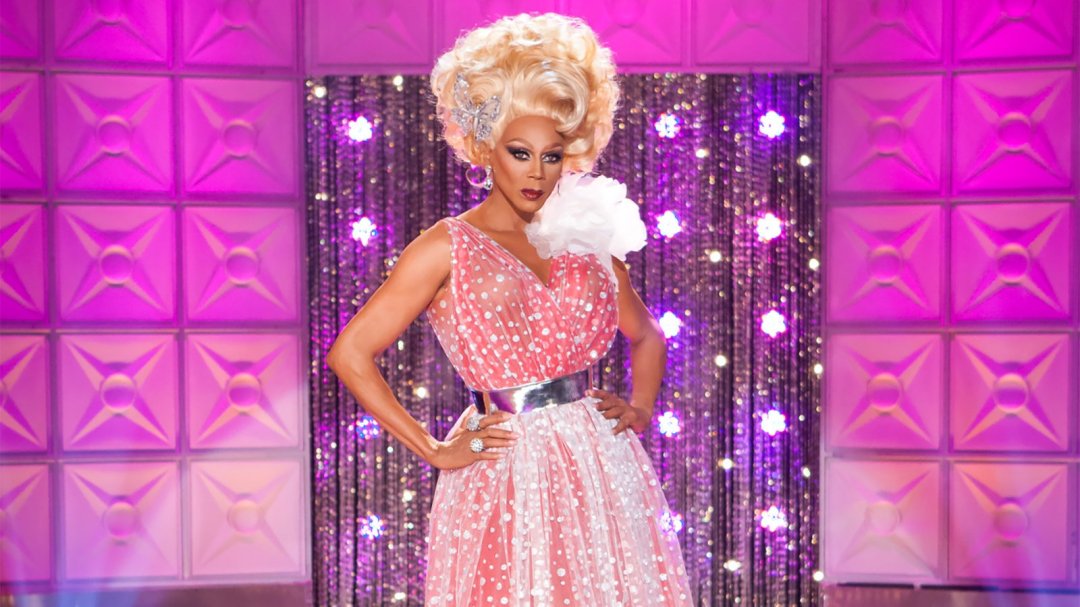
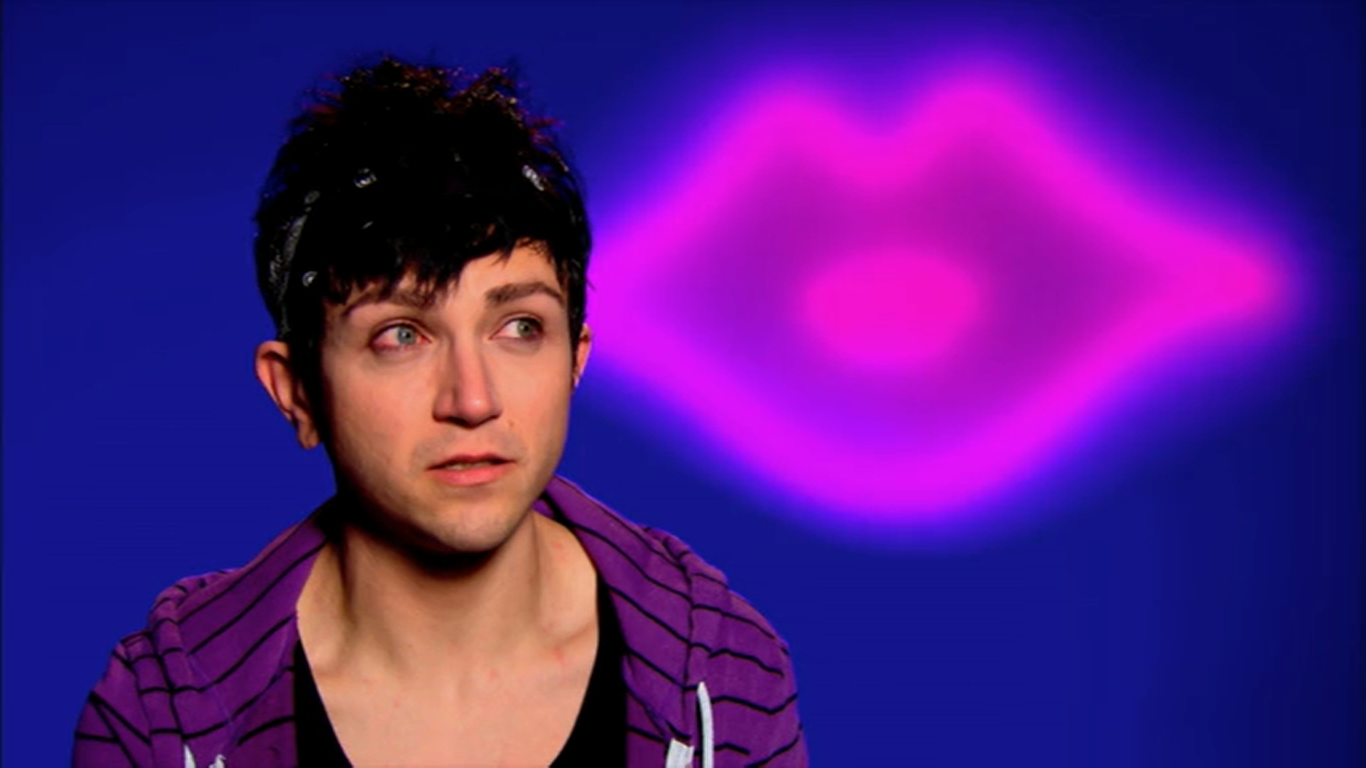
The first time I clocked a deceitful edit in RuPaul’s Drag Race was my second viewing of the show’s sixth season. During preparation for that season’s iteration of Snatch Game, a challenge in which the queens impersonate a celebrity, RuPaul cast doubt on competitor BenDeLaCreme’s plan to portray Dame Maggie Smith. Three shots follow: first, Ben looks at RuPaul while audio from one of Ben’s confessionals plays over it (“Ru does not seem into my idea.”); next, a shot of Ben’s wig on a foam head while the audio continues (“I’m shaken–my confidence is definitely shaken, but, I–”); finally, it cuts to the confessional itself where a puffy-eyed Ben is speechless, either just finished crying or just about to start.

Except that last part isn’t true, because, later in the episode, Ben talks about his adolescent struggles with body image and his mother’s death from cancer when he was thirteen. “I just–”, he begins to describe the loss in voiceover, and then it cuts to a much longer shot of Ben speechless in the same confessional from earlier. It’s clear in this longer shot that Ben is stumbling over his explanation of how he felt when his mother died, not Ru’s lack of enthusiasm for his Maggie Smith impression, especially since he actually won Snatch Game. The editors had blatantly cut footage of Ben crying as he recalled his grief and moved it earlier in the episode to make it look like Ru had shaken Ben to his core.

Ever since, I’ve been completely sceptical of the Drag Race edit.

Continue reading “RuPaul’s Unreliable Editing Race”

God Allegedly Has Bigger Plans for Me: Religion in Lost

When Michael Schur was coming up with The Good Place, he asked Lost co-creator Damon Lindelof for advice. “[Lindelof] told me, ‘Here are the pitfalls. Here are the traps you can fall into. Here’s the problem you’re going to hit’…” Schur said, “He actually I think said to me, ‘You just need to know where you’re going.’”

Lindelof’s advice was presumably drawing from experience, because Lost absolutely did not know where it was going. For the six full-length seasons it ran, it was an incredibly messy show, narratively convoluted and incoherent, brimming over with set-ups that were never paid off – and not in a David Lynch way, where it’s meant to be surreal and not intended to be “solved”. It only took Lost until its second season to do a “what if this character is in a psych ward and this is all in his head” episode, something Buffy managed to stave off for six years. The finale of Lost aired eight years ago to a polarised reception, and its reputation has only depreciated in the interim. It regularly makes lists of the worst finales of all time, and is practically synonymous with “all the mystery-box shit turning out to be nonsense” and “wasting years of your life on a show that turns out to be crap.”

So here’s the thing: Lost was a great show, finale and all. And I think that those who came away from the finale scratching their heads kind of missed the whole point of the show – because Lost was always a show about religion.

Continue reading “God Allegedly Has Bigger Plans for Me: Religion in Lost”

Art and the Artist

If you read a lot of pop criticism and entertainment journalism, you’ll be a familiar with a debate about “separating the art from the artist” or some similar turn of phrase. This is a very old debate, but it’s come to occupy ever more space in discussions about art, especially popular art, in recent years. The main driving force behind its increasing prominence has been the proliferation of online publications covering entertainment news and producing reviews and criticism over the last ten or so years. Such platforms are making more information and commentary on the entertainment industry and more opinions about art available to more people than ever before. Over the years, plenty of people who make art have been exposed for doing bad things, and so naturally the issue of how we should relate to art made by bad people has come up pretty regularly in these publications.

But that was before Jodi Kantor and Megan Twohey (for the New York Times) and Ronan Farrow (for the New Yorker) exposed Hollywood mega-producer Harvey Weinstein as a serial sexual predator. I don’t know why this one was the tipping point, but in the months since, dozens of other sexual predators working in the entertainment industry, in news media and in sports have been similarly exposed. In fact, there’s been a seemingly endless wave of revelations about powerful public figures – almost exclusively men, to no great shock – who have abused their power in order to sexually harass and assault other people, including minors.

What used to be a largely seasonal phenomenon of finding out a celebrity was a bad person, getting bombarded with thinkpieces about it and then forgetting about it when something else came along to make you anxious about the world has now become an apparently permanent state of revelation.

Continue reading “Art and the Artist”

The One Where Pop Culture Disintegrates

Why do people still love Friends so much?

To be clear, I love Friends. I’ve seen every episode of Friends multiple times. It was a good show, and often a great one. It was such a massive juggernaut hit at the time that it’s inevitable that it would have some staying power – I can’t imagine a world where Friends was forgotten, consigned to the ash heap of history. Anything that big hangs around for a while. Culture doesn’t have a reset button, you just turn it at right angles and draw over what’s already there.

But Friends isn’t just hanging around in the background. It’s still hugely, actively popular. BuzzFeed’s clickbait pop culture listicle/quiz department pumps out posts about Friends on at least a biweekly basis. People get engaged on the Central Perk couch on tours of the Warner Brothers lot. The whole series was recently added to Netflix in Ireland and the UK, and – even though the show finished fourteen years ago, even though it’s been in reruns constantly, unavoidably since then – it was treated as a legitimately big deal.

And that’s weird. It is so far outside of the norm of televisual afterlife that “it’s a good show” doesn’t go a tenth of the way to explaining it.

Continue reading “The One Where Pop Culture Disintegrates”

Because I Choose To: The Horror and Hope of Free Will

The final battle between good and evil at the end of The Matrix Revolutions is the best part of a very flawed movie. Whatever else the Matrix sequels did wrong – and they did a fair bit – the last fight between Neo and Agent Smith is basically perfect. It’s not just a punching contest, it’s a distillation of every moral value at stake in their conflict. I know that’s a controversial statement because I’ve seen so many people make fun of the best part of the scene:

Agent Smith: “Why, Mr. Anderson? Why, why, why? Why do you do it? Why? Why get up? Why keep fighting? Do you believe you’re fighting for something? For more than your survival? Can you tell me what it is? Do you even know? Is it freedom or truth? Perhaps peace? Could it be for love? Illusions, Mr. Anderson, vagaries of perception! Temporary constructs of a feeble human intellect trying desperately to justify an existence that is without meaning or purpose. And all of them as artificial as the Matrix itself, although only a human mind could invent something as insipid as love. You must be able to see it, Mr. Anderson. You must know it by now! You can’t win! It’s pointless to keep fighting! Why, Mr. Anderson?! Why?! WHY DO YOU PERSIST?!”

Neo: “Because I choose to.”

I worry about what it means that such a beautiful and simple encapsulation of what it means to be a human being is so routinely mocked for its alleged meaninglessness: “Because I choose to”. There is something in our language, always present, but more and more prevalent as we sink deeper into the grey muck of modernity: we don’t know how to talk about freedom. We don’t know how to speak about each other as beings with free will. We speak of people driven by rage, rather than people who choose the path of rage. We speak of people who can’t help but be who they are and do what they do, rather than people who consistently choose to continue in their habits. We speak of people as if they’re machines, rather than people.

Some of it is well-intentioned, I’m sure. There are legitimate critiques of theories of freedom that ignore the ways we are prevented from exercising our free will. But we’re at risk of sprinting towards the other extreme. We’re at risk of denying that free will exists at all.

Continue reading “Because I Choose To: The Horror and Hope of Free Will”