How South Park is saving free speech in America

I was on the latest episode of the podcast The Bunker: News Without The Nonsense to discuss the new season of South Park, its criticism of Trump, and the show’s shifting place in the US culture wars. Listen below:

How South Park is saving free speech in America The Bunker – News without the nonsense

You can also find it on SpotifyApple, or wherever you get your podcasts.

If you want more of my South Park takes, check out this article I wrote for Current Affairs in 2023. An extract to whet your appetite:

In 2017, the two-headed monster of Donald Trump’s inauguration and South Park’s 20th anniversary prompted much hand-wringing over the show’s legacy. In the post-2016 rush to point fingers, a cartoon about the adventures of some potty-mouthed 8-year-old boys was made to bear at least some of the blame. Dana Schwartz tweeted that it was impossible to overstate the cultural damage of South Park’s portrayal of “earnestness as the only sin” and mockery as “the ultimate inoculation against all criticism”—and then, her point seemingly proven, she was descended on by trollsSouth Park didn’t invent the alt-right, Sean O’Neal wrote for The AV Club, “but at their roots are the same bored, irritated distaste for politically correct wokeness, the same impish thrill at saying the things you’re not supposed to say, the same button-pushing racism and sexism, now scrubbed of all irony.” For Lara Zarum in The Village Voice, the show’s misogyny—the creators “never seem content just to make fun of women; they relish sexually humiliating them, too, all while shunting the show’s female characters, young and old, to the maddeningly familiar role of disapproving nag”—is deeply tied to Hillary Clinton’s election loss. 

The consensus that seemed to calcify was that South Park’s corrosive influence on popular culture raised a generation of nihilistic trolls that revived American fascism for the lulz. At best, it inculcated a wilful apathy, political and otherwise. According to Lindsay Ellis, South Park creators Trey Parker and Matt Stone spent the whole 2000s “explaining that things were fine actually, both sides bad”: both symptomatic of, and feeding into, a wider apathetic cultural attitude towards social injustice in the 2000s. As Schwartz outlines, South Park has always skewered “both the left and the right—and anyone who believed in anything—as equally ridiculous. The smart people were those detached enough to know that everyone was full of it.”

There is some ring of truth to all this. The best of these critiques—like Zarum’s or O’Neal’s—are rooted in an acknowledgement that South Park is and has always been extremely funny, and that its cultural effect is not necessarily reflective of Stone and Parker’s intentions. But even still, a fundamental rift inevitably opens up between these arguments and my experience of the show itself.
Vast Wasteland or Fertile Soil?: Redefining TV’s Golden Ages

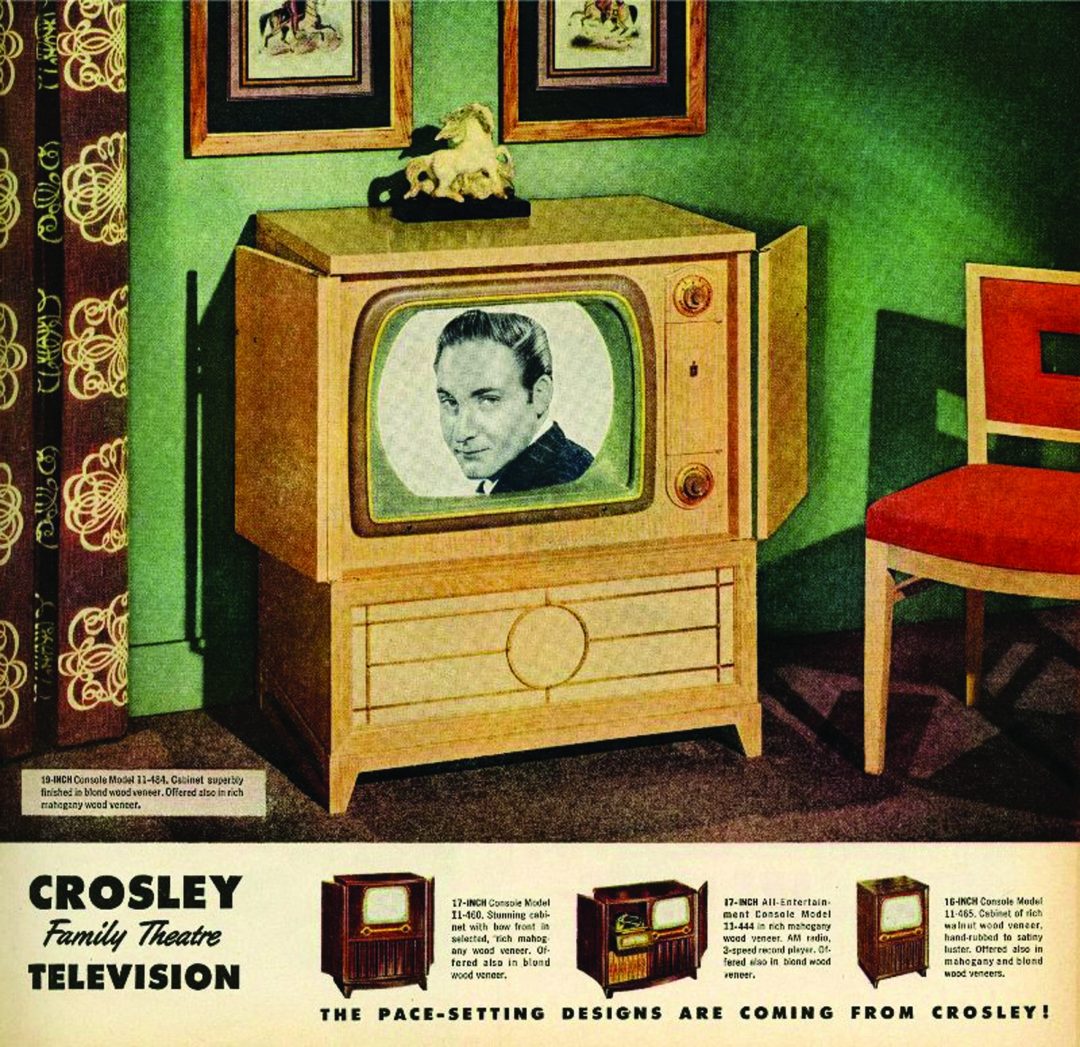
In 1961, newly appointed Federal Communications Commission chairman Newton N. Minow referred to American television as a “vast wasteland.” The New Yorker TV critic Emily Nussbaum referred to this as “the medium’s most famous libel”—one repeated as an adage of discerning viewers turning their nose up at television as a whole. As Nussbaum notes, however, Minow’s point was not to dismiss television as a medium; quite the opposite. He was mourning what he viewed as the public interest programming of television’s original Golden Age—“the much bemoaned good old days” of live teleplays on Playhouse 90 or Studio One, which had given way to “a procession of game shows, formula comedies…violence, sadism, murder, western bad men, western good men, private eyes, gangsters, more violence, and cartoons.”

A couple of decades later, I’m a little kid, cross-legged in front of the television. Like Carol Anne in Poltergeist (1982), I was in communion with the box. Awash in its glow, watching, rapt, until my eyes went square. American sitcoms and Australian soap operas. A procession of game shows, violence, and cartoons. Television had by then been long considered a disreputable medium—the kind people denied as an “art form”—but its glimmer has enchanted me my entire life. It was my first, and maybe truest, love.

I reviewed some books about the so-called Golden Age of Television in a feature article for Cineaste last year. You can buy the issue here, and it’s also archived on JSTOR!

A Portrait of the Autist as a Young Woman

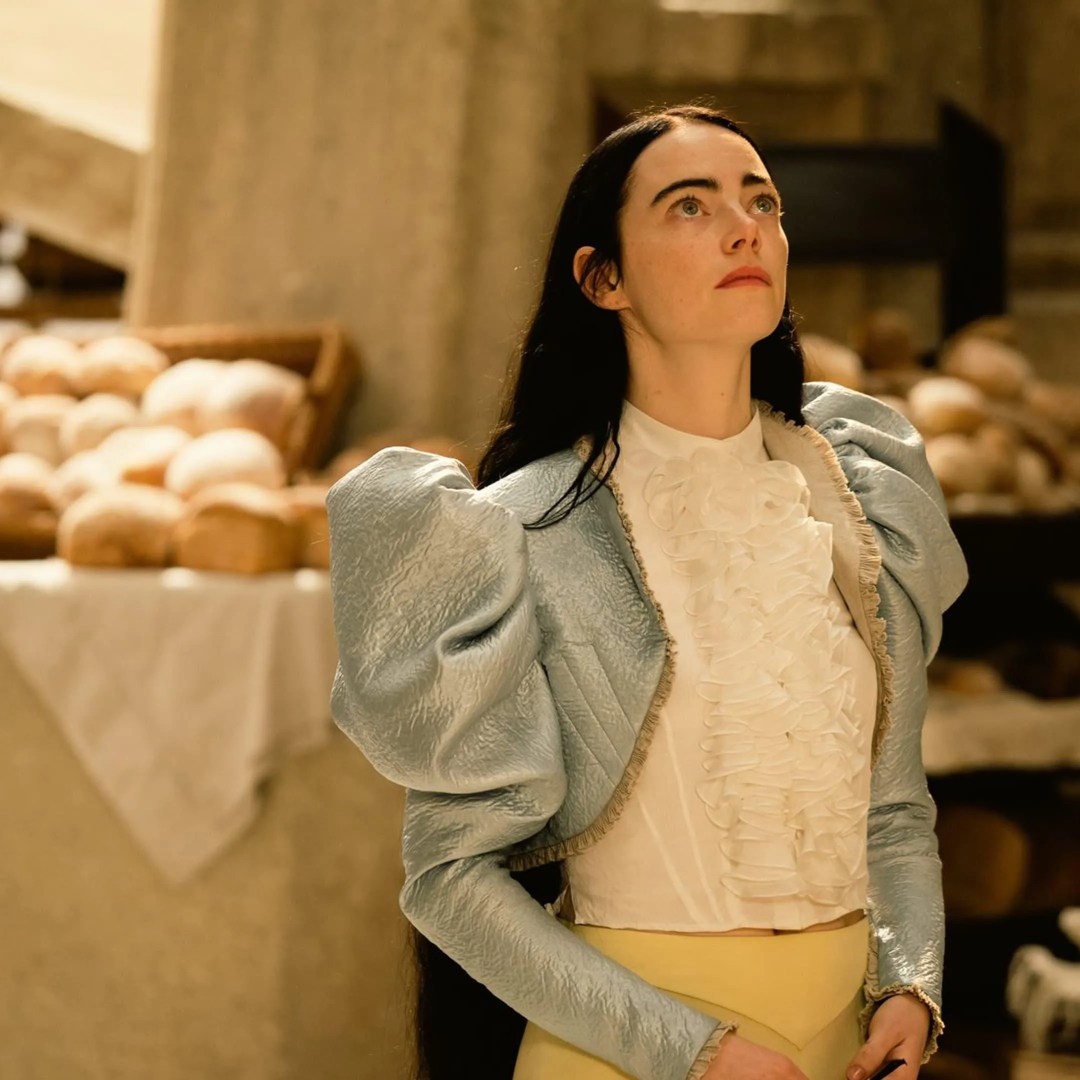
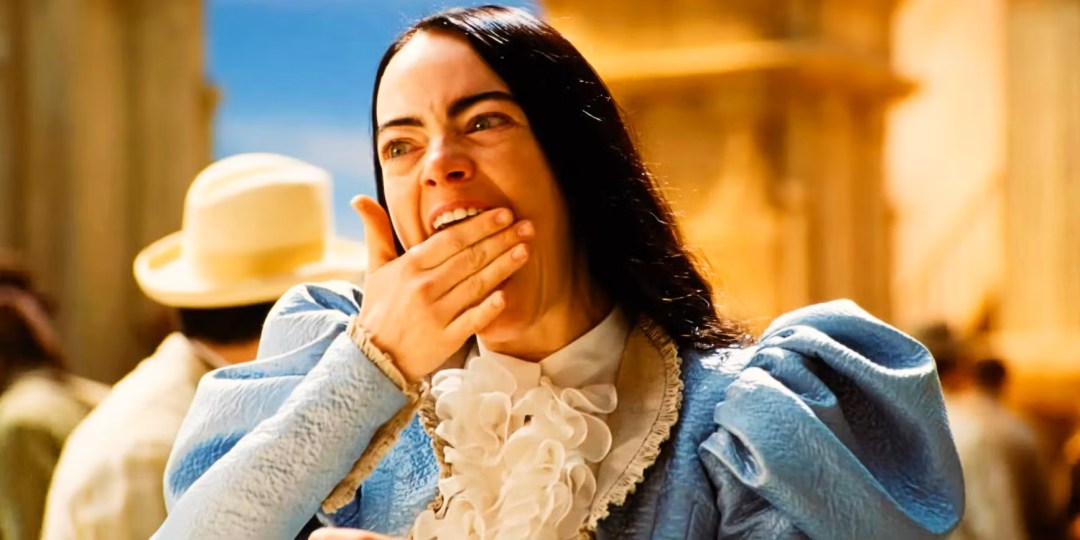
A woman stands atop the parapet at the edge of a bridge. Her dark hair is pinned in curls at the back of her head, loose strands near her face caught in the wind. Her deep blue dress has a Victorian high collar; its flared skirt would trail on the ground behind her if her feet were on the ground. The camera pans up to the endless blue of the sky, and then back down as the woman jumps into the endless blue below her. In Yorgos Lanthimos’s Poor Things, her death becomes a birth. Neither her own rebirth nor the birth of the unborn child in her womb, or maybe both those things. A new person is scavenged from the existing materials. Her name is Bella Baxter. 

The basic premise of Poor Things is this: Dr. Godwin Baxter (Willem Dafoe) found the corpse of a woman who had taken her own life, before rigor mortis had set in—dead but fresh, with a still-living fetus inside her. “It was obvious,” he tells his student Max McCandles (Ramy Youssef). “Take the infant’s brain out and put it in the full-grown woman, reanimate her, and watch.” The film is a riff on Frankenstein that shucks off two centuries of cultural baggage to recapture how messed up Frankenstein must have seemed when Mary Shelley first wrote it, long before Dr. Frankenstein’s creature was meeting Abbott and Costello (or Alvin and the Chipmunks). Part of what it discards in the process is any stability around who, if anyone, is the “monster” in a Frankenstein story.

Godwin—who Bella affectionately calls “God”—is himself both Frankenstein and the creature. As a child, he was subjected by his father to experiments that have left his face carved with deep, thick scars, his genitals non-functional, and a digestive system that requires being hooked up to machinery to produce gastric juices. “Dafoe plays every movement and gesture as labored,” Angelica Jade Bastién writes for Vulture. “He shuffles and sighs and sulks.” A student in his surgery class derisively calls him “the monster” because of his visible deformity. Yet God seems to regard his father not as an abusive sadist, but a man of science unwilling to put moral or emotional considerations above the pursuit of knowledge. He seems to admire this cool detachment and emulates it in his own work: “Our feelings must be put aside,” he tells Max. “Do you think my father could have branded me with hot irons on the genitals the way he did if he could not put science and progress first?” In Shelley’s original, Dr. Frankenstein shrunk with horror from his creation, next to which God’s problem is almost a photonegative: his paternal feelings towards Bella are an affliction he tries to overcome, though he never quite manages it. 

But the film’s point of view is wholly Bella’s: she, too, is both the creator and the creature, but entirely her own. She is her own mother and her own daughter, “born” into a crisply black-and-white, steampunk version of Victorian London and trapped in the confines of God’s mansion. When she meets Duncan Wedderburn (Mark Ruffalo)—a lothario who warns her not to become a jealous lover demanding constancy before himself becoming exactly that—she embarks on a journey of discovery, adventuring across a funhouse-mirror Europe in which trams traverse Lisbon’s skies and city streets come in the colors of lemon drops, cherry blossoms, and sherbet. 

Early last year I wrote about Poor Things as a film about autism and neurodivergence for Current Affairs. You can read it here.

How Capitalism Incentivizes the Destruction of Art

Wile E. Coyote is a famously loyal customer of Acme Corporation, producers of nitroglycerine, bird seed, giant rubber bands, explosive tennis balls, do-it-yourself tornado kits, and jet-propelled pogo sticks. His brand loyalty is absurd considering his actual experience of using Acme products to try to catch Road Runner: anything Acme-branded inevitably backfires. He’s the one who gets blown up by the explosive tennis balls. When he uses the tornado kit, he’s the one who gets sucked up into a twister. The jet-propelled pogo stick launches him backwards off a cliff. 

In Coyote vs. Acme, Wile E. Coyote decides to sue Acme with the help of a down-and-out human lawyer played by Will Forte. A live-action/animation hybrid in the tradition of Who Framed Roger Rabbit, the film involved artists sketching line drawings of the animated characters over a rough edit which was then used as a reference for the animators and visual effects artists. It was a combination of 2D and 3D animation which captured the look and feel of the original Looney Tunes designs in a live-action world

Coyote vs. Acme “is about a giant corporation choosing stock over empathy, doing nothing ‘illegal’ but morally shady stuff for profit. It’s a David vs Goliath story,” the film’s editor, Carsten Kurpanek, wrote on X. “It’s about the cynical and casual cruelness of capitalism and corporate greed.”

In November 2023, Warner Bros. announced that they wouldn’t be releasing it. The crew were not informed in advance; instead they were blindsided after the decision had already been made. The film had been completed. Test audiences reportedly scored it very highly. But Warner Bros. decided that they would rather take a tax write-off of $30 million. 

Thirty million dollars. To shred a completed work of art. Once again, things blow up in Wile E. Coyote’s face. 

I wrote about the cancellation of Coyote vs. Acme and what it says about the state of the movie business for Current Affairs. You can read the whole thing here!

Scarface Is For Girls

Last summer, at the peak of the Barbenheimer phenomenon, it seemed like cinematic gender essentialism – the kind that made a Ghostbusters reboot a lightning rod for controversy the guts of a decade ago – had finally died off. Barbie and Oppenheimer were released on the same day, and what was set up as a versus between the “boy movie” and the “girl movie” quickly became a both/and. There were no movies for this gender or that, just a couple of great films that we all wanted to see. I saw them back-to-back. Loads of people saw them back-to-back, and tons more watched both films at some point in their long runs on the big screen. The movies were back, and this time, quadrants could be damned. 

Then awards season came along and, as usual, crushed all my hopes and dreams. 

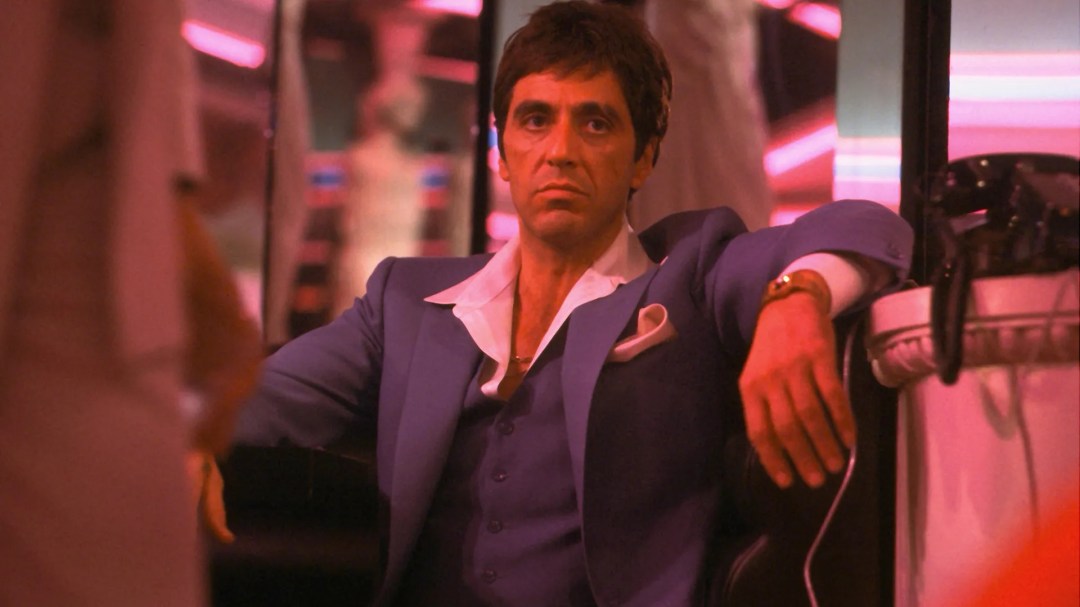
I wrote about the girliest movie for girls going, Brian De Palma’s Scarface, for Crooked Marquee! You can read it here.

25 Years Later, Sports Night Is Still Aaron Sorkin’s Greatest Work

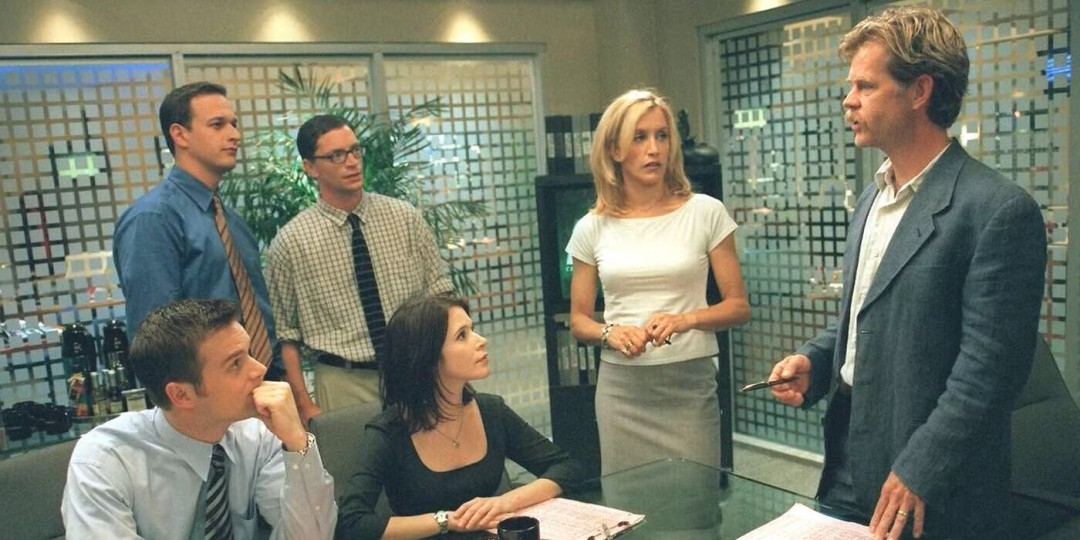
Nearly everyone agrees: Aaron Sorkin’s career lives in the shadow of his early masterpiece. He has tried to recapture the magic of this small-screen triumph over and over again, mostly in vain. “What if I did the same show but set at Saturday Night Live?” he asked, and gave us Studio 60 on the Sunset Strip. “What if I did the same show but set in a newsroom?” he asked, and gave us The Newsroom. It’s a truism of Sorkin studies, generally mentioned within the first two paragraphs of a review of any movie he had a hand in. And everybody’s right—except for one thing: they think it’s The West Wing he’s trying to recreate. 

I wrote about Sports Night for Paste. You can read it here!