Can You Believe It: Trump and Political Comedy

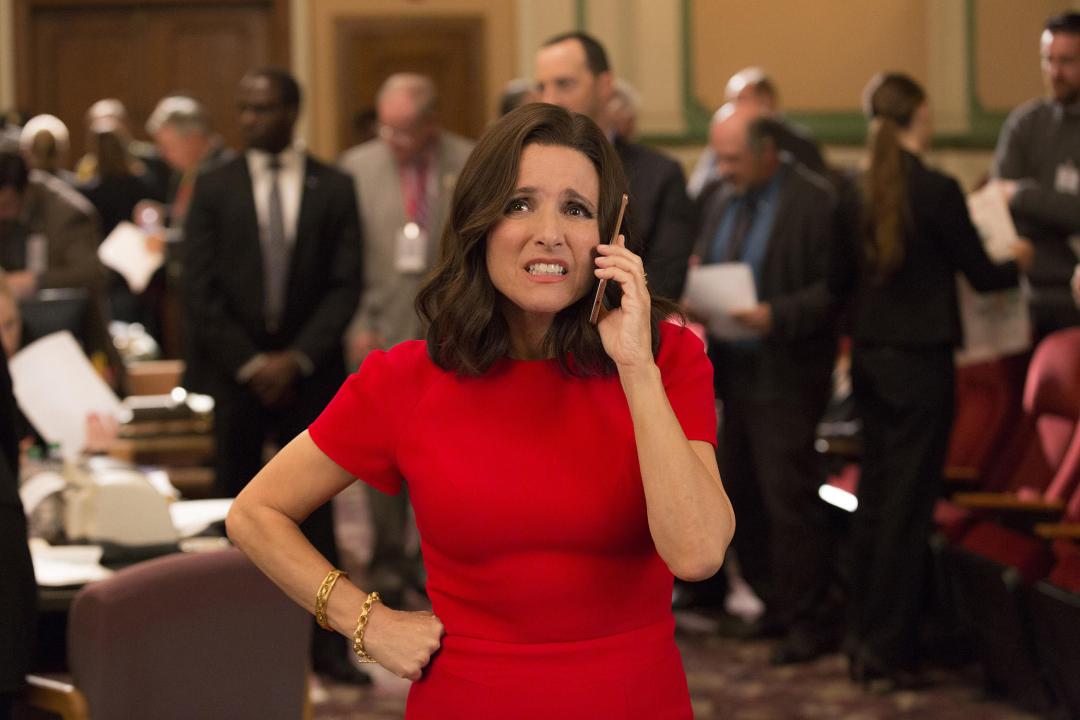
If you like comedy, but you’re tired of Trump jokes, the last couple of years have been frustrating. Your choices for political comedy on American television range from The Daily Show, which is pretty much all about Trump, to three different shows from Daily Show alumni – Last Week Tonight with John Oliver, Full Frontal with Samantha Bee and The Opposition with Jordan Klepper – which are also pretty much all about Trump. John Oliver’s turn towards Trump is particularly irritating because his show made its reputation on in-depth examinations of underdiscussed issues, like patent trolling, public funding of stadiums and the exploitation of chicken farmers, and had made a point of largely ignoring Trump for months before gradually becoming yet another Show Against Trump.

Shows without an explicit political bent offer no escape: Saturday Night Live features Trump so frequently that Alec Baldwin will likely be eligible for the Supporting Actor Emmy again this year, even though he’s ostensibly a guest star. The Late Show with Stephen Colbert does so much Trump material it was able to spin-off a recurring animated segment called Our Cartoon President into its own TV show. Colbert was always going to be more political than the average late-night host, except he’s actually not that much more political than the rest anymore: Seth Meyers does a weekly politics segment on Late Night called “A Closer Look” which is, of course, mostly about Trump and Jimmy Kimmel is constantly taking cracks at him. Even that spineless hair-ruffling weasel Jimmy Fallon has started to do regular Trump jokes now, and he’s Jimmy Fallon, the most inoffensive man who’s ever existed.

Continue reading “Can You Believe It: Trump and Political Comedy”
RuPaul’s Unreliable Editing Race

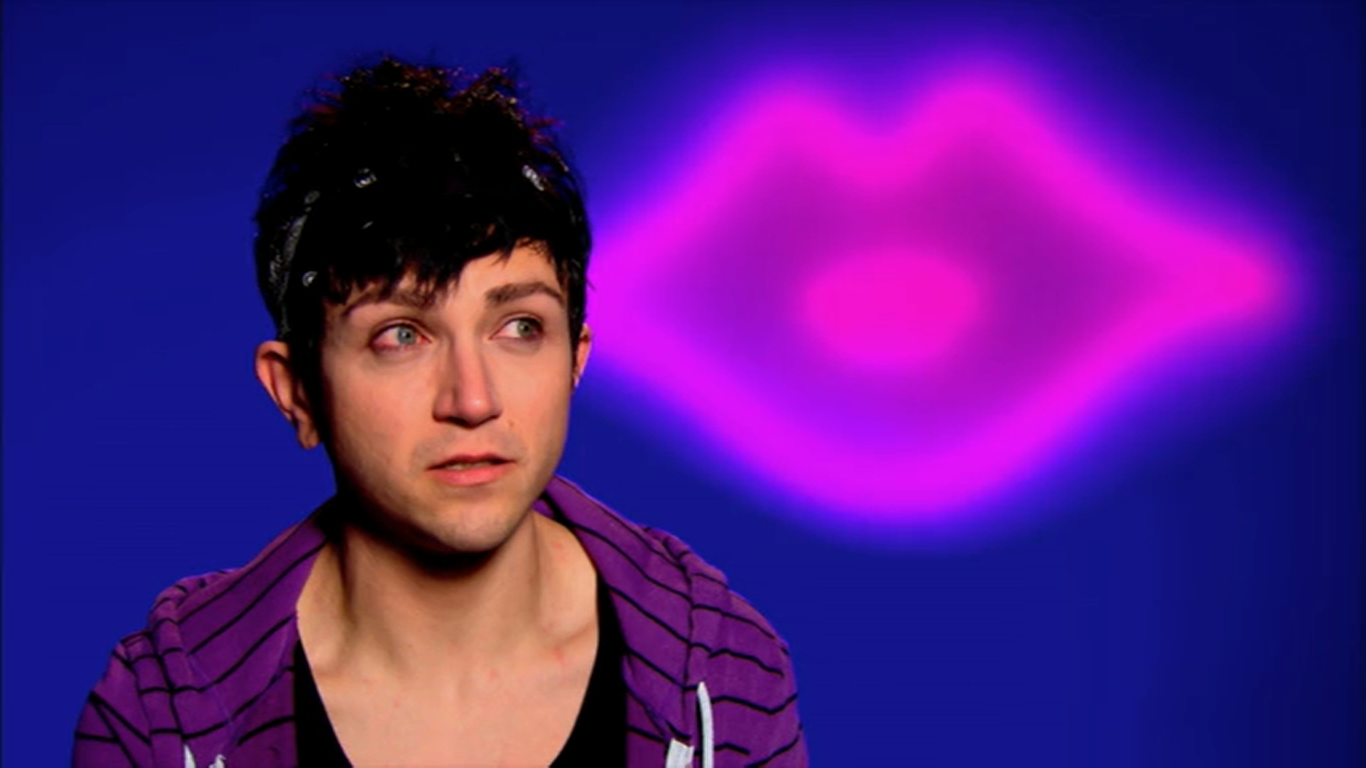
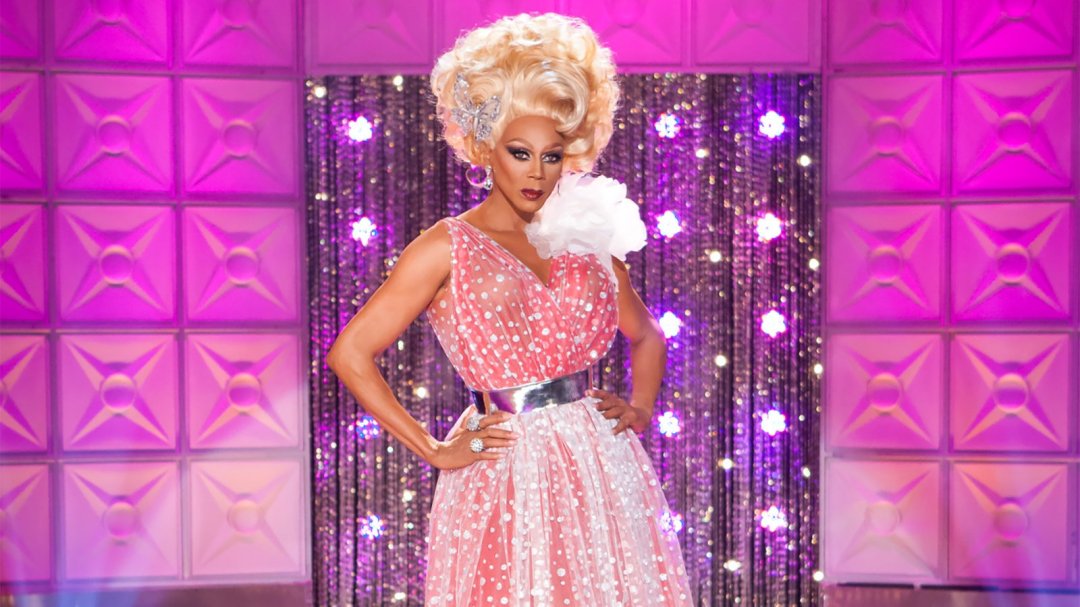
The first time I clocked a deceitful edit in RuPaul’s Drag Race was my second viewing of the show’s sixth season. During preparation for that season’s iteration of Snatch Game, a challenge in which the queens impersonate a celebrity, RuPaul cast doubt on competitor BenDeLaCreme’s plan to portray Dame Maggie Smith. Three shots follow: first, Ben looks at RuPaul while audio from one of Ben’s confessionals plays over it (“Ru does not seem into my idea.”); next, a shot of Ben’s wig on a foam head while the audio continues (“I’m shaken–my confidence is definitely shaken, but, I–”); finally, it cuts to the confessional itself where a puffy-eyed Ben is speechless, either just finished crying or just about to start.

Except that last part isn’t true, because, later in the episode, Ben talks about his adolescent struggles with body image and his mother’s death from cancer when he was thirteen. “I just–”, he begins to describe the loss in voiceover, and then it cuts to a much longer shot of Ben speechless in the same confessional from earlier. It’s clear in this longer shot that Ben is stumbling over his explanation of how he felt when his mother died, not Ru’s lack of enthusiasm for his Maggie Smith impression, especially since he actually won Snatch Game. The editors had blatantly cut footage of Ben crying as he recalled his grief and moved it earlier in the episode to make it look like Ru had shaken Ben to his core.

Ever since, I’ve been completely sceptical of the Drag Race edit.

Continue reading “RuPaul’s Unreliable Editing Race”

Art and the Artist

If you read a lot of pop criticism and entertainment journalism, you’ll be a familiar with a debate about “separating the art from the artist” or some similar turn of phrase. This is a very old debate, but it’s come to occupy ever more space in discussions about art, especially popular art, in recent years. The main driving force behind its increasing prominence has been the proliferation of online publications covering entertainment news and producing reviews and criticism over the last ten or so years. Such platforms are making more information and commentary on the entertainment industry and more opinions about art available to more people than ever before. Over the years, plenty of people who make art have been exposed for doing bad things, and so naturally the issue of how we should relate to art made by bad people has come up pretty regularly in these publications.

But that was before Jodi Kantor and Megan Twohey (for the New York Times) and Ronan Farrow (for the New Yorker) exposed Hollywood mega-producer Harvey Weinstein as a serial sexual predator. I don’t know why this one was the tipping point, but in the months since, dozens of other sexual predators working in the entertainment industry, in news media and in sports have been similarly exposed. In fact, there’s been a seemingly endless wave of revelations about powerful public figures – almost exclusively men, to no great shock – who have abused their power in order to sexually harass and assault other people, including minors.

What used to be a largely seasonal phenomenon of finding out a celebrity was a bad person, getting bombarded with thinkpieces about it and then forgetting about it when something else came along to make you anxious about the world has now become an apparently permanent state of revelation.

Continue reading “Art and the Artist”

Notes on Split

I went to see Split on my twenty-third birthday, and I was very excited. That was partly because my birthday was the day Donald Trump was inaugurated as President and it was a way to not think about, you know, events. But it was mostly because I am an M. Night Shyamalan apologist, and he was back! I love The Sixth Sense and Unbreakable and The Happening, and after a string of bad decisions, he was resurgent. He’d had a surprise hit on television with Wayward Pines and his previous film, The Visit, had been both well-received and profitable. Now it was time for his redemption story to go mainstream with his biggest success since Signs.

And it did.

Measured by return on investment, Split was Shyamalan’s most profitable movie, turning $9 million into over $250 million, and it received some of the best reviews of his career. It was number one at the US box office for three consecutive weeks (a record in Shyamalan’s filmography matched only by The Sixth Sense), it had a sequel greenlit by April, and James McAvoy is one of the year’s prototypical examples of an actor locked out of the Oscars race by genre rather than merit. M. Night Shyamalan brought his reputation back from the dead with one of the year’s most successful movies.

And I hated it.

Continue reading “Notes on Split”

Because I Choose To: The Horror and Hope of Free Will

The final battle between good and evil at the end of The Matrix Revolutions is the best part of a very flawed movie. Whatever else the Matrix sequels did wrong – and they did a fair bit – the last fight between Neo and Agent Smith is basically perfect. It’s not just a punching contest, it’s a distillation of every moral value at stake in their conflict. I know that’s a controversial statement because I’ve seen so many people make fun of the best part of the scene:

Agent Smith: “Why, Mr. Anderson? Why, why, why? Why do you do it? Why? Why get up? Why keep fighting? Do you believe you’re fighting for something? For more than your survival? Can you tell me what it is? Do you even know? Is it freedom or truth? Perhaps peace? Could it be for love? Illusions, Mr. Anderson, vagaries of perception! Temporary constructs of a feeble human intellect trying desperately to justify an existence that is without meaning or purpose. And all of them as artificial as the Matrix itself, although only a human mind could invent something as insipid as love. You must be able to see it, Mr. Anderson. You must know it by now! You can’t win! It’s pointless to keep fighting! Why, Mr. Anderson?! Why?! WHY DO YOU PERSIST?!”

Neo: “Because I choose to.”

I worry about what it means that such a beautiful and simple encapsulation of what it means to be a human being is so routinely mocked for its alleged meaninglessness: “Because I choose to”. There is something in our language, always present, but more and more prevalent as we sink deeper into the grey muck of modernity: we don’t know how to talk about freedom. We don’t know how to speak about each other as beings with free will. We speak of people driven by rage, rather than people who choose the path of rage. We speak of people who can’t help but be who they are and do what they do, rather than people who consistently choose to continue in their habits. We speak of people as if they’re machines, rather than people.

Some of it is well-intentioned, I’m sure. There are legitimate critiques of theories of freedom that ignore the ways we are prevented from exercising our free will. But we’re at risk of sprinting towards the other extreme. We’re at risk of denying that free will exists at all.

Continue reading “Because I Choose To: The Horror and Hope of Free Will”

I Took My Time, I Hurried Up

This article is part of the In Defense of the Genre series. Previously, My Chemical Romance as armour in a world full of misery and cruelty


It’s hard to believe now, but once upon a time it was quite a thing for a pop punk band to write a downbeat song about depression. Pop punk has always had a deep and abiding commitment to sincerity, but the genre’s early breakouts, especially Green Day, generally maintained a weird ironic distance from their feelings even as they exorcised them. “Basket Case” is a typical example: it’s not that it isn’t upfront about its subject matter – the sense of disorientation and purposelessness that is most definitive of Gen X alternative rock – but it’s delivered with a kind of self-deprecating, tongue-in-cheek, throwaway attitude that’s very hard to describe and very uniquely pop punk.

Partially that’s a product of the inherent irony of pop punk as a genre – the tension of sad lyrics over upbeat music – and partially it’s a product of the pervasiveness of irony in Gen X pop culture at large, from Kurt Cobain deadpanning positivity slogans to the relentless cynicism of Seinfeld, which is one reason the balance shifted heavily (but never completely) towards sincerity as this early wave of pop punk bands were succeeded by bands like My Chemical Romance, Paramore and Fall Out Boy in the noughties. Though mostly not millennials themselves (MCR’s Gerard Way is only five years younger than Green Day’s Billie Joe Armstrong), their fanbases are, and these bands were at the vanguard of millennial pop culture’s reaction to the excessive and counterproductive irony of much Gen X art, a reaction that came to include Green Day themselves with American Idiot (2004).

Several successful singles from the turn of the century played a big part in that reaction: “The Middle” by Jimmy Eat World, “Perfect” by Simple Plan, and the first and most devastating shot, “Adam’s Song” by Blink-182, one of the most perfect songs ever written.

Continue reading “I Took My Time, I Hurried Up”

The Real Lesson of Get Out’s Success

Get Out is one of the best horror films this year, and it’s been a particularly good year for horror. The directorial debut of comedian Jordan Peele, Get Out is the story of Chris Washington, a young black photographer who reluctantly agrees to meet his white girlfriend’s family for the first time. Bad things happen. As well as being really, really good, Get Out was phenomenally successful, grossing $254 million over a $4.5 million budget.

If a movie is critically acclaimed, financially successful and not a blockbuster, chances are that its financial success will be followed by a series of articles on what lessons Hollywood should take from its success. This isn’t a hard and fast rule, but it’s predictable enough that I wasn’t surprised when it happened to Get Out.

I hate these articles.

Continue reading “The Real Lesson of Get Out’s Success”

Can The Maker Repair What He Makes? [Bright Wall/Dark Room]

I wrote an essay for my favourite film magazine, Bright Wall/Dark Room, about Ridley Scott’s Blade Runner and the endless debate about whether Deckard is a replicant or not.

If you want a definitive foolproof argument that Deckard definitely is or isn’t a replicant, you will not care for my essay. But if you want a thoughtful examination of the debate itself and what it implies about the film and its audience, you’ll enjoy it a lot.

You can read it here.

Video Game Movies and Why They Suck

It is a truth universally acknowledged that no one has ever made a good movie based on a video game, since the genre came into being with 1993’s Super Mario Bros. I don’t usually care for such truths, but that’s one I’m happy to accept, by and large. I would possibly carve out an exception for some of the Pokémon movies, though I haven’t watched any of them in a long time, and there are, of course, some good movies about video games or inspired by their aesthetic: Scott Pilgrim vs. the World, Wreck-It Ralph, Tron, etc. But as far as film adaptations of video games, it’s been one failure after another, with only occasional spells of mediocrity to shake things up.

Continue reading “Video Game Movies and Why They Suck”