I Know Your People, Sean

The Quiet Man is the bogeyman of Irish cinema. Shot on location in County Mayo in the west of Ireland in 1951, it’s both the most significant—and most acclaimed—screen depiction of the country before an indigenous film industry developed in the 1990s, a go-to example of stage Irish buffoonery that Irish cinema has raced away from. When An Cailín Ciúin—the first Irish language film to be nominated for an Oscar—powered itself to the Academy Awards last year, its English title framed it as a reply to John Ford’s fantasy depiction of Ireland: The Quiet Girl

Irish people lay claim to and celebrate The Quiet Man—there’s a whole museum in the village where it was filmed—but just as often, cringe away from it. We anxiously imagine that this is how Americans see us. But the truth is, The Quiet Man is a much bigger deal to us than it could ever be to them.

I wrote about The Quiet Man and John Ford’s complicated diasporic nostalgia for Bright Wall/Dark Room. You can read it here!

The Cheerfully Dystopian Americana of Hands on a Hard Body

On paper, the premise of Hands on a Hardbody: The Documentary–released twenty-five years ago this week–might sound niche: it documents a 1995 endurance competition where the last contestant to keep their hands on a Nissan Hardbody pick-up truck wins the truck. But on screen, it’s enthralling, an irresistible salted-caramel treat. It is, somehow, both giddy and grim: at once a bite-sized anthropological study of post-Reagan America and the most exciting sports movie not to feature Rocky Balboa. 

A dealership in Longview, Texas has run the Hands on a Hardbody competition for years. The twenty-four contestants are drawn from a raffle because there are so many entrants: you’re only allowed to put your name forward once per day, so prospective hopefuls come back day after day to maximise their chances of being selected. When the selected two dozen arrive on the morning of the competition, the rules are outlined. You must have one hand on the truck. You cannot lean on the truck, or squat; you have to be standing. There is a five-minute break hourly and fifteen-minute break every six hours.  The first time I watched it, I thought six hours seemed like a long time. 

I wrote about Hands on a Hard Body for Crooked Marquee. You can read it here!

The Miracle Worker Is Not The Film You Think It Is

The Miracle Worker is something of a middle school staple in the United States. Helen Keller is a significant figure in American history—she was the first deafblind person to earn a bachelor’s degree and a co-founder of the American Civil Liberties Union, among other things—and the 1962 film offers an accessible way into her story. But when something’s a middle school staple, you inevitably tend to continue viewing it through your middle school eyes, no matter how the years pass. It can take so much to let go of that—even though, if pushed, none of us would have trouble admitting that we were really stupid when we were 13. 

I’m from Ireland, where The Miracle Worker doesn’t have that kind of cultural cache, but I’ve spent enough of my life online to absorb it by osmosis. For American leftists in particular—eager to reassert Helen Keller’s socialism, since that doesn’t seem to come up in middle school—The Miracle Worker is almost a bogeyman. The more I learned about Helen Keller, the more it seemed like people talking about her life and work were actively countering The Miracle Worker, sometimes explicitly. The Miracle Worker is the official Helen Keller story, sanitized and shrink-wrapped for moral majority suburbanites, a reduction of a complex, trailblazing woman. For disability activists, it’s invoked the way Rain Man is by autistics: this is how they see us, this is what we are understood to be

I wrote about the 1962 Helen Keller biopic The Miracle Worker for Current Affairs. You can read it here!

Notes on Where The Truth Lies

This article is part of the Notes on Failure series, which discusses interesting cinematic failures. Previously, The Conjuring.

As I threatened to at the end of last year, I have gotten way into Martin and Lewis. I have watched all their movies and a bunch of Colgate Comedy Hour, and read Dean & Me: A Love Story, Jerry Lewis’s memoir about his partnership with Dean Martin. I have bored the pants off people by subjecting them to irrelevant Martin and Lewis anecdotes.

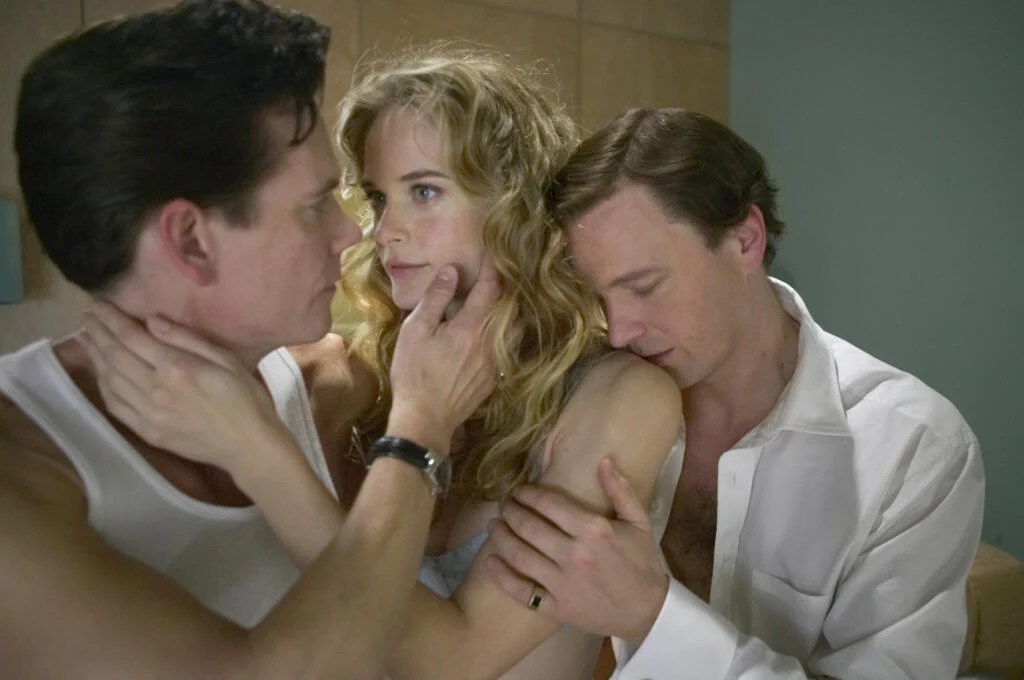
So, naturally, I carved out a couple of hours to watch Where the Truth Lies. Adapted from a novel by Rupert Holmes (of ‘Escape (The Piña Colada Song)’ fame), it’s a queer fictional take on Martin and Lewis’s break-up – a ‘90s erotic thriller half a decade late. By rights I should love it no matter how bad it is. But Where the Truth Lies is not just bad, it’s baffling. Top to bottom, it’s full of insane decisions at basically every level of filmmaking.  

Here’s why:

Continue reading “Notes on Where The Truth Lies”

Come and Have a Go, If You Think You’re Clever Enough

Television criticism, maybe even more so than other forms of arts criticism, has an implicit but rigid hierarchy. “Often, these biases involve class, gender, race, and sexuality, disguised as biases about aesthetics,” Emily Nussbaum writes in her book I Like to Watch: “Green/grey drama, serious; neon-pink musical, guilty pleasure. Single-cam sitcom, upscale; multi-cam, working class.” Nussbaum attributes this, in part, to television’s status anxiety: it wasn’t too long ago that TV was considered the idiot box, the boob tube, a vast wasteland. “So much of TV,” John Mason Brown told Steven H. Scheur in 1955, “seems to be chewing gum for the eyes.” For the rest of the twentieth century, at least, most people would agree with him. And so critics appeal all too readily to other, more respectable mediums – it’s a visual novel, a ten-hour movie. It’s not TV, it’s HBO.

I agree totally with Nussbaum’s argument, and have made versions of it myself over the years. But the privileging of drama over sitcoms, of gritty realism over silly genre fare, of masculinity over femininity, is a relatively small part of the equation. The types of television most neglected by critics are, if we’re honest, the same ones that make up most of the TV made and most of the TV watched: all the vast, vast area that exists outside of scripted comedy and drama programmes.

Continue reading “Come and Have a Go, If You Think You’re Clever Enough”

In Defense of South Park

In 2017, the two-headed monster of Donald Trump’s inauguration and South Park’s 20th anniversary prompted much hand-wringing over the show’s legacy. In the post-2016 rush to point fingers, a cartoon about the adventures of some potty-mouthed 8-year-old boys was made to bear at least some of the blame. Dana Schwartz tweeted that it was impossible to overstate the cultural damage of South Park’s portrayal of “earnestness as the only sin” and mockery as “the ultimate inoculation against all criticism”—and then, her point seemingly proven, she was descended on by trollsSouth Park didn’t invent the alt-right, Sean O’Neal wrote for The AV Club, “but at their roots are the same bored, irritated distaste for politically correct wokeness, the same impish thrill at saying the things you’re not supposed to say, the same button-pushing racism and sexism, now scrubbed of all irony.” For Lara Zarum in The Village Voice, the show’s misogyny—the creators “never seem content just to make fun of women; they relish sexually humiliating them, too, all while shunting the show’s female characters, young and old, to the maddeningly familiar role of disapproving nag”—is deeply tied to Hillary Clinton’s election loss. 

The consensus that seemed to calcify was that South Park’s corrosive influence on popular culture raised a generation of nihilistic trolls that revived American fascism for the lulz. At best, it inculcated a wilful apathy, political and otherwise. According to Lindsay Ellis, South Park creators Trey Parker and Matt Stone spent the whole 2000s “explaining that things were fine actually, both sides bad”: both symptomatic of, and feeding into, a wider apathetic cultural attitude towards social injustice in the 2000s. As Schwartz outlines, South Park has always skewered “both the left and the right—and anyone who believed in anything—as equally ridiculous. The smart people were those detached enough to know that everyone was full of it.”

There is some ring of truth to all this. The best of these critiques—like Zarum’s or O’Neal’s—are rooted in an acknowledgement that South Park is and has always been extremely funny, and that its cultural effect is not necessarily reflective of Stone and Parker’s intentions. But even still, a fundamental rift inevitably opens up between these arguments and my experience of the show itself.

I wrote about South Park, shock humour, and morality in art for Current Affairs. You can read it here!

The Joys of Soviet Sherlock Holmes (and Dr. Watson)

Contemporary television feels like an endless tide of hot new thing after hotter, newer thing. I find the faux-urgency of it genuinely stressful. I love television, but I hate obligations, so I find myself retreating into the medium’s past, to shows which, pending an ill-advised reboot or two, don’t feel like they come with a deadline. And very little comes with less of a deadline than a Soviet adaptation of Sherlock Holmes from the 1970s and ‘80s.

The Adventures of Sherlock Holmes and Dr. Watson is usually called a series of TV movies, but I’m not sure why: each of the five “TV movies” aired separated into either two or three episodes, making them pretty normal TV seasons by European standards. Despite Vasily Livanov being given an MBE for his portrayal of Holmes, the show isn’t talked about or remembered much in the English-speaking world, at least outside of Holmes fanatics. It will appear and disappear onto YouTube every so often, and you can stream it if you pay to join Soviet Movies Online, a specialist streaming service for Soviet cinema. But it’s not going to show up on Netflix or generate a hundred articles announcing it on entertainment news websites if it did. But as it turns out, it’s one of the best TV shows there is.

Continue reading “The Joys of Soviet Sherlock Holmes (and Dr. Watson)”

My Year of James Bond [Paste]

At the start of last year, I had seen one James Bond film: No Time to Die, in late 2021. Even though I loved it, I felt like I was missing out on so much context. James Bond felt like a huge black hole in my cinematic knowledge, too big to know where to begin stitching it together. Everyone I know, it seemed, grew up watching Bond movies—and has a particular actor they instinctively consider “their” Bond—leaving me without a model of how to get into Bond in the first place, at least without a time machine. At times, I used my preconceptions about Bond movies as a shield justifying my ignorance: Bond is misogynistic trash, anyway. British imperial propaganda. Cheesy and embarrassing besides.

Seeing No Time to Die with my dad, mostly because it happened to be on, I determined that I needed to get around to watching some James Bond films, misogyny and imperialism be damned. Then, because 2022 marked 60 years since the release of Dr. No, all the Eon-produced James Bond films were re-released in Ireland and the U.K., one each Wednesday.

I wrote about watching all the James Bond movies last year for Paste magazine. You can read it here!

Lucio Fulci: So Much More Than The Godfather Of Gore

Lucio Fulci “was sort of an Italian Hershell Gordon Lewis,” Roger Ebert wrote in 1998, dismissing The Beyond as a plotless and dim-witted movie full of bad special effects and worse dialogue. It’s not surprising that Ebert didn’t like The Beyond – he thought Friday the 13th was disgusting enough trash to warrant a letter writing campaign, after all – but what is surprising is how much Fulci’s legacy is framed more or less as Ebert had it, just with a positive inflection.

Ciara wrote about Lucio Fulci’s masterpiece Don’t Torture a Duckling for Fangoria on its fiftieth anniversary! You can read it here.