“I don’t know how much movies should entertain. To me, I’m always interested in movies that scar.”
David Fincher, interviewed by Mark Salisbury in Empire, February 1996
The first Harmony Korine film I saw was Spring Breakers, because Dean made me watch it for our podcast, The Sundae Presents. I did not like Spring Breakers, but in a way where saying whether I liked it or not seems like such a gross simplification that it becomes a lie. While watching it, I found what was great and awful about it impossible to parse, and from a distance, I mostly think of it as an epic troll – a movie whose existence is a joke despite it containing zero jokes. I remember the boring parts more than the unpleasantness that felt so visceral at the time.
Julien Donkey-Boy has not come out in the wash that way. I can feel its viscerality still wriggling in my blood. Korine’s sophomore directional outing, Julien Donkey-Boy is the sixth Dogme 95 film – it’s got the certificate and everything – though less because it strictly follows the Dogme 95 rules (no “superficial action,” no non-diegetic sound, only natural lighting, only handheld cameras) and more because what the hell else could it be? It is, at once, a family drama and totally outside the bounds of mainstream filmmaking. And since there are Dogme 95 movies that are both these things, fuck it, this one is too.
Watching Julien Donkey-Boy was one of the most unpleasant, upsetting experiences of my life. It is difficult to write about because it is outside of that which I know how to put words on. On The Sundae Presents, I called Spring Breakers a one-star film, a two-star film, a four-star film and a five-star film each battling to be free, but Julien Donkey-Boy is all ones and fives: knotted together, impossible to untangle. You start to wonder if one and five might be the same thing.
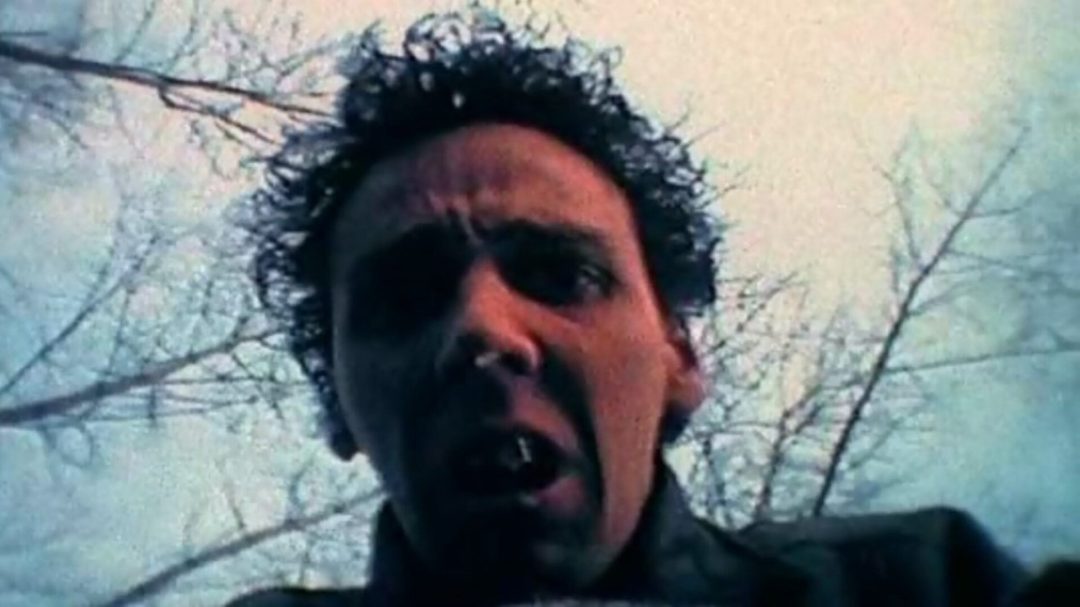
Ewen Bremner plays Julien, a young man with rotted teeth and some kind of mental disability. He’s a donkey boy by the same rationale that had Frank on It’s Always Sunny put in an asylum as a youth: he’s got donkey brains. His home life is dominated by his abusive, domineering father, played terrifyingly by Werner Herzog. Just him describing a scene from Dirty Harry made my skin crawl. He’s like Fritz Von Erich in The Iron Claw but without even ambitions and goals as a glean of an excuse for his cruelty. He gets Julien to hit himself over and over, while demanding his sister Pearl (Chloë Sevigny) participate by also telling Julien to hit himself. Pearl is pregnant, and she is cagey when a nurse asks who the father is. It could be the result of Father’s abuse, or an incestuous relationship between her and Julien. (Near the end of the film, Julien claims to be the father, but the truth of this is left ambiguous.)


Father is cruelest to Chris (Evan Neumann). In one scene, he hoses him down with cold water. In another, he challenges Chris to do a balancing trick – and when Chris does it first try, he changes the rules. Most disturbingly, Father tries to pay Chris to dance with him wearing a dress belonging to his late wife, Chris’s mother. Chris is ostensibly training to be a wrestler, but like his siblings, seems to exist within the closed system of this house. They are like children off school for the summer, but they are adults without an endpoint in sight. I had thought that the Australian film Bad Boy Bubby – also about an intellectually disabled man in an abusive, incestuous and controlling home – was dark, but Bubby gets out. There is catharsis, release, self-discovery. Julien and his siblings aren’t, like Bubby, told the air outside is poisonous to breathe – Julien visits the bowling alley or the ice rink – but there is no escape.
The closest thing to a reprieve from the bleak hopelessness is in those scenes at the bowling alley or ice rink, where Julien attends a social club for the blind. Julien isn’t blind, but he seems to fit in here in a way he does nowhere else. There’s a deep unease to these scenes, too – not least because I was never fully confident on if the disabled people were being portrayed with empathy or treated like objects in a freak show. When a literal freak show occurs at one of the club’s events – featuring a man who does a truly disgusting trick where he swallows and regurgitates cigarettes – it’s as good of evidence for the former as the latter. But the moment where a blind guy at the bowling alley raps about being a “black albino, straight from Alabama” was one of the only times I felt the weight lift off my shoulders.
The film mimics sight issues with its visuals. It’s shot on video, frequently recording over itself to juxtapose images. It’s always fuzzy, in a way that feels symbolically evocative and scuzzily authentic. It looks like a home movie, and is all the more intense and upsetting because of it. I thought of The Shaggs watching it, wondered if Korine was incubated with total unknowledge of movies before unleashing some inseparable incompetence and brilliance on the world. I want to call it “shocking”, but I mostly want to call it some perfectly descriptive word I have not learned. Julien Donkey-Boy is defiantly ugly, in a way that contributed more to my nausea than the actual content. I have seen lots of films whose stories were as disturbing as Julien Donkey-Boy, and plenty much more so. (Father does not successfully get Chris to dress as his mother, after all.) But I don’t think I’ve ever seen a film whose visual and storytelling sensibilities were synched on this key. It leaves the viewer with as little reprieve as the characters: what would already be a tough watch is an all-out assault on the senses. I am baffled by Empire dubbing it “rectum-numbingly dull”, because even when I was sure I hated it, even as I begged for it to be over at last, its claws tore into my skin. That was how hating it felt, and how loving it felt.
Both visually and narratively, this distressing whole that made me want to throw up occasionally lined up just right to make my throat ache with unshed tears. Pearl talks to Julien on the phone, and she pretends to be his mother. It’s not totally clear how much Julien understands what’s happening, but it seems to soothe him. This moment gives the audience the greatest insight into his unprocessed grief, but it’s much less utilitarian than that. Pearl-as-mother tells Julien to make sure to brush his teeth, and my heart clenched into a tight fist.

 The Sundae